
VA Watchdog Finds Scar Claim Errors Caused $5.6 Million in Overpayments
A projected 17,900 cases had at least one error, the inspector general found, while VA disputes how the sample was drawn and how serious the errors were
By AXY Defense Desk ·
Key points
- VA Office of Inspector General found errors by Veterans Benefits Administration staff led to about $5.6 million in overpayments to veterans on painful scar disability decisions.
- The watchdog projected at least one error in 17,900 cases, roughly 38 percent, from June 1, 2024, through May 31, 2025, with 920 decisions leading to overpayments.
- The report points to a Disability Benefits Questionnaire that does not clearly define objective versus subjective evidence, and to two diagnostic codes applied to one condition.
- VA disputes the sample and says only seven of 60 errors resulted in improper payments; it plans to complete the OIG’s suggestions by February 2027 at the latest.
Mistakes by Veterans Benefits Administration staff have led to about $5.6 million in overpayments to veterans, according to a VA Office of Inspector General report on disability decisions for painful scars. The watchdog found that the VA made at least one error in 17,900 cases, roughly 38 percent, during a review period from June 1, 2024, through May 31, 2025. Of those decisions, 920 led to overpayments, and the report says those payments will keep accruing without “corrective action.”
The VA disputes how the watchdog reached its numbers and how serious the errors were. The department agreed with many of the recommendations, but said only a small share of the flawed decisions actually resulted in improper payments. The dispute matters because the answer shapes how urgently the agency has to act, and how many veterans could be asked to repay money or see their ratings changed.
How a Scar Rating Turns Into a Payment Error
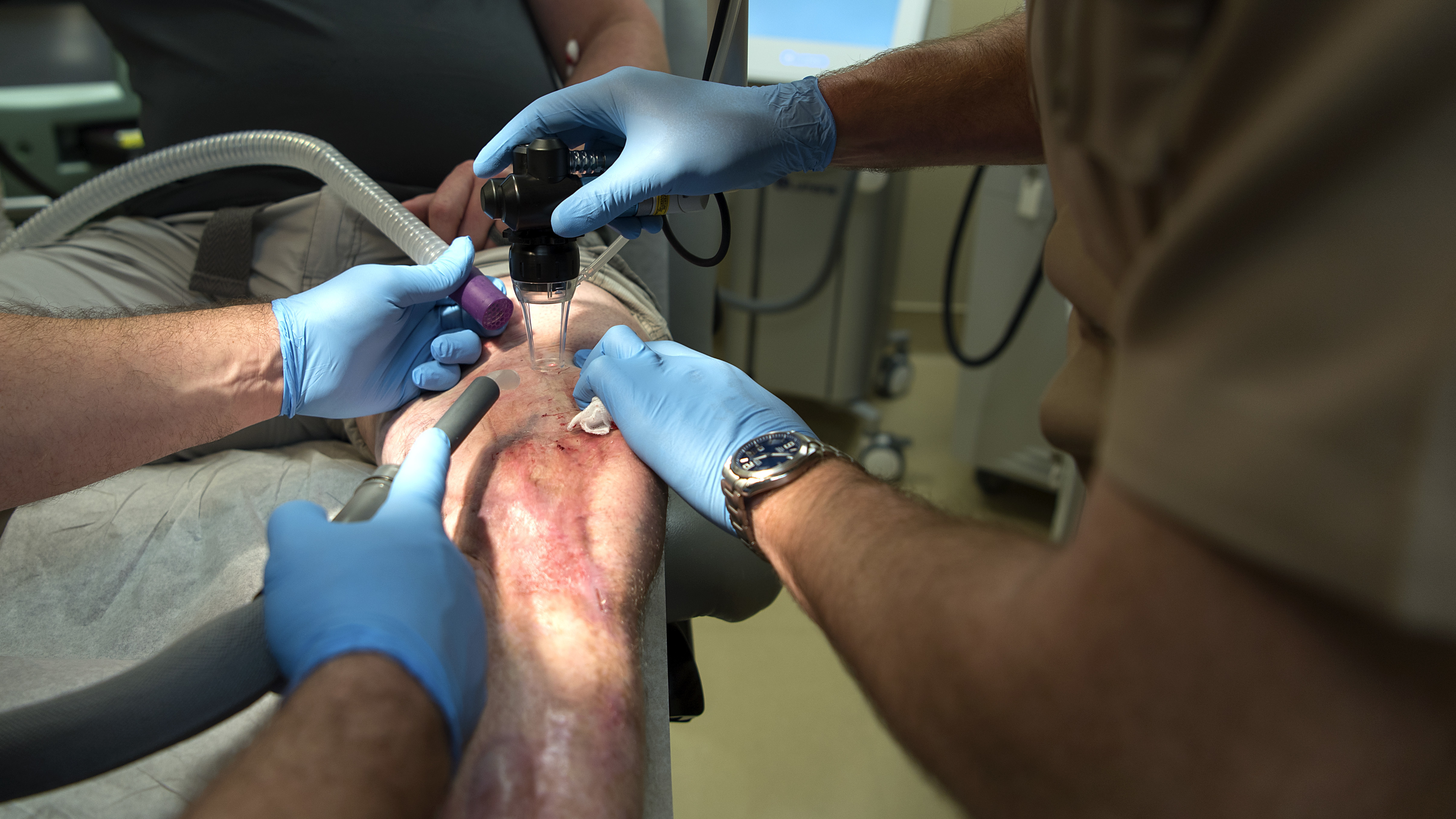
Painful scars are one of the more common lasting marks left by military service. The report lists burns, surgeries, shrapnel and gunshot wounds among the sources. When a scar is connected to service, the VA can pay monthly disability compensation, and the amount depends on how the condition is rated. The watchdog said more than a half-million veterans currently receive VA disability benefits for painful scarring caused or worsened by military service. A mistake in how even a fraction of those claims were rated reaches a large number of households.
An overpayment means a veteran received more money than the rating allowed. In most cases the veteran did nothing wrong. The problem sits in how the claim was processed, and the extra money can keep flowing until someone catches it. That is the central concern in the watchdog’s findings. The 920 decisions that led to overpayments are still accruing, according to the report, and only corrective action can stop that.
For a veteran, the practical question is what happens once an error is found. A rating that was granted in error can be reviewed and changed, and money paid in error can be questioned. Those corrections can affect people who believed their rating was settled. The timing of fixes therefore matters to the people on the rolls as well as to the agency that pays them.
The Exam Form That Does Not Separate Evidence Types
VA rules require a physical examination to support a veteran’s painful scar claim. The examiner records findings on a standardized form called the Disability Benefits Questionnaire, or DBQ. The form is the link between what a clinician sees in the exam room and what a claims processor uses to assign a rating. If the form is unclear, every later step inherits the confusion.
The inspector general said the form has a specific gap. In the report’s words, the DBQ “does not clearly define objective versus subjective evidence.” Objective evidence is something an examiner can observe or measure, such as the size, texture or appearance of a scar. Subjective evidence is what the veteran reports, such as pain that is felt but cannot be seen. Both can matter, but a rating needs a clear basis for each part of it.
That gap, the watchdog found, led to a concrete problem. “Therefore, claims processors sometimes provided evaluations for painful scars without objective evidence to support the evaluations, which led to overpayments in disability compensation.” In plain terms, some ratings were granted without the physical findings needed to back them up. The report ties the error to the form itself, not only to individual decisions by staff, which helps explain why it recommends revising the document.
Why Two Diagnostic Codes Can Mean Double Counting
The VA rates disabilities using diagnostic codes, which are standard categories that tie a medical condition to a rating level. A single physical problem should be rated under the code that fits it best. The inspector general found that the physical effects of painful scars were often evaluated under two separate diagnostic codes.
The report calls this “pyramiding,” a term for rating the same underlying problem more than once. When that happens, the total rating and the monthly payment can end up higher than the condition supports. The watchdog said this practice, alongside the missing objective evidence, often produced overpayments. The two problems can feed each other. A rating built on thin evidence and counted under two codes can compound the error on a single claim.
The Sample Behind the 17,900 Estimate
The watchdog’s headline numbers come from a sample rather than a review of every file. The report says it took a random sample of 70 decisions from a review population of 47,300. It then projected the error rate across the full population, which produced the estimate of 17,900 cases with at least one error.
The inspector general brought its findings to the Veterans Benefits Administration in February 2026. After that briefing, the report says, “30 additional decisions completed from January 1 through January 31, 2026… identified a 43 percent error rate.” That later figure is higher than the projected 38 percent, though it covers a much smaller group of decisions, so it cannot be read as a new overall rate.
The VA pushed back on how the numbers were presented. In its comments in the report, the department said, “The OIG examined 130 decisions, representing approximately 0.27 percent of the total review population of about 47,300 decisions, and identified 60 errors, which form the basis for the projected 17,900 errors referenced throughout the report.” The description of the sample therefore differs between the two sides. The report describes a random sample of 70 decisions, while VA’s comments describe 130 decisions examined.
VA Says Most Errors Did Not Cost Money
The department’s central argument is about payments rather than paperwork. VA said, “only seven of the 60 errors OIG found resulted in improper payments, which represents about 5.4 percent of the sample, and when viewed across the full review population, only about 0.015 percent of all decisions reviewed.” It added that “The remaining 53 errors, more than 88 percent of the sample, were technical or procedural issues that did not result in improper payments.”
The two sides are answering different questions. The watchdog asks how often decisions are wrong. The VA asks how often those errors cost money. Both can be true at once. A decision can be flawed in its paperwork without creating an overpayment, and a single payment error can still matter a great deal to the veteran and the taxpayer involved. The $5.6 million figure in the report is the sum that the watchdog tied to overpayments, and it is the number that will matter most to veterans who may be asked to address a correction.
For readers, the gap between the two positions is the key to the story. The watchdog’s projection covers errors across a large population. VA’s percentages cover improper payments. Neither side disputes that the decisions examined contained problems, but they describe the seriousness of those problems in very different ways.
Fixes Due by February 2027 and the 920 Open Cases
VA agreed with many of the inspector general’s recommendations. The department said it would revise the “Scars/Disfigurement” section of the DBQ, ensure employees understand how to accurately evaluate painful scars, and review and correct the processing errors on decisions the inspector general’s team identified. The VA said it is working to complete the suggestions by February 2027 at the latest.
The first test is whether the revised form closes the gap the watchdog described. If the new section clearly separates objective evidence from subjective evidence, examiners and claims processors would have a firmer basis for each rating. That would address the root cause the report identified, rather than only the individual decisions that were already flagged.
The second test is the 920 decisions already producing overpayments. The report says those payments continue to accrue without corrective action, so the speed of corrections will show whether the fixes reach the cases that cost the most. Veterans whose ratings are reviewed will need clear notice of what changed and why, and the reviews will show whether the agency can stop overpayments without leaving veterans unsure of what they are owed.
The third test is whether VA and the watchdog can agree on the size of the problem. The department’s figures and the inspector general’s projection point in different directions, and the February 2027 deadline gives both sides a timeline to show which reading holds up as the corrections are made.
Questions and answers
How much money did veterans get in overpayments from scar claim errors?
The VA Office of Inspector General found that errors in painful scar disability decisions resulted in approximately $5.6 million in overpayments to veterans. The review covered decisions made from June 1, 2024, through May 31, 2025.
What caused the overpayments on painful scar claims?
The watchdog said the Disability Benefits Questionnaire does not clearly define objective versus subjective evidence, so some ratings were granted without physical findings to support them. It also found that physical effects were often rated under two separate diagnostic codes, which the report calls pyramiding.
What is the VA doing to fix the problem?
The VA agreed with many of the inspector general’s recommendations, including revising the Scars/Disfigurement section of the DBQ and correcting processing errors. It said it is working to complete the suggestions by February 2027 at the latest.
Topics: VA Office of Inspector General, Veterans Benefits Administration, Painful scars, VA disability benefits, Disability Benefits Questionnaire, Veterans overpayments
Sources: Military Times