
US Navy Expands Gecko Robotics AI Ship Maintenance Deal to $300 Million
Expanded contract funds drones, climbing robots and deck-coating scans aimed at cutting repair time and costs
By AXY Defense Desk ·
Key points
- The US Navy increased its Gecko Robotics contract to as much as $300 million, six months after the initial agreement.
- The original deal was a five-year, $54 million IDIQ contract covering 18 ships assigned to the Pacific Fleet.
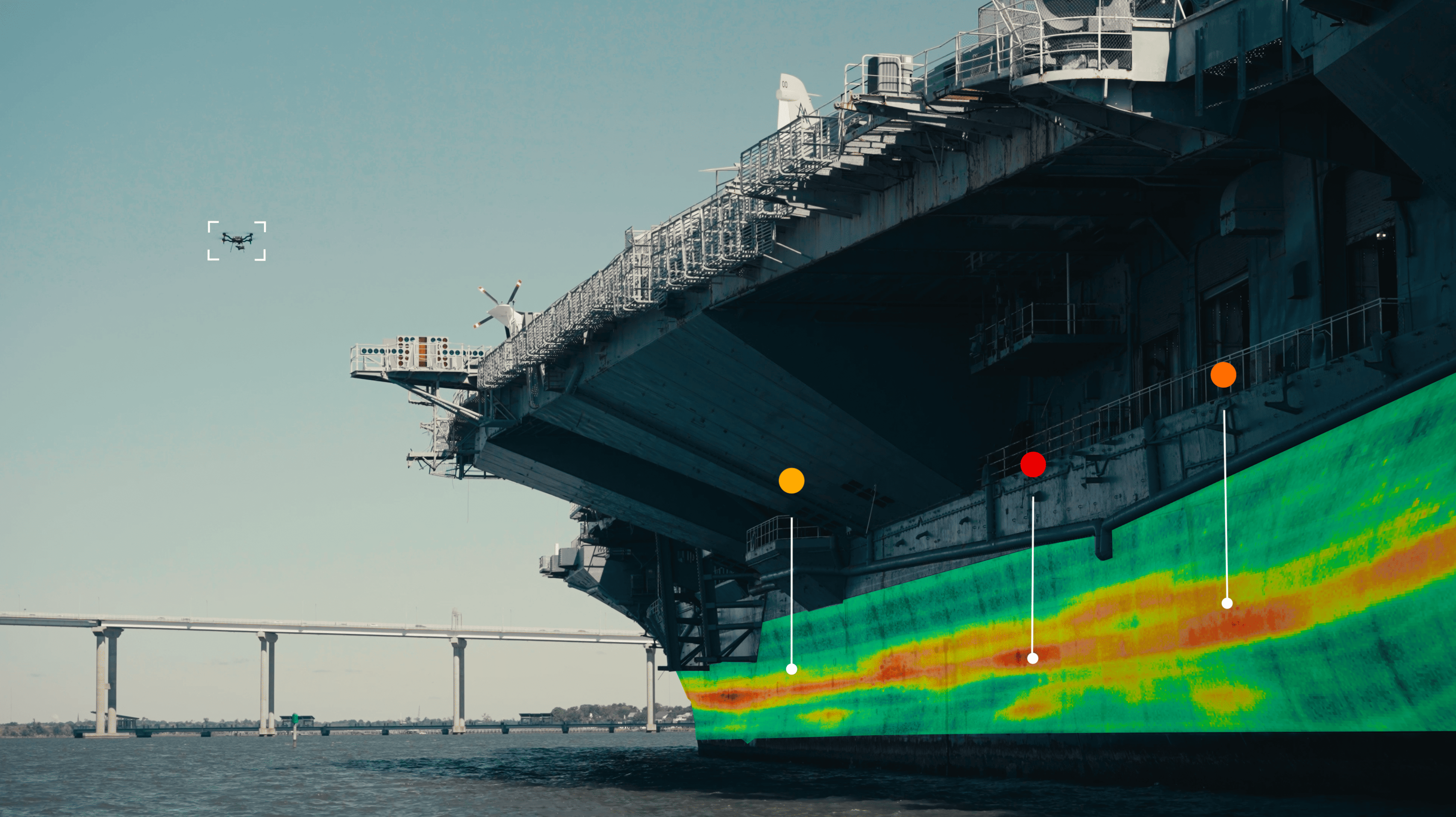
- Gecko uses drones, wall-climbing robots, fixed sensors and AI tools, and its Komodo system scans deck coatings before dry dock.
- The Navy aims for 80 percent fleet readiness by 2027, while amphibious ship readiness reportedly fell to 41 percent in August 2025.
- Gecko's savings and speed claims come from the company's own release and are not independently verified in the source material.
The US Navy has increased the value of its maintenance contract with Gecko Robotics to as much as $300 million, six months after the two reached an initial agreement, the company announced on Tuesday, October 20, 2026. The expansion brings robotics and artificial intelligence deeper into the work of repairing warships, at a time when the Navy is trying to clear maintenance backlogs that keep vessels out of service. In a release, Gecko said its technology can save the Navy up to $8 million in repair costs per ship and identify structural problems up to 50 times faster than traditional methods, reducing some inspections from months to days.
The announcement matters beyond one company's contract. Ships periodically pull into shipyards for scheduled maintenance and repairs, and when that work runs long, the delay ripples through training cycles, deployment plans and the crews who depend on those vessels. Any tool that can shorten the time a ship spends in maintenance, or lower its cost, is therefore of interest to the Navy's leadership, to Congress that funds the fleet, and to the taxpayers who pay for it.
What the Contract Change Means
The original agreement was a five-year, $54 million indefinite delivery, indefinite quantity contract for Gecko to work on 18 ships assigned to the Navy's Pacific Fleet. That type of deal, often shortened to IDIQ, is a common way for the government to buy services over a long period. It sets a ceiling on how much work and money may be ordered over the life of the contract. The government then issues specific task orders as work is needed, so the contract itself does not guarantee that the full amount will be spent.
That distinction is important for reading the $300 million figure. It is a maximum value, not a guaranteed payment. The increase shows that the Navy sees enough promise in the approach to commit more funding to it, but the actual spending will depend on how many ships are sent for work and how many task orders are placed. The contract was expanded only six months after the initial agreement, which suggests the Navy moved quickly once it had early experience with the technology. Analysts would typically treat the ceiling as a sign of intent, and watch the task orders as the more reliable measure of how much the service is really buying.
How Gecko's Technology Works
Gecko Robotics uses a mix of drones, wall-climbing robots and fixed sensors to gather data on a ship's components, decks, welds and hulls. A weld is a joint where two pieces of metal have been fused together, and a hull is the main watertight body of a ship. Structural issues are problems with the ship's frame and metal structure, such as cracking, thinning or other damage that can weaken the vessel over time. Some of these issues may not be visible to the naked eye, which is why sensor-based data collection can be valuable.
The collected information is paired with artificial intelligence tools, which are software systems that analyze large volumes of data to spot patterns and anomalies. In this case, the tools are used to identify current structural issues as well as potential ones that could develop later. Gecko says this approach is what allows its systems to find problems far faster than conventional inspection methods, which typically depend on people physically examining each area.
A central part of the new investment is Gecko's Komodo machine system. According to the announcement, Komodo analyzes the health of a ship's deck coatings by scanning them. Deck coatings are the paint and protective layers that cover a ship's deck and help guard the metal underneath from corrosion and wear. Traditionally, checking the condition beneath those layers can require physically digging into them, which is slow and disruptive. Scanning removes the need for that step. The company says this allows the Navy to plan repairs and map out damaged areas before a ship enters dry dock, a stage that previously only occurred after the maintenance cycle had already begun.
Dry dock is a large facility that can be drained of water so that a ship's hull is fully exposed for work. Time spent in dry dock is costly, and the schedule for that period is often set in advance. Planning the work before the ship arrives can help crews arrive with the right parts, tools and instructions, which is why the timing of inspections has a direct effect on how long a vessel stays out of service.
Why Ship Maintenance Has Become a Bottleneck
The contract expansion is closely tied to the Navy's broader struggle to keep its ships ready for missions. Readiness refers to the share of ships and aircraft that are available and able to carry out their assigned tasks. When vessels spend longer than planned in maintenance, fewer ships are available for deployments, training and operations. The strain spreads to sailors and Marines who rely on those ships and to commanders who must plan around missing capacity.
The Navy has consistently stated a goal of reaching 80 percent fleet readiness by 2027. That target has been met with criticism over the service's ability to deploy ships when they are needed. The Government Accountability Office, the independent watchdog that audits federal programs and spending, reported in December 2024 that readiness rates among the Navy's amphibious warfare ships fell to 46 percent between 2011 and 2020. Amphibious warfare ships carry Marines and their equipment to and from distant operations, so lower availability in this group has direct consequences for the Marine Corps. The GAO found that these lower rates hindered Marine Corps deployment and training plans.
The situation reportedly grew more difficult after that period. In August 2025, the amphibious readiness rate reportedly dipped to just 41 percent, a level that resulted in a gap of more than five months in Marine Expeditionary Unit deployments that year. Marine Expeditionary Units are Marine Corps task forces that typically deploy with amphibious ships, and they are often used for rapid-response missions. The strain came as the Trump administration pushed to counter the illicit drug trade in Latin America and the Caribbean, a mission that also draws on naval resources. When limited ships are tied up in repairs, that kind of commitment becomes harder to sustain.
The Chief of Naval Operations' Plan
Chief of Naval Operations Adm. Daryl Caudle, who leads the Navy, adopted the 80 percent readiness goal from his predecessor, Adm. Lisa Franchetti. In a column written for Military Times in December, Caudle laid out what he considers the major requirements for reaching it. He wrote: "Achieving this requires shorter maintenance cycles, increased spare-parts availability, improved training pipelines and targeted upgrades across the fleet."
The Gecko contract speaks most directly to the first item on that list. Shorter maintenance cycles depend on knowing what needs fixing before a ship reaches a shipyard and on being able to schedule the work precisely. Earlier planning, faster identification of structural problems and reduced inspection times all bear on that goal. Spare-parts availability, training pipelines and targeted upgrades, however, depend on separate programs, budgets and industrial capacity, and the Gecko technology does not address them directly. That makes the deal one part of a larger effort rather than a complete answer to the readiness problem.
What the Figures Do and Do Not Show
The most striking numbers in the announcement, including the $8 million in potential savings per ship and the claim of 50 times faster identification of structural issues, come from Gecko Robotics' own release. They reflect the company's assessment of its technology, and the source material does not include independent verification of them. Savings and speed in real shipyard conditions can differ from results in a limited trial or early deployment, so the Navy's own evaluations will be the most useful measure of whether these claims hold across a larger part of the fleet.
It is also important to separate the contract's ceiling from the money that will actually change hands. A value of up to $300 million indicates the maximum the Navy may order under the agreement. The amount paid will depend on how many ships are serviced, how extensive the work is and how many task orders are issued over the contract's life. Readers should treat the headline figure as an upper limit rather than a forecast of spending.
The comparison of savings per ship should also be read with care. Maintenance costs vary widely by vessel type, the condition of the ship and the scope of the work. A per-ship figure presented in a company release is useful for understanding the company's pitch, but it is not the same as a fleet-wide audit of costs saved.
What to Watch Next
Analysts following defense spending would typically look for several signals in the months ahead. The first is whether the Navy extends the work beyond the 18 Pacific Fleet ships covered by the original agreement. Such an expansion would suggest broader confidence in the technology. The second is whether the Navy or Gecko publishes results showing reduced repair costs, faster inspections and shorter time in dry dock. Independent or official data would carry more weight than promotional figures.
The third signal is the trend in readiness. If amphibious and other fleet readiness rates begin to rise toward the 80 percent goal for 2027, that would indicate that maintenance improvements are contributing to availability. If readiness continues to fall, the technology may prove useful but insufficient on its own to close the gap. Progress would also depend on the other areas Caudle identified, including spare parts, training pipelines and targeted upgrades, which are governed by separate budgets and programs.
For now, the expanded contract is best understood as a sign that the Navy is turning to robotics and data analysis to address a maintenance problem that has become central to its readiness debate. Its real significance will become clearer as task orders are issued, results are measured and the Navy's readiness rates are tracked against its stated target.
Questions and answers
How much is the US Navy's contract with Gecko Robotics worth now?
The US Navy has increased the value of its contract with Gecko Robotics to as much as $300 million. The original agreement was a five-year, $54 million indefinite delivery, indefinite quantity deal covering 18 ships assigned to the Pacific Fleet.
What does Gecko Robotics' technology do for Navy ships?
Gecko uses drones, wall-climbing robots and fixed sensors to collect data on decks, welds, hulls and components. AI tools analyze that data to find structural issues, and its Komodo system scans deck coatings so repairs can be planned before a ship enters dry dock.
Why is the Navy investing in ship maintenance technology?
The Navy has set a goal of 80 percent fleet readiness by 2027. The Government Accountability Office reported that amphibious ship readiness fell to 46 percent between 2011 and 2020, and it reportedly dipped to 41 percent in August 2025.
Topics: US Navy, Gecko Robotics, Naval maintenance, Ship repair, Pacific Fleet, Fleet readiness, Defense contracts
Sources: Defense News