
US Army Seeks New 155mm Howitzer Barrel Makers as Demand Rises
Notice asks contractors to build up to 10 barrels a month within three years as the Watervliet plant in New York struggles to keep pace
By AXY Defense Desk ·
Key points
- The US Army wants contractors able to manufacture up to 10 155mm howitzer barrels per month within three years.
- Companies have until Nov. 23 to respond to the Sources Sought notice, which asks for capacity estimates and a cost quote for 40 cannon tubes.
- The Watervliet Arsenal in New York is currently the only US government plant making large-caliber barrels for howitzers and tanks.
- A 2024 Pentagon budget document said Ukraine’s heavy use of M777 howitzers created demand for more than 30 M776 tubes per month.
- The Army is also exploring whether to replace the M777 with a weapon based on Korea’s K9 howitzer.
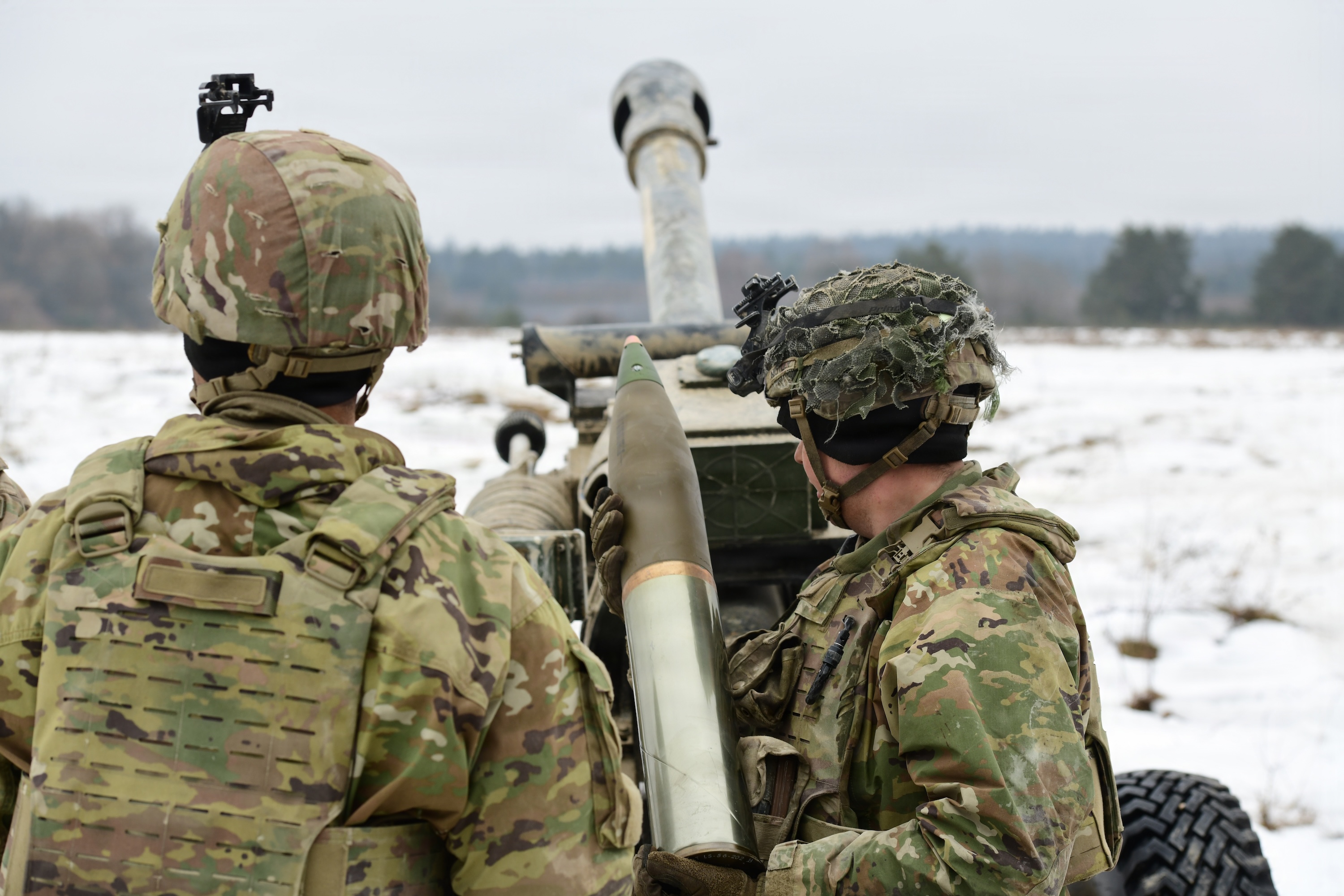
The U.S. Army is looking for new manufacturers to build barrels for 155mm howitzers, after Pentagon concerns that the government’s only plant for making them cannot keep up with rising demand for artillery. The Army has issued a Sources Sought notice, a formal request that asks companies to describe what they could build before any contract is offered. It wants contractors able to manufacture up to 10 barrels per month within three years. Companies have until Nov. 23 to respond.
The barrel is the long steel tube the shell travels down when the gun fires. Every shot pushes hot gas and high pressure through that tube, and over thousands of rounds the inside surface wears down. When it wears too far, the barrel has to be replaced.
That makes the tube one of the least visible parts of an artillery system, and one of the hardest to replace quickly. Shells can be stockpiled in warehouses. A gun with a worn-out barrel is out of action until a new one is made and fitted.
Why One Aging Factory Has Become the Bottleneck
Right now the Army makes large-caliber barrels for howitzers and tanks at only one place: the aging Watervliet Arsenal in New York. That means every new barrel the Army needs for those weapons depends on a single government plant. If that plant falls behind, the delay does not stay in one place. Units waiting for replacement tubes wait too, and the gap grows each time a gun wears out faster than new barrels arrive.
Watervliet is not a small operation with spare capacity. The Pentagon’s own concern is that it cannot keep up with the recent jump in demand. In practice, that means a gun that needs a new barrel may have to wait its turn behind everything else the plant is making. The Army’s new notice is an attempt to create more places where barrels can be made, so that one plant’s backlog does not decide how quickly a unit gets its guns back.
How the Ukraine War Exposed a Second Problem
For the past several years, America and Europe have focused heavily on expanding production of howitzer ammunition. That push is tied to the war in Ukraine and to the need to refill domestic stockpiles after large amounts of shells were fired or sent abroad. Most of the attention has gone to shells, because they are the item that gets used up fastest and is easiest to see in a news story.
Barrels are the less visible problem. Shell factories can run at full speed and still leave artillery units short if the guns themselves are sitting idle for lack of new tubes. A stockpile of ammunition does little good when the cannon that fires it is worn out. That is why the barrel shortage matters as much as the ammunition shortage, even though it receives far less public attention.
What a 2024 Pentagon Budget Document Warned
The concern is not new. A 2024 Pentagon budget document said Ukraine’s heavy use of M777 howitzers had created demand for more than 30 M776 tubes per month. The M777 is a towed 155mm howitzer used by the US Army. The document’s figure shows how quickly barrel demand rises when a weapon is fired at the pace a war requires.
The same document admitted that Watervliet could not keep up with that demand. It asked for emergency funding to be transferred so that a second manufacturer of barrels could be set up. In other words, the Army and the Pentagon had already identified the risk of relying on one plant. The new notice suggests the problem has not gone away, and that the Army is now going back to industry to find out who else can do the work.
What Companies Would Have to Show the Army
The notice asks companies to describe their ability to make barrels, or the capacity of any subcontractor they would rely on. Firms are asked to say whether they could add “chrome bore coatings on a steel tube up to 30 [feet] long and up to 7,500 pounds in weight,” as the notice put it. They must also state the maximum length and weight of tube they could coat.
That detail says a good deal about the scale of the work. A chrome coating on the inside of a barrel helps the bore hold up under hot, high-pressure firing. A tube of that size is a long and very heavy piece of metal, so the request tells potential suppliers that the Army expects them to handle large, difficult parts rather than small-scale work. A company that can only handle short, light tubes would not be a practical second source.
Companies must also say what they can do with boring, milling and rifling. Boring hollows out the tube. Milling shapes parts of it. Rifling cuts the spiral grooves that make the shell spin in flight and keep it on course. The notice also asks about raw materials, including “steel preform production, forging, guide bore, and heat treatment.”
In plain terms, the Army wants to know whether a company can start with raw steel, shape it, bore it, cut the grooves and treat the metal so it is strong enough to fire again and again. A firm that can do only one or two of those steps would need partners for the rest, which is why the notice allows companies to describe their subcontractors’ capacity as well as their own.
The 18-Month and 36-Month Targets
The Army has laid out a two-stage timeline. Companies are asked to estimate how many 155mm barrels they could make within 18 months. They are also asked to estimate their capacity to manufacture up to 10 barrels per month within 36 months. That gap matters. An early ramp-up would give the Army some relief from the Watervliet bottleneck. The full monthly rate is what would make a second source meaningful over the long run.
The notice also asks for a cost estimate for an “initial production quantity of 40 cannon tubes (broken down by caliber or indicating pricing for a combined/flexible mix).” That wording lets companies price either a single barrel size or a mix of sizes. For the Army, flexible pricing could make it easier to buy barrels for different guns without running a separate contract for each one. For a manufacturer, it means the cost of setting up a production line depends heavily on how many different tube types it has to build.
Could a Korean Howitzer Change the Plan?
The barrel notice comes at the same time as a wider review inside the Army. The Army is exploring whether to replace the M777 with a weapon based on Korea’s popular K9 howitzer. That question matters for barrel makers as much as it does for gunners. If the Army moves to a different gun, the barrels it needs, their dimensions and the tooling required to make them could all change.
That creates a planning risk for any company thinking about investing in a specific production line. A factory that spends heavily to build tubes for one weapon could find its work shifted toward a different design. The notice itself does not name a new weapon or say how many more barrel makers the Army wants. Those decisions will depend on the responses the Army receives and on what it decides about the weapon it plans to field.
Who Feels the Effects If the Gap Stays Open
The people most directly affected are the soldiers and units that depend on working guns. A howitzer waiting for a new barrel cannot fire, no matter how many shells are sitting in storage nearby. Training schedules, readiness reports and the ability to support allies all depend on whether replacement tubes can be made when they are needed.
Taxpayers have a stake too. The Army is looking for a second source at a time when the Pentagon has already identified a single plant as a risk. Building new capacity costs money, and the notice’s request for a cost estimate for 40 tubes is the first step in finding out what that capacity would cost. For companies, the notice is an opening. A firm that can meet the chrome coating, boring, rifling and heat treatment requirements could become a supplier to the Army for years.
What the November 23 Deadline Will Decide
The next test is the response period. Companies that want to be considered must show what they can build, what they would need from subcontractors and what a first order of 40 tubes would cost. The Army will then compare those capacity estimates and prices against its goal of up to 10 barrels per month within three years.
If the responses show that private firms can fill part of the gap, the result could be the second source for barrels that the 2024 budget document called for. If they do not, the Army will still depend on one plant while its guns and shells are in heavy demand. The Army’s decision on the M777 and the K9 could also change which barrels it needs. Either way, the answers that come back by Nov. 23 will show whether the Army can keep its artillery in working order without waiting on one aging factory in New York.
Questions and answers
Why is the US Army looking for new 155mm howitzer barrel makers?
Pentagon concerns say the government’s only barrel plant, the Watervliet Arsenal in New York, cannot keep up with increased demand for artillery. The Army wants contractors able to manufacture up to 10 barrels per month within three years.
What is a 155mm howitzer barrel?
It is the long steel tube a 155mm howitzer fires its shell through. Barrels wear out with repeated firing and must be replaced, so manufacturing capacity for them matters as much as shell production.
When is the deadline to respond to the Army’s barrel notice?
The deadline in the Sources Sought notice is Nov. 23. Companies must describe their ability, or their subcontractor’s capacity, to make barrels, including a cost estimate for an initial production quantity of 40 cannon tubes.
Topics: US Army, 155mm howitzer, Watervliet Arsenal, M777 howitzer, Artillery production, Army barrel manufacturing, Pentagon
Sources: Defense News
https://axynewsglobal.com/article/us-army-seeks-new-155mm-howitzer-barrel-makers-as-demand-rises