
US Army Inactivates 8th Psychological Operations Group at Fort Bragg
The Phantom Knights unit, activated in 2013, is the latest move in a service effort to overhaul psychological operations and information warfare forces.
By AXY Defense Desk ·
Key points
- The US Army inactivated the 8th Psychological Operations Group (Airborne) at Fort Bragg, North Carolina, in a ceremony on Sept. 29.
- Inactivation means the unit is removed from service for an indeterminate period during restructuring, not necessarily permanently dissolved.
- The move follows the activation of Delta Company, 7th Psychological Operations Battalion, which now sits under the 3rd Special Forces Group (Airborne).
- Officials and analysts argue that adversaries can move faster in information warfare than the US military can respond.
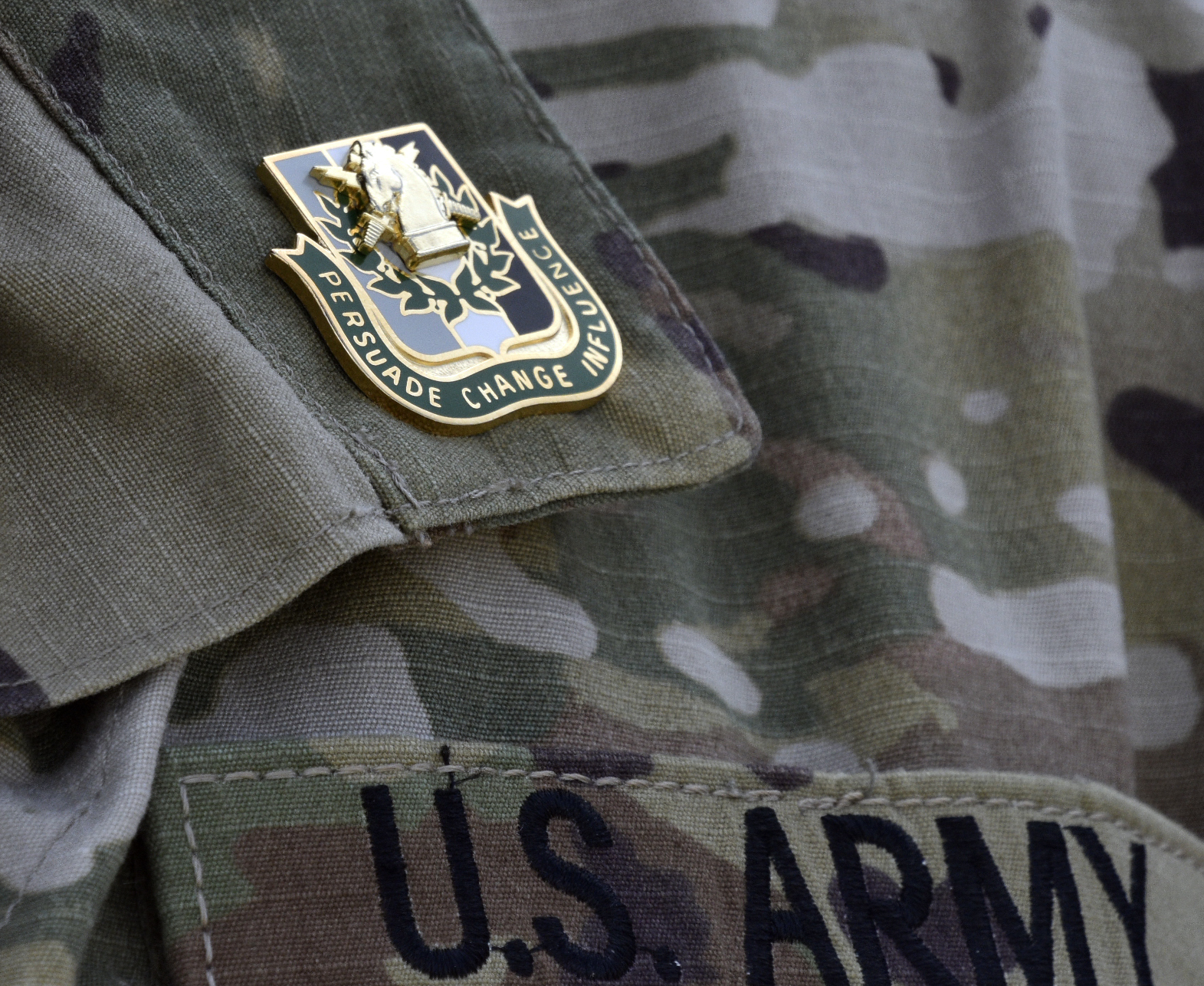
The US Army has officially inactivated the 8th Psychological Operations Group (Airborne), a unit based at Fort Bragg, North Carolina, that was nicknamed the “Phantom Knights.” According to Military Times, the ceremony took place on Sept. 29. Col. Robert Cusick, the group’s commanding officer, spoke at the event and said he “could not be prouder of the men and women that stand before us today and those that came before us to inactivate the unit.” He added that the group “introduced new concepts that will remain for years to come.” The decision is part of a broader Army effort to reshape how the service runs its psychological operations, known as PSYOP, and its wider information warfare capabilities.
What Inactivation Actually Means
The word “inactivation” is precise, and it is easy to misread. In Army usage, it means a unit is being removed from active service for an indeterminate period while it goes through some form of restructuring and reorganization. It does not automatically mean the unit has been permanently deactivated or dissolved. A unit that is inactivated can, in principle, be brought back later if the service decides it needs those capabilities again. For that reason, the 8th group’s inactivation should be understood as a decision about the current shape of the force rather than a final statement about the future of the mission.
PSYOP refers to military operations designed to influence the perceptions, attitudes and behavior of foreign audiences, usually through information such as broadcasts, printed material, and other messages. The Defense Department renamed these activities Military Information Support Operations in 2010, but Army units have continued to use the PSYOP term in many official contexts, and the source reporting uses it throughout. The core idea has not changed: these units try to shape how people in other countries understand events, and in doing so support broader military and diplomatic goals.
A Unit Built Over More Than a Decade
The 8th group was formally activated on Nov. 16, 2013, after operating provisionally for two years. Provisional operation usually means a unit is working in practice before it receives full official status, which allows the Army to test a structure and adjust it before making it permanent. Once formally activated, the group became one of four Army PSYOP groups. Its life as a permanent organization therefore lasted a little more than a decade before the Sept. 29 ceremony.
The group contained two battalions, the 3rd and 9th PSYOP Battalions (Airborne). According to the reporting, the 3rd PSYOP Battalion influences print, radio and broadcast information operations around the world. The 9th PSYOP Battalion is typically involved in activities such as dropping leaflets and building relationships with local communities in areas where Special Forces units may be operating. Together, the two battalions covered a range of methods, from mass media messaging to face-to-face engagement at the local level.
The Information Warfare Center and Special Forces Ties
The Information Warfare Center, which was organized in 2020, also operated under the 8th group. The center combines intelligence operations with information warfare, with a specific focus on supporting Army Special Forces. Special Forces are small, highly trained units that often work in regions where the United States does not maintain a large conventional military presence. In that setting, information activities can help shape local attitudes, support partner forces, and limit the influence of rival powers. Because the center sat under the 8th group, its future is a central question in any restructuring of the Army’s information capabilities.
Where the 8th Group Fit Among Army PSYOP Groups
The 8th group was one of four Army PSYOP groups. The others included the 4th Psychological Operations Group (Airborne), which is on active duty, and the 2nd and 7th Psychological Operations Groups, which belong to the Army Reserve. In plain terms, active-duty units are full-time military formations, while Reserve units are made up of soldiers who train part-time and can be mobilized when needed. Shifting capabilities between the active force and the Reserve is one way the Army can rebalance its strengths, and the Phantom Knights’ inactivation leaves the active-duty group count and Reserve group count in a changed arrangement that will need to be watched as the service makes its plans public.
Delta Company and the Africa Command Connection
The inactivation follows the Army’s activation of Delta Company, 7th Psychological Operations Battalion, two months earlier. That company had previously been assigned to the 4th Psychological Operations Group (Airborne). It is now under the 3rd Special Forces Group (Airborne), a unit focused on psychological operations primarily under the purview of US Africa Command. Africa Command is the US military command responsible for military activities across the African continent, and it is headquartered in Stuttgart, Germany. The shift suggests the Army is moving some PSYOP capabilities closer to the Special Forces units that operate in specific regions and missions.
Why the Army Is Rethinking Information Warfare
The reorganization reflects an argument that some military officials and analysts have been making for several years: the United States needs to overhaul how it approaches psychological operations and information warfare. The Delta Company activation and the retirement of the 8th group are both part of that argument, though the source reporting does not give a full public account of every reason behind each decision.
One of the clearest statements of the concern came from Maj. Ryan Walters, an active-duty Army Psychological Operations officer, who wrote in the Small Wars Journal in January. “What is most concerning is not simply that adversaries invest in information warfare, but that they can often employ it faster and more coherently than we can respond,” Walters wrote. He argued that adversaries “win by compressing the time between sensing, shaping, and exploiting,” while US forces “remain constrained by approval latency, fragmented execution, and inconsistent assessment.” In his description, this creates a “temporal mismatch in which effects arrive after decisions are already made.”
In simpler terms, Walters’ point is about speed and bureaucracy. An information campaign is only useful if it reaches audiences while events are still unfolding. If approvals take too long, if different units work in isolation, or if the military cannot measure whether its messages are working, then the campaign can arrive too late to influence outcomes. That is the problem that restructuring is meant to address, and it helps explain why the Army is shifting units, creating new companies, and reconsidering how its information teams are grouped.
Why It Matters Beyond the Army
For most readers, the inactivation of a single group may seem like an internal personnel matter. Yet information operations shape how foreign populations view the United States, its partners and its adversaries, and those perceptions can affect diplomacy, security cooperation and the risks of conflict. Analysts often note that rival governments invest heavily in messaging through state media, social platforms and online networks. If the US military is slow to respond, its messages may lose ground in contested information spaces, even when its policies are sound.
There is also a question of public accountability. Reorganizations of military units often involve significant spending decisions, changes to career paths for soldiers, and effects on communities where units are based. Fort Bragg is one of the Army’s largest installations, and changes to units stationed there can affect local economies and families. Lawmakers and the public typically look at such restructuring to judge whether it improves capability or simply moves resources around.
What to Watch Next
Several questions remain open after the ceremony. The most immediate is what happens to the functions of the 8th group, including its 3rd and 9th PSYOP Battalions, and whether those capabilities are absorbed into other units or reduced. Observers will also want to know what becomes of the Information Warfare Center, since it operated under the group and supports Special Forces. Analysts will likely watch whether Delta Company’s new placement under the 3rd Special Forces Group produces the faster, more coordinated response that Walters and others have called for.
Another point to watch is whether the Army eventually reactivates the 8th group. Because inactivation leaves that door open, the service’s future budget requests, force structure announcements and official statements will reveal whether this is a temporary pause or a lasting change. Until more details are released, the clearest picture is that the Army is redesigning its information forces around a faster and more integrated model, and the Phantom Knights’ inactivation is one visible step in that process.
Topics: 8th Psychological Operations Group, US Army, Fort Bragg, Psychological operations, Information warfare, 3rd Special Forces Group, US Africa Command, Special Forces
Sources: Military Times