
US Air Force Says It Needs 1,509 Combat-Coded Fighters by 2035
F-35s would rise to about 40% of the fleet and F-47s would replace F-22s, while drone wingmen stay outside the count
By AXY Defense Desk ·
Key points
- The Air Force says it needs 1,509 combat-coded fighters by 2035, according to a force structure report sent to Congress on Oct. 16.
- F-35s would rise to about 40% of the fleet from about 30% today, while F-22s and F-47s together would make up about 20%.
- The fiscal 2027 request seeks 38 F-35s and 24 F-15EXs, and $2.34 billion tied to a reconciliation bill would pay for 14 of the F-35s.
- The 1,509 figure excludes drone wingmen for now, and the F-16 replacement decision is not expected in the fiscal 2028 budget.
The U.S. Air Force says it needs 1,509 combat-coded fighters by 2035, a target that would change which jets fly with its frontline combat units over the next decade. The figure comes from a new force structure report the service sent to Congress on Oct. 16. Lt. Gen. David Tabor, the Air Force’s deputy chief of staff for plans and programs, described the report at an Oct. 20 roundtable with reporters at the Pentagon. Reporters did not receive a copy of the document, and the service did not respond to a request for it.
For most people, the phrase “combat-coded” needs a plain explanation. It refers to aircraft assigned to combat units, the squadrons that would fly if the United States went to war or faced a sudden crisis. Jets used for training, testing or sitting in storage do not count. So 1,509 is a statement about how many fighters the Air Force wants ready to fight, not the total number of aircraft it owns.
That distinction matters to taxpayers, to the companies that build the jets and to the airmen who would fly and maintain them. A target that size means more pilots assigned to the right units, more mechanics kept busy and more money set aside each year for new aircraft. It also sets the terms of a debate in Congress that has been running for years about how big the fighter force should be and what kind of jets should fill it.
How the 1,509 Fighter Target Was Calculated
Tabor said the number was built from what regional commanders say they need to carry out their missions. Those commanders plan for the military operations in their areas of responsibility, and they say how many aircraft they would need to carry them out. The Air Force then adds those requests together into a force-wide target.
That process depends on a choice about risk. The military rates risk on four levels: low, medium, significant and high. Tabor said the analysis was based on medium risk. At that level, forces would likely achieve their goals, but they could be strained in long operations. In plain terms, the Air Force is planning for a fleet that can do the job, but without a large cushion if a conflict drags on.
The choice of risk level shapes the size of the force. A stricter standard would call for more jets, because the fleet would have more room to absorb losses, repairs and busy schedules. A looser standard would allow fewer jets, but it would leave less room for error. Medium risk is a middle setting, and it is the one the service used to reach the 1,509 figure.
Tabor also said the analysis began before the war with Iran this year and was not driven by it. That point is useful for readers trying to judge the plan. The Air Force is presenting the target as the product of a longer planning process, not a rush to respond to one conflict. He cautioned, however, that the 1,509 figure is likely to change as world events shift, new requirements appear and new technology arrives. Put simply, the number is a planning target that can move in later reports.
Why F-35s Would Grow to About 40% of the Fleet
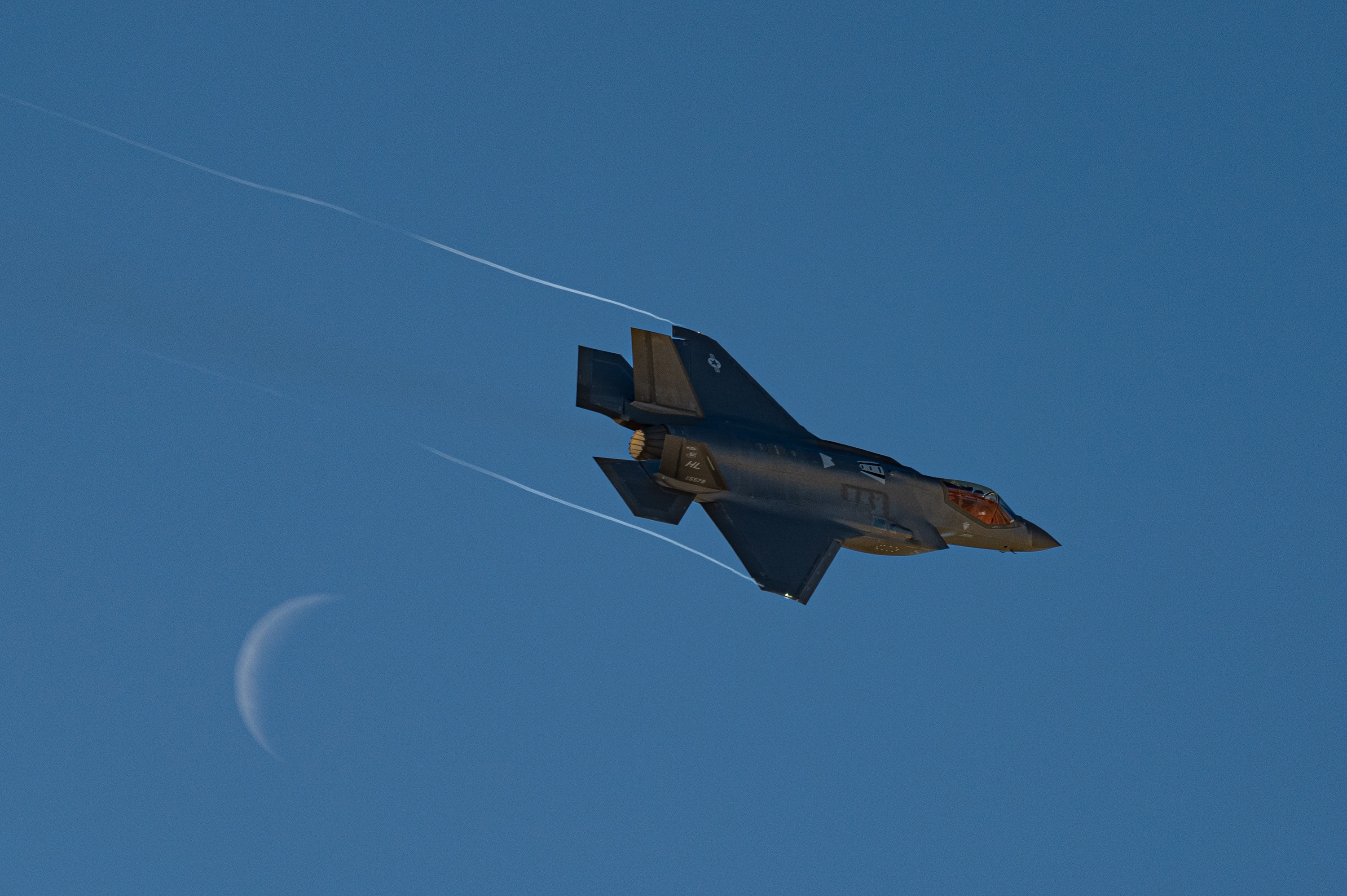
The F-35 is Lockheed Martin’s fifth-generation stealth fighter, a jet built to slip past radar and carry sensors that share information with other aircraft. It has become the centerpiece of many air forces’ plans. According to the figures Tabor cited, F-35s would make up about 40% of the Air Force’s combat-coded fighter fleet by 2035, up from about 30% today.
That shift would make the F-35 the backbone of frontline fighter units. For the squadrons that fly it, the change means more of their pilots and maintainers will train on the same type of aircraft. For the Air Force, it means a larger share of its combat power depends on one design and one prime contractor, which is a reason the service is seeking long-term contracts for the jet.
The F-35 is not the only jet in the mix. The rest of the fleet has to be counted too, and Tabor’s figures show how the remaining share would be divided.
The F-47 and F-22 Swap
The F-22 Raptor is the Air Force’s air-superiority fighter, designed to win control of the sky against enemy aircraft. Production of the F-22 ended more than a decade ago, so the Air Force has been planning for its eventual replacement for years. The F-47 is the jet meant to take that role.
Tabor said the F-22 and its replacement, the F-47, would together make up about 20% of the fleet. He also said the service plans to replace its F-22s with about the same number of F-47s. That means the F-47 is meant to take over the F-22’s place in the force rather than add a new layer on top of it. For readers, that is the key detail: the total number of air-superiority fighters is expected to hold steady, while the aircraft itself changes.
The remaining 40% of the fleet would be split about evenly between the F-15 and the F-16. The F-15 is a long-serving air-superiority and strike jet, and the F-16 is a multirole fighter that has been flown by the Air Force for decades. The figures exclude the A-10, the close-air-support jet that is not part of the Air Force’s plans for 2035. Close air support means aircraft that attack targets near friendly ground troops, so the A-10’s absence from the 2035 picture is a notable choice, even though Tabor did not say why it is left out.
Funding the 2027 Buys and the $2.34 Billion Test
Buying 1,509 fighters takes money every year, and the fiscal 2027 request is the first real test. The Air Force has long said it needs to buy 72 fighters a year. The fiscal 2027 request seeks 38 F-35s and 24 F-15EXs, a total of 62. That is below the 72 level the service has said it needs. Tabor said purchases can increase over time, which suggests the request is a step toward the larger target rather than the full amount.
The budget counts on $2.34 billion to pay for 14 of the 38 F-35s. That money would come through a reconciliation bill, a budget package that can pass the Senate with a simple majority. Most major bills need 60 votes to clear procedural hurdles in the Senate, so a reconciliation route is a faster way to move spending. Still, it depends on Congress acting on that package.
Tabor said that if the bill fails, the service could pull money from other programs or push the buys to 2028. Both options carry costs. Moving money from other programs means trade-offs that could affect other parts of the force. Delaying the purchases means the fleet grows more slowly and the 2035 target becomes harder to reach on time.
The Air Force is also seeking multiyear contracts for the F-35 and F-15EX. That request is now pending in Congress. A multiyear contract locks in purchases across several years instead of approving each year’s buys separately. Tabor said such deals would give industry more stability to expand production. For companies such as Lockheed Martin and Boeing, a longer commitment makes it easier to hire workers, order parts and plan factory schedules. The F-15EX is a newer version of the F-15 built by Boeing, and the multiyear request covers it as well.
Tabor said reaching the goal depends on two things: Congress funding the jets, and the companies building them on schedule. On the industry side, he said the manufacturers have “assured us that they can, and we believe them.” That quote was reported by Air & Space Forces Magazine, which covered the same roundtable.
Drone Wingmen Stay Outside the Count
The 1,509 figure does not count Collaborative Combat Aircraft, or CCAs. These are drones designed to fly alongside crewed fighters, extending what a pilot can see, carry and do in the air. The Air Force plans to field 500 CCAs by 2032.
Tabor said the drones are not yet changing the fighter requirement. He also said they could reduce it in future reports. That is a significant point for readers following the plan. If unmanned wingmen prove they can handle some missions that crewed jets now fly, the Air Force could eventually need fewer crewed fighters. For now, though, the drones sit outside the count and the planning math behind it.
That creates an open question the service has not settled. The fighter target assumes crewed jets do the work for now. If the drones arrive on schedule and perform well, future reports could look very different from the one sent to Congress on Oct. 16.
Whether the F-16 Decision Can Wait
The F-16 raises a separate question. Tabor said older F-16s reach the end of their service lives in the mid-2030s. The service has not yet decided whether to buy a new-build F-16, which is tentatively called the F-16G. Tabor said that decision likely will not come in the fiscal 2028 budget.
That timing leaves a gap to manage. If the Air Force chooses to buy new F-16s, it would need to fund and schedule them before the older jets retire. If it does not, the F-15 and F-35 fleets would have to carry more of the load. Either way, the choice will show whether the fleet target can hold once the mid-2030s arrive.
The next test is the fiscal 2027 budget. Its $2.34 billion reconciliation dependency and the pending multiyear contracts will show whether Congress is willing to fund the buys the plan depends on. If the money comes through, the service has a clearer path toward its target. If it slips, the Air Force has said it could move purchases to 2028, and the 2035 goal would become harder to reach on schedule. Readers should watch those decisions in Congress, along with any new version of the force structure report, to see whether the 1,509 figure holds.
Questions and answers
How many fighters does the US Air Force say it needs by 2035?
The Air Force says it needs 1,509 combat-coded fighters by 2035, meaning jets assigned to combat units. The figure comes from a force structure report sent to Congress on Oct. 16 and described by Lt. Gen. David Tabor.
Why are F-47s replacing F-22s?
Lt. Gen. David Tabor said the Air Force plans to replace its F-22s with about the same number of F-47s. Together the two would make up about 20% of the fleet by 2035.
Does the 1,509 figure include drone wingmen?
No. The figure does not count Collaborative Combat Aircraft, the drones that will fly alongside crewed fighters. The Air Force plans to field 500 CCAs by 2032, and Tabor said they could reduce the fighter requirement in future reports.
What could delay the Air Force fighter plan?
The plan depends on Congress funding the jets and on Lockheed Martin and Boeing building them on time. The $2.34 billion for 14 F-35s relies on a reconciliation bill, and if it fails the service could push those buys to 2028.
Topics: US Air Force, F-35, F-47, F-22, Lt. Gen. David Tabor, Collaborative Combat Aircraft, Lockheed Martin, Congress
Sources: Defense News
https://axynewsglobal.com/article/us-air-force-says-it-needs-1-509-combat-coded-fighters-by-2035