
UK Royal Navy Faces Serious Anti-Submarine Warfare Gap, Committee Finds
Only five Type 23 frigates are available for submarine hunting against a stated need of eight, a parliamentary committee warns
By AXY Defense Desk ·
Key points
- A parliamentary Defence Committee says the Royal Navy has only five Type 23 frigates for anti-submarine warfare, against a stated requirement of eight.
- The committee says the shortfall weakens Britain's response to Russian submarines and underwater sabotage, including protection of nuclear-armed submarines at Faslane.
- Only five frigates with towed array sonar could remain in service for the next three years, according to the committee's analysis.
- Norway's order for five Type 26 frigates could delay the Royal Navy's own requirement until 2037 if two British-built ships are diverted.
- The committee wants the government to brief members on under-ice capability and prepare a classified assessment of High North gaps for 2030.
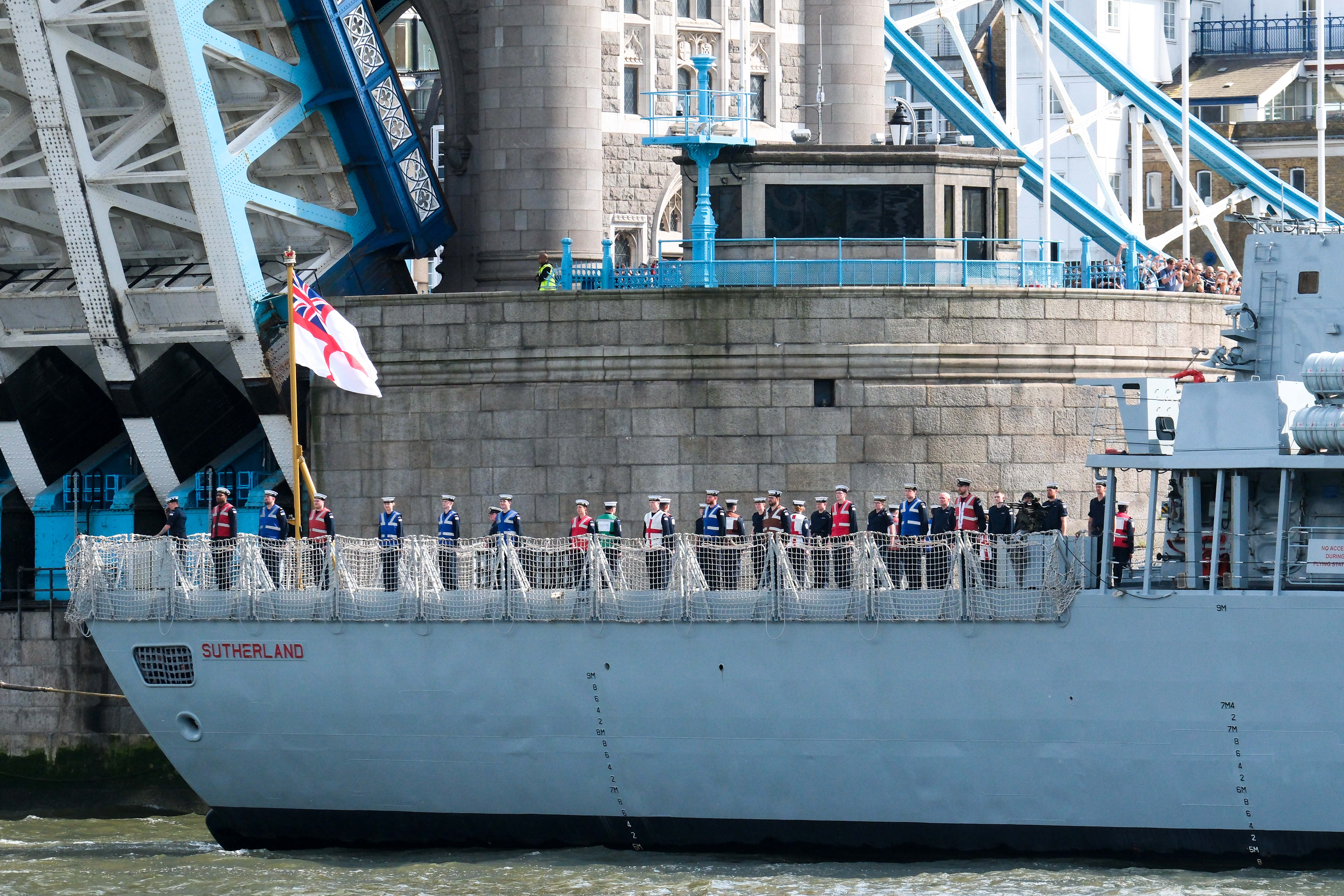
A parliamentary committee has found that the Royal Navy has a "serious anti-submarine warfare gap" that weakens Britain's ability to respond to Russian submarines and underwater sabotage. The Defence Committee said in an inquiry report published on Thursday that the navy has only five Type 23 frigates for anti-submarine warfare in service, against a stated requirement of eight. The committee's analysis suggests the number of frigates fitted with towed array sonar could stay as low as five for the next three years.
The finding matters well beyond naval planners. The report links the shortfall to the safety of Britain's nuclear deterrent, which is carried by ballistic missile submarines based at Faslane in Scotland. Those submarines have to be protected when they enter and leave port, and the committee said anti-submarine frigates are "critical" to locating Russian submarines both in the High North and in British home waters.
Only Five Frigates for Submarine Hunting
Anti-submarine warfare, or ASW, is the work of finding, tracking and if needed stopping enemy submarines. It is one of the least visible jobs a navy does, but it is among the most demanding. The ships used for it carry sonar, which listens for the faint sound of a submarine moving through water. A towed array sonar is a long cable of listening sensors dragged behind a ship. It can pick up quiet targets that a hull-mounted sonar might miss, and it is the main reason ASW frigates are valued.
The Type 23 frigates are the Royal Navy's current workhorses for this job. The committee says there are only five in service for ASW, and that the navy's requirement is eight. The report also says the Royal Navy's wider requirement is for 13 frigates and six destroyers. The fleet has five Type 23 frigates and six Type 45 destroyers in service, so the figures are well short of what the government has said the navy needs.
The committee did not hide its frustration with the condition of the ships that do exist. In its words, the navy's ASW frigates and nuclear-powered submarines offer the greatest deterrent against Russian submarines and underwater sabotage, but "unfortunately, they are either aging or too often unavailable due to maintenance issues." A ship that is in dock for repairs cannot hunt submarines, so availability matters as much as the headcount.
The Type 26 Delivery Squeeze and Norway's Order
The long-term answer is the Type 26 frigate, which the UK has ordered in eight units from BAE Systems for the anti-submarine role. The lead vessel is scheduled to enter service in 2028. Minister of State for Defence Luke Pollard said in June that the programme remained on track, according to the report.
The committee is worried about a conflict between two goals. Norway said in August 2025 that it would buy five Type 26 frigates, with deliveries to begin in 2030. The UK's own Type 26 programme and Norway's order draw on the same shipyard capacity, skilled workers and supply chains. If two of the frigates being built for Britain were sent to Norway to meet Norway's delivery deadline, the report says the Royal Navy would not reach its requirement of eight frigates with towed array sonar until 2037.
The committee's answer was blunt. "Export success must not come at the expense of the Royal Navy's own Type 26 frigate delivery timelines," it said. It went further, arguing that the government "must ensure that naval exports expand industrial capacity and allied capability, rather than competing with U.K. requirements for scarce ships, systems and skilled labor." For ordinary readers, the point is simple. Selling warships abroad can help allies and bring money into industry, but if it delays the navy's own ships, Britain can end up with fewer submarine hunters for longer.
The committee recommended that no further Type 23 frigates fitted with towed sonar leave Navy service until they are replaced, one for one, by Type 26 frigates. That would keep the existing ASW capability in place until new ships can take over. It is a direct response to the risk that old ships are retired before their replacements are ready.
Arctic Ice, Russian Bases and the Northern Sea Route
The committee's concern is rooted in geography. It defined the High North as the greater Arctic and parts of the North Atlantic, and said the region "has become central" to British defence and security concerns. Climate change is making the area easier to reach. As melting ice sheets and sea ice expose Russian bases that were once mostly inaccessible, the committee said Russia is trying both to defend those bases and to project force into the Atlantic and British territorial waters.
That puts several things at risk. The report names NATO supply lines running from the United States to Europe, undersea and onshore infrastructure, and the UK's nuclear deterrent. Supply lines across the Atlantic are the arteries that would carry troops and equipment in a crisis, so the threat is not limited to the Arctic itself.
The committee also looked at shipping. With the Northern Sea Route becoming more accessible, it said Russia may try to turn control of that route into a monopoly. It asked the government to prepare options for a UK state-owned vessel to transit the route, to support freedom of navigation. The report gave one example of why the route matters. Sailing from Shanghai to Rotterdam takes about 14,900 kilometres by the northern route, compared with 19,500 km through the Suez Canal. A shorter route is valuable to shippers, and whoever controls it has leverage over traffic that uses it.
Under-Ice Gaps and the Hybrid Navy Question
The report's most pointed warning concerns the ability to operate under the ice. The committee said that a lack of a credible under-ice capability means the navy is less able to contest Russian freedom of action in the High North. Without that ability, the committee warned, Britain risks being pushed into a more defensive posture. In plain terms, Russia could move more freely in the area, and Britain would have to react rather than set the terms.
The Defence Committee asked the government to brief members on progress towards restoring an under-ice capability for at least some of the Astute-class nuclear-powered attack submarines. The request shows how seriously the committee takes the gap. It also asked the Ministry of Defence for a classified assessment of the capability gaps in a High North conflict in 2030 in which the UK and its allies would operate without US support.
The committee called the readiness of the Royal Navy's equipment and platform numbers "far worse than the government's stated requirements." It said "dramatic progress is required before the end of the decade" to improve the availability and capabilities of the UK's Armed Forces for High North operations. The committee also said that for the UK to lead an effective coalition, it would need to address "glaring gaps" in the availability of its maritime forces, and agree a plan with European allies to deter, and if necessary defeat, any aggression in the High North from 2030.
The report also raised questions about the Hybrid Navy programme, which is intended to combine crewed and uncrewed vessels. The source material cuts off before it sets out the committee's full argument on that point, so the details of its concerns are not clear from the report as published here. What is clear is that the committee sees the High North as a demanding environment for any new mix of ships, and that the timetable for filling the current gaps is short.
What Comes Next for the Navy
The immediate tests are the ones the committee has set. The government has been asked to brief members on under-ice progress, to produce or share the classified assessment, and to show how Type 26 deliveries will be protected from export demand. Each of those steps will show whether the government accepts the committee's warning about 2030.
The core choice is between keeping old frigates in service longer and speeding up new ones. Keeping a Type 23 with towed sonar in service is one way to protect the ASW numbers, but the committee also says those ships are aging and too often unavailable. Pushing Type 26 deliveries faster is the other route, but that depends on shipyard capacity and skilled labour, which the committee says are scarce. This could mean that the next few years are tight for the Royal Navy, even if the programme stays on schedule.
For Britain, the stakes are concrete. The navy's submarine hunters protect the boats that carry the nuclear deterrent, guard the Atlantic routes that NATO relies on, and help Britain keep its options open in a region where Russian activity is growing. The committee's message is that the gap is not a future problem. It is already here, and the window to close it is the rest of this decade.
Questions and answers
How many anti-submarine frigates does the Royal Navy have?
The Defence Committee says the Royal Navy has five Type 23 frigates in service for anti-submarine warfare, against a stated requirement of eight. The committee says the number of frigates fitted with towed array sonar could stay as low as five for the next three years.
Why does the Royal Navy's anti-submarine gap matter?
Anti-submarine frigates help locate Russian submarines in the High North and in British home waters. The committee says they also protect the UK's ballistic missile submarines when they enter or leave their base at Faslane in Scotland, which carry the country's nuclear deterrent.
When will the Royal Navy get Type 26 frigates?
The UK has ordered eight Type 26 frigates from BAE Systems for the anti-submarine role, with the lead vessel scheduled to enter service in 2028. The committee warns that if two British ships are sent to Norway, the Royal Navy would not reach its eight-frigate requirement until 2037.
Topics: Royal Navy, Anti-submarine warfare, Type 26 frigate, Type 23 frigate, High North, Russia submarine threat, UK Defence Committee, Norway
Sources: Defense News