
Starshield Limit for Ukraine Came From Inside White House, Sources Say
Ukrainian officials say the restriction disrupted strike missions and interceptor drones, while the White House, Pentagon and SpaceX did not answer questions about who approved it
By AXY Defense Desk ·
Key points
- Two U.S. officials and a Western official say an order to limit SpaceX's Starshield service for Ukraine's military came from inside the White House.
- Ukrainian drones using the system had guidance problems when moving quickly, and the receivers now work only at speeds up to 100 mph (160 kph), according to a Ukrainian Defence Ministry official.
- The restriction came as Trump pressed Kyiv to stop attacks on Russian refineries, which he has blamed for rising energy prices ahead of the November midterms.
- The White House and the Pentagon did not say who made the decision, and a senior U.S. official said the president never made such a request.
Two U.S. officials and a Western official briefed on the matter say the order to limit Starshield, a satellite communications service used by Ukraine's military, came from inside the White House. According to the officials, leaders at the Defense Department received a message that the service for the Ukrainian military needed to be slowed. The officials spoke on condition of anonymity and did not say who in the White House made the decision or who was responsible for carrying it out.
The reporting is the most specific account so far of who may have been behind a restriction that Ukrainian officials say has affected battlefield operations. The White House did not respond to questions about whether other administration officials might have made the request, and the Pentagon, SpaceX and the Ukrainian embassy in Washington also did not respond to requests for comment.
What Starshield is and why Ukraine relies on it
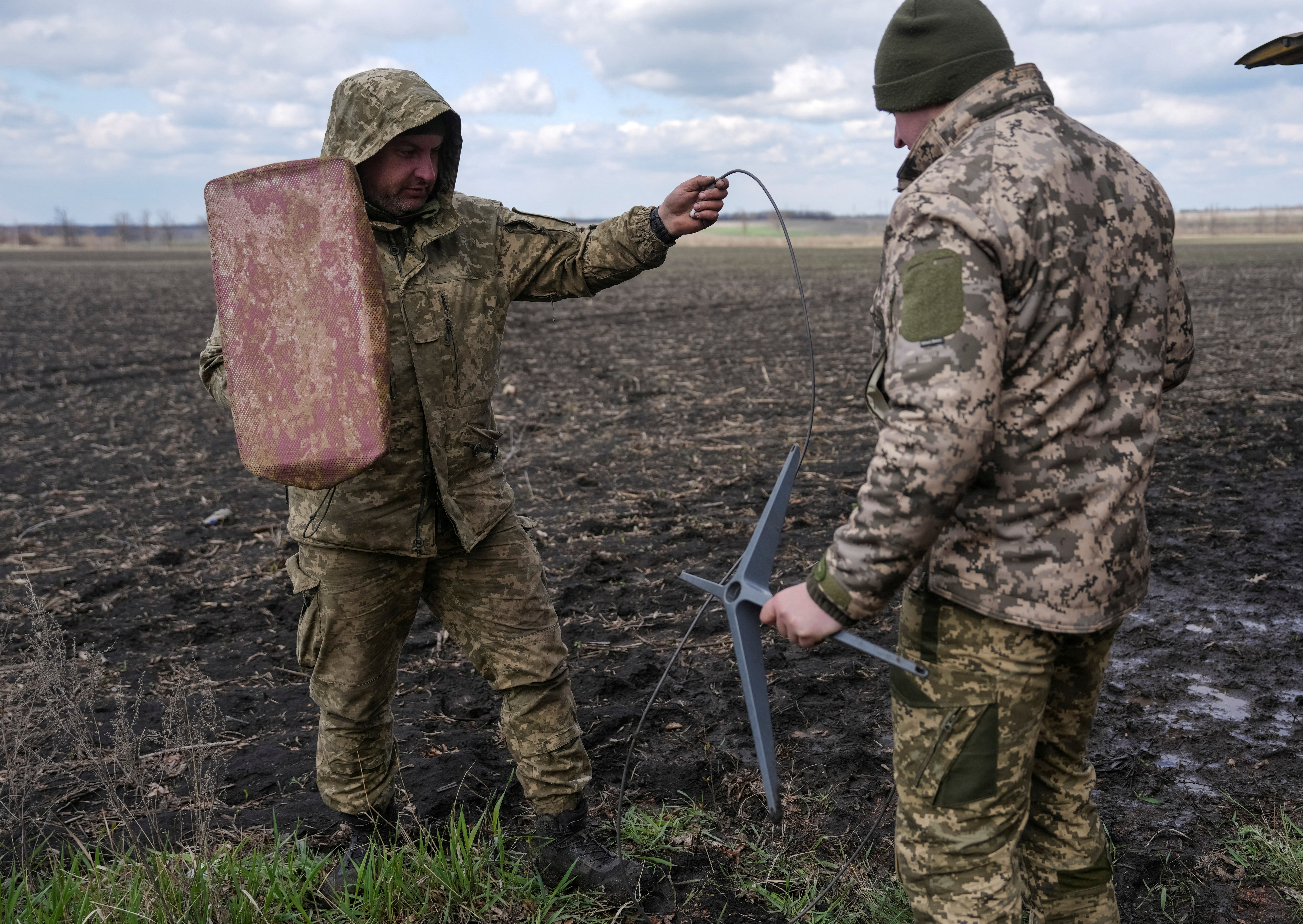
Starlink is the satellite internet network operated by SpaceX, made up of a large constellation of satellites in low Earth orbit. Low orbit allows signals to travel a shorter distance than from traditional geostationary satellites, which can mean faster connections and lower delay. Its terminals, the dish-like receivers that connect users to the network, have become a lifeline in conflicts where ground communications have been damaged or jammed.
Starshield is the military-grade version of that service. According to the source reporting, it was developed by SpaceX specifically for government and national-security customers, particularly the U.S. Department of Defense, and it uses the Starlink constellation as its backbone. The Pentagon is the largest customer of Starshield. Reuters reported in 2024 that the Pentagon had spent billions of dollars on Starlink and Starshield services and had also bought dedicated Starshield satellites, including communications spacecraft for missile-warning missions and a spy constellation for the National Reconnaissance Office, the agency that runs the country's spy satellites.
For Ukraine, the system has supported communications for front-line units. The reporting says Ukraine uses it for battlefield communications and for drone operations, which is where the current dispute has its most immediate effects.
How the restriction affected drones and strike missions
Ukrainian officials said this week that military-grade Starlink receivers stopped working when mounted on fast-moving objects. The problem affected Ukrainian drones that depend on these receivers for onboard guidance over Ukrainian territory. Losing reliable satellite positioning and data links in flight can cause a drone to drift off course, lose contact with its operator or fail to reach its target.
A person in Ukraine's Defence Ministry said on Thursday that the receivers were working again when in motion, but only at speeds of up to 100 miles per hour, or 160 kilometres per hour. That limit matters for drones that need to move quickly, including those used to intercept incoming aircraft. Ukrainian officials said the restrictions complicated strike missions against Russian forces and logistics in occupied territory. They also said the restrictions slowed interceptor drones used to shoot down incoming Russian Shahed drones. Shaheds are one-way attack drones of Iranian design that Russia has launched in large numbers against Ukrainian cities and infrastructure, and interceptor drones are a cheaper way to bring them down than traditional missiles.
It is not clear from the reporting how long the restriction was in place or whether the limit has been fully lifted. The source material says only that the receivers were operating again at lower speeds, which suggests the restriction was narrowed rather than entirely removed.
Pressure over Russian refinery attacks
The order came as relations between Kyiv and Washington have worsened. President Donald Trump has pressed Ukraine to stop attacks on Russian oil refineries. Trump has blamed those strikes for rising energy prices, which he argues are hurting the Republican Party's prospects in the November midterm elections, when voters choose members of Congress.
Experts cited in the reporting disagree with that explanation. They say the surge in energy costs is mainly the result of the U.S.-Israeli war with Iran, which brought Iranian attacks on energy facilities and has largely shut the Strait of Hormuz. The strait is a narrow waterway between Iran and Oman through which a large share of the world's seaborne oil passes, so disruptions there tend to push up global fuel prices quickly.
Analysts following the dispute say that the pressure on Ukraine is part of a broader effort to influence the war's course and the political climate at home. This is analysis rather than established fact: if Washington sees Ukraine's refinery strikes as a factor in fuel prices, it may judge that limiting a key Ukrainian capability is a way to change Kyiv's behaviour. Whether that is the intent behind the Starshield order has not been established.
Meeting in Miami and the diesel deal
The current tension traces back to a meeting in Miami on October 9 that brought together representatives from Ukraine and the United States, as well as Europe and the World Bank. According to a separate person familiar with the matter, Trump's son-in-law Jared Kushner and Steve Witkoff, the Trump administration's Middle East envoy, took a tough tone with Ukrainian officials. They told Kyiv that Washington was frustrated that Ukraine continued to strike Russian refineries despite repeated requests to stop.
The U.S. delegation also explained Washington's decision to strike a diesel deal with Russia. According to the reporting, the White House hoped the arrangement would soften Moscow's position on peace talks. Under that deal, Russia will supply more than 2.25 million barrels of diesel to U.S. and global markets. Some U.S. lawmakers have criticised the agreement, arguing that it will give Moscow money to continue its war without requiring Russian President Vladimir Putin to make concessions to end the conflict.
In the days that followed, Ukrainian President Volodymyr Zelenskiy and Trump publicly criticised each other. Zelenskiy called the U.S. decision on the Russian diesel deal weak. Trump called for elections in Ukraine and for Zelenskiy's removal. Behind the scenes, American officials threatened to stop providing Kyiv with intelligence about Russian missile launches, which Ukraine uses to defend against attacks. Reuters had previously reported that threat. Trump said on Tuesday that Washington was still sharing intelligence with Ukraine.
Confusion in Kyiv and open questions
After the Starshield restriction, Ukrainian officials made calls on Tuesday and Wednesday to senior officials at the White House, State Department and Pentagon seeking explanations. A senior Ukrainian official said Kyiv was told the decision had been made by the White House.
In response to a request for comment about the order, a senior U.S. official said: "No such request was ever made by the president." That statement addresses only Trump personally and does not say whether anyone else in the administration asked for the restriction.
Elon Musk, the chief executive of SpaceX, said on X on Wednesday that because Starshield systems are owned and controlled by the U.S. government, any limits on speed or usage are decided by the U.S. military or the president. His comment places the decision with the government rather than with the company, but it does not identify an individual or agency that issued the specific order.
What to watch next
Several questions remain open. The first is who in the White House, if anyone, gave the instruction, and whether it was passed through the Defense Department as a formal directive. The second is whether the speed limit will be lifted or whether restrictions on Ukrainian use will be tightened. The third is how the dispute affects intelligence sharing, which Ukraine depends on to detect and intercept Russian missile launches.
Analysts would be watching for a response from the Pentagon, which has not yet commented, and for any statement from SpaceX beyond Musk's post. For Ukrainian forces, the practical question is whether drone operators can rely on the system during fast flights and interceptor missions. For Washington, the question is whether pressure on Kyiv over refinery strikes will bring the outcome it seeks, or whether it will deepen a rift over a war that remains central to the country's relations with Russia and Europe.
Topics: Starshield, SpaceX, Ukraine, White House, Pentagon, Donald Trump, Starlink, Russian refineries
Sources: Military Times