
Shield AI's Hivemind Cuts Honeywell Autonomous Flight Work to Six Weeks
Honeywell's autonomy team completed a second flight test on Oct. 8, in which one aircraft found a target and another delivered a payload
By AXY Defense Desk ·
Key points
- Shield AI said its Hivemind software helped Honeywell Aerospace achieve autonomous flight after six weeks of training, compared with an estimated 54 weeks.
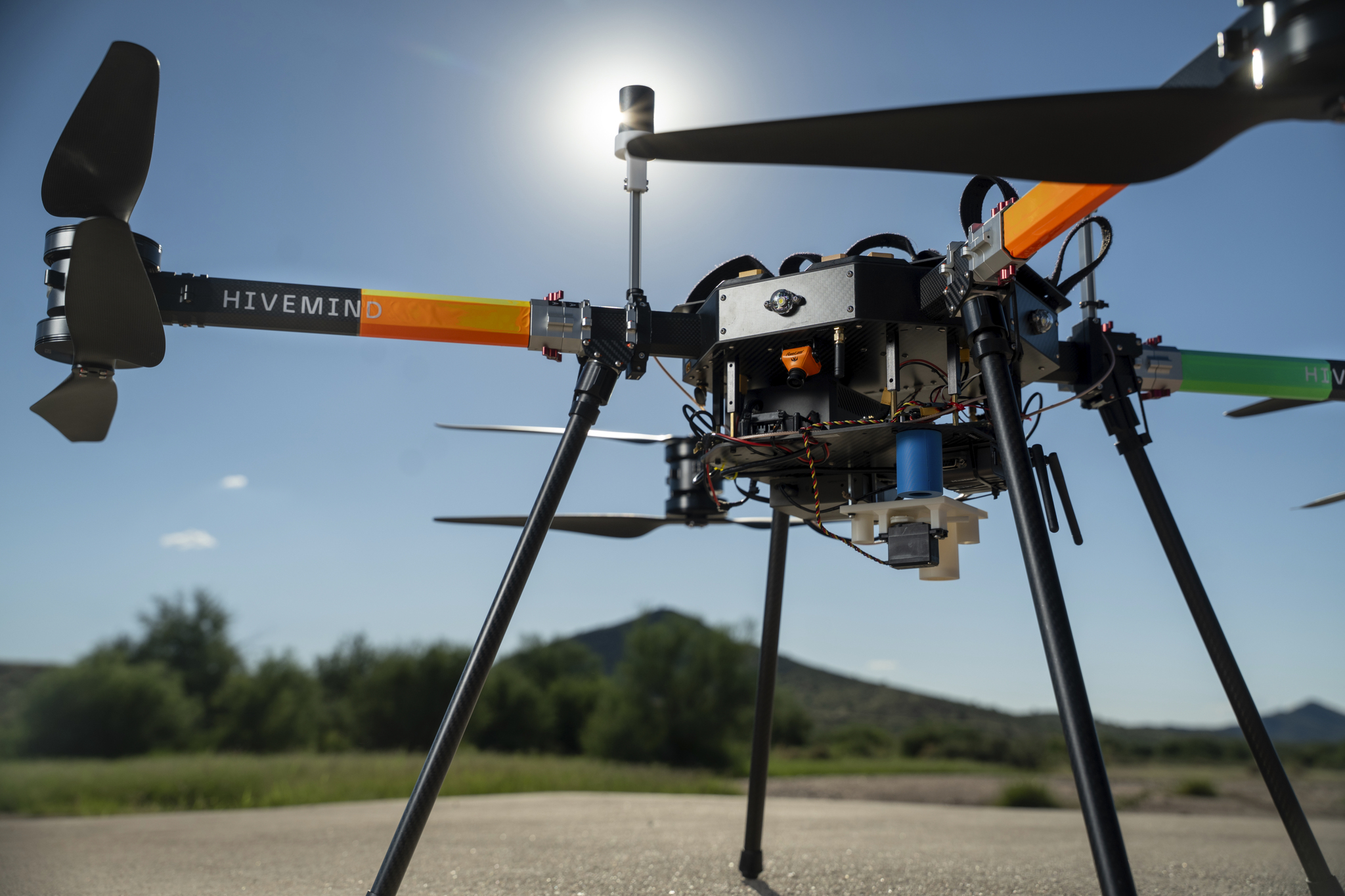
- Honeywell’s team flew a BFD-SE8 multirotor autonomously after a July 8 demonstration in Plymouth, Minnesota, and held a second test on Oct. 8.
- The October test showed one aircraft detecting and tracking a target and passing the information to another aircraft that delivered a payload.
- The 54-week baseline is an estimate from the companies, and the source does not provide independent verification.
- Analysts will watch for repeatability, formal contracts and independent validation before judging the broader impact.
Shield AI, a California-based defense company, said its Hivemind software helped Honeywell Aerospace achieve autonomous flight after six weeks of training, down from an estimated 54 weeks, ahead of two flight demonstrations. The claim appeared in a joint statement released on Monday, which described how Honeywell’s autonomy team used Shield AI’s software to get a multirotor aircraft flying on its own.
Autonomous flight means an aircraft carries out parts of a mission using onboard software rather than a pilot or remote operator directing every movement. Tasks can include taking off, following a planned route, avoiding restricted airspace, and returning to base. Defense forces have pursued these capabilities for years because uncrewed or partly uncrewed aircraft can reduce risk to people and can be useful in places where communications are weak or contested.
The hard part has often been integration. An autonomy system must work reliably with the specific aircraft, sensors, flight controls and mission equipment it is installed on, and each new combination has traditionally required extensive testing before it can be trusted. That time and cost is one reason new military systems can take many months or years to move from prototype to field use. The companies’ announcement is therefore less about a single flight than about whether that process can be shortened.
What the companies say happened
According to the statement, Honeywell’s autonomy team began training on Hivemind in late April. By mid-June, the team had flown a BFD-SE8 multirotor aircraft autonomously for the first time using a newly developed autonomy stack, a term for the layered set of software that controls navigation, decision-making and aircraft behavior.
The official demonstration took place on July 8 in Plymouth, Minnesota. The companies said the aircraft took off on its own, followed a planned route, re-routed around a no-fly zone, and returned to base. A no-fly zone is an area where aircraft are not permitted to enter, so the ability to change course around one is a basic test of mission planning and safe navigation.
Afterward, the companies said, the team immediately turned to a second demonstration. Over the following three months, they trained and deployed their own target detection and tracking model, which is software that identifies objects in sensor data and follows them over time.
The October demonstration
On Oct. 8, Honeywell hosted the second demonstration. In that test, a scout aircraft used the AI model to detect, identify and track a target. It then passed the information to another aircraft, which navigated autonomously to the target, delivered a payload, and returned to base together with the scout. A payload is the equipment or cargo an aircraft carries for a mission, and the handoff between two aircraft is significant because it shows coordination rather than a single vehicle operating alone.
The sequence matters because it combines several functions that defense planners often want to work together: sensing, identifying a target, sharing data between platforms, and then acting on that information. The statement presents the demonstration as evidence that a partner’s own detection software can be added to the Hivemind framework without rebuilding the core flight system.
Why the partnership model is the central claim
The two companies announced their collaboration in July, alongside a memorandum of understanding. A memorandum of understanding is generally a written statement of shared intent that is not, by itself, a binding contract. The stated goal was to help “defense operators move from demonstration to deployment faster… without having to rebuild confidence in each new system every time.”
Shield AI described Hivemind as providing “core capabilities such as route planning, mission management, and communication between aircraft.” In the company’s account, partners such as Honeywell can then integrate “their own AI models, sensors, and mission capabilities” and move them “from simulation to flight.” Tom Schaefer, vice president of Hivemind Enterprise at Shield AI, said the arrangement let Honeywell engineers focus on their own detection and tracking model. “Hivemind Enterprise handled the autonomy basics, so [Honeywell engineers] could spend its time on its own detection and tracking model,” he said. “We built Hivemind so partners can work this way.”
This describes a platform model: a common autonomy base that other companies build on, similar to how software developers use shared frameworks. The benefit, if it holds up, is that a supplier does not have to start from zero each time it wants to add a new capability to an aircraft.
Honeywell’s view and the role of open architectures
Todd Giles, senior vice president of engineering and chief technology officer at Honeywell Aerospace, credited “open architectures” for the pace of progress. Open architectures are system designs that use public standards for software and hardware interfaces, so that components from different suppliers can be connected more easily. Giles said the approach was “changing the pace of innovation in aerospace” and credited his team’s accomplishment to it.
Giles also said: “By combining our expertise in avionics, navigation, sensing, and autonomy, we are helping create a scalable foundation for the next generation of autonomous aircraft and mission systems.” Avionics refers to the electronic systems used in aircraft, including communications and flight control, and the phrase signals that Honeywell sees itself as a core supplier in future autonomous platforms.
Why the six-week figure matters for defense buyers
The headline comparison, six weeks versus an estimated 54 weeks, is the most attention-grabbing part of the announcement, but it is also the part that requires the most care. The source describes the 54-week figure as an estimate, and the statement does not explain in the source material how that baseline was calculated or whether an independent party reviewed it. Readers should treat the comparison as the companies’ own assessment.
Still, the underlying question is important for defense procurement. Military buyers typically care about how long it takes to field a capability, how much it costs to adapt it to new hardware, and how confident they can be in its safety and performance. If a common autonomy base can cut integration time significantly, it could allow forces to test more concepts, replace or upgrade equipment more often, and respond faster to new threats. Analysts who follow defense technology often point to this kind of speed as a competitive advantage, although the actual benefit depends on repeated results across different aircraft and missions.
The source material does not disclose contract values, production volumes, or any military customer commitments tied to this work. Those details would be needed to judge how the demonstration translates into procurement.
What to watch next
The next questions concern repeatability and independent validation. Two demonstrations are a meaningful milestone, but they are still limited test events. Observers will look for whether the same approach works on other aircraft, in more complex airspace, and under conditions that differ from controlled demonstrations.
Another question is whether Honeywell and Shield AI move from demonstration to formal programs. The July memorandum of understanding signals intent, but the next stage would normally involve contracts, funding decisions, and testing requirements set by government customers. Analysts expect that any broader adoption will depend on how well the companies show safety, reliability and interoperability with other systems, since defense users must be able to trust autonomous aircraft that operate near people, other aircraft, or sensitive areas.
For now, the announcement offers a clear picture of what the companies say they achieved: a multirotor aircraft flown autonomously in July, a route that avoided a no-fly zone, and a October test in which one aircraft found a target and another delivered a payload. Whether that pace becomes a durable advantage will depend on what comes after the headline numbers.
Questions and answers
How long did Honeywell’s autonomous flight development take with Shield AI’s Hivemind software?
According to a joint statement from the companies, Honeywell achieved autonomous flight after six weeks of training with Hivemind, down from an estimated 54 weeks. The 54-week figure is an estimate given by the companies.
What did the Honeywell and Shield AI flight demonstrations show?
On July 8 in Plymouth, Minnesota, an aircraft took off on its own, followed a planned route, re-routed around a no-fly zone and returned to base. On Oct. 8, a scout aircraft detected and tracked a target and passed the information to another aircraft, which navigated autonomously to the target, delivered a payload and returned.
What is Hivemind software used for?
Shield AI describes Hivemind as providing core capabilities such as route planning, mission management and communication between aircraft. Partners such as Honeywell can add their own AI models, sensors and mission capabilities to it.
What comes next for Honeywell and Shield AI?
The companies announced a memorandum of understanding in July with the goal of moving defense operators from demonstration to deployment faster. The source does not describe contracts or production plans, so further steps remain to be seen.
Topics: Shield AI, Hivemind, Honeywell Aerospace, Autonomous flight, Military drones, Defense technology, Plymouth Minnesota
Sources: Defense News