
Saudi Arabia Sends Kingdom Centre Workers Home Amid Houthi Attacks
Coalition intercepts drones and ballistic missiles as Egypt moves toward possible military support for Riyadh
By AXY Defense Desk ·
Key points
- Management at Riyadh's Kingdom Centre ordered all office staff to work remotely until further notice on Sunday, according to AFP.
- The Saudi-led coalition said it intercepted two drones in Riyadh, a third over the Eastern Province and two ballistic missiles in southern Saudi Arabia overnight.
- An October 10 attack on King Khalid International Airport killed 13 people and wounded more than 300, according to the source material.
- Egypt's president requested an emergency parliamentary session to authorise possible defensive military support for Saudi Arabia.
- Schools in Riyadh have extended remote learning as security threats continue.
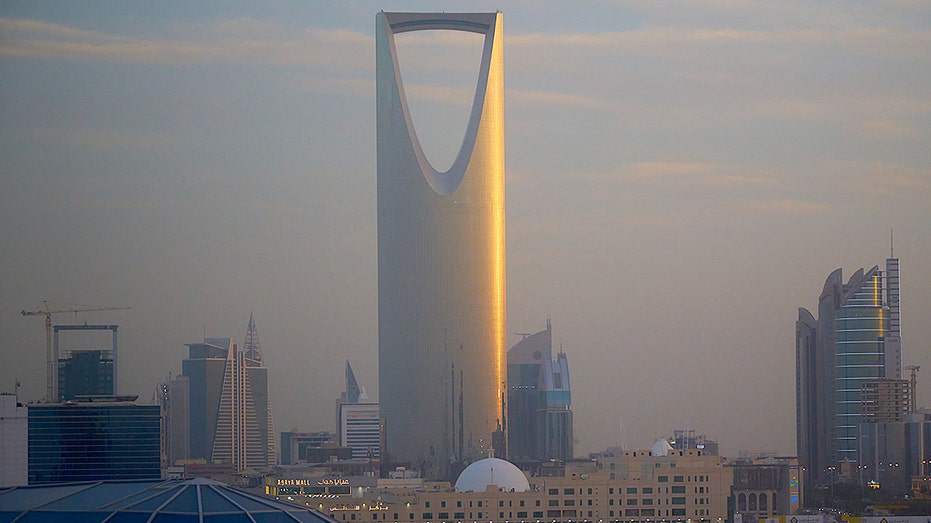
Management at Riyadh's Kingdom Centre, one of Saudi Arabia's most recognisable skyscrapers, ordered office employees to work remotely until further notice on Sunday, as escalating attacks by Iran-backed Houthi rebels unsettled the Saudi capital and raised fears of a wider Middle East conflict. According to reporting by Agence France-Presse (AFP), the building's management said in an email that remote working was mandatory for all office staff, effective immediately, and that employees should not return to their offices. The shopping mall at the base of the tower stayed open to the public. Management did not give a reason for the decision, but it came as repeated missile and drone attacks by Yemen's Houthis disrupted Riyadh.
The remote-working order at a Riyadh landmark
The 99-story Kingdom Centre is one of the most prominent buildings on Riyadh's skyline. Its tenants include major international financial institutions such as Merrill Lynch, the consulting firm McKinsey & Company and the International Monetary Fund. A directive affecting an office tower of that profile signals how seriously the building's operators are treating the security situation, even though the company has not publicly explained its reasoning. For employees, the order means working from home or elsewhere outside the building with no set date for a return, and it is likely to affect the daily routines of thousands of workers in the city's central business district.
It is worth explaining why a private office directive matters beyond the building itself. Large towers housing financial firms and international organisations are often among the first places where companies make security decisions, because they have staff, visitors and valuable operations concentrated in one location. When a building of this kind moves to remote work, it signals that private-sector planners are weighing risks that go beyond a single incident. Analysts who follow Gulf security typically watch such moves as indicators of how businesses judge the threat over days or weeks, not just hours.
Drones and missiles intercepted across the kingdom
The directive came after the Saudi-led coalition said it had intercepted two drones in the Riyadh area, a third over the Eastern Province and two ballistic missiles in southern Saudi Arabia overnight. Authorities had earlier issued a threat alert in the capital, which was also shared on X, the platform formerly known as Twitter. The combination of attacks in three separate regions, from the capital to the oil-producing Eastern Province to the south near Yemen, suggests a campaign spread across a wide area rather than a single targeted strike.
A ballistic missile is a weapon that travels along a high, arcing path before descending on its target, and it is generally harder to intercept than a slow cruise missile or small drone. Interceptions therefore reduce damage but do not eliminate the risk, and debris from intercepted weapons can still fall on populated areas. This is one reason that civil authorities often issue shelter or threat alerts even when the attacks are stopped in the air.
How the Houthi conflict reached Saudi cities
To understand why Saudi Arabia is facing these attacks, it helps to know the background of the Yemen war. Yemen has been in a civil war since 2014, when the Houthis, a armed movement drawn from the Zaydi Shia community in the north, seized the capital, Sanaa, and pushed the internationally recognised government into exile. The Houthis still control Sanaa and much of the country's north, according to the source material. In March 2015, a Saudi-led military coalition launched an intervention to support Yemen's government, and the conflict has since been one of the most significant in the region.
The Houthis have repeatedly struck targets inside Saudi Arabia during the war, with the most damaging attack widely recorded as the 2019 strike on the Abqaiq and Khurais oil facilities, which temporarily cut a large share of Saudi oil output. A UN-brokered truce in 2022 reduced large-scale fighting for a period, but tensions never fully ended. The current escalation has taken place against a broader backdrop of the U.S.-Israeli conflict with Iran, which the source material describes as intensifying fighting in Yemen. Iran's support for the Houthis has been widely documented, though the precise extent of the group's decision-making is debated among analysts.
The airport attack and the wider toll
The security concerns in Riyadh follow a deadly attack on King Khalid International Airport on October 10, which killed 13 people and wounded more than 300 others, according to Fox News Digital reporting cited in the source material. A strike the following day killed one person and injured 11. Airport operations have been severely disrupted, and schools in Riyadh have extended remote learning measures because of continued security threats. For families, the combination of school closures, airport disruption and the office directive means that routine life in the capital has been reshaped over a short period.
The airport is one of the most important transport hubs in the kingdom, handling large volumes of domestic and international travellers. Disruption there affects not only passengers but also freight, business travel and the wider economy that depends on steady connections to the rest of the world. Analysts say that sustained disruption to a hub of this size can have knock-on effects on hotels, logistics firms and employers far beyond the airport itself.
A helicopter crash and a strike in Najran
The mounting crisis also includes other incidents near the southern border with Yemen. Saudi Arabia's military reported two deaths in a helicopter crash on Sunday. Maj. Gen. Turki al-Maliki, spokesperson for the Saudi-led coalition, said that an AH-6i reconnaissance helicopter crashed in the Najran region because of a technical malfunction, killing both crew members. The coalition attributed the crash to a technical fault rather than hostile action.
Separately, Saudi civil defence authorities reported that six people were injured when a hostile projectile struck a residential neighbourhood in Najran, damaging three homes and three vehicles. Najran lies close to the Yemeni border, and its residents have been exposed to cross-border fire during the conflict. The reported injuries and property damage show that the threat is not confined to major cities or military installations.
Egypt's possible role in the regional response
An important development is the move by Egypt toward potentially providing military assistance to Saudi Arabia. According to Reuters, Egyptian President Abdel Fattah el-Sissi requested an emergency parliamentary session to authorise defensive military support for Saudi Arabia, should Riyadh request it. Lawmakers were expected to continue discussions on Monday. The Egyptian presidency said Cairo was prepared to provide Saudi Arabia with the necessary support to defend its security, stability, territorial integrity and Islamic holy sites. The statement followed a meeting of Egypt's National Defense Council, which el-Sissi chaired and which was attended by senior government and military officials.
Egypt has one of the largest militaries in the Arab world, so any involvement would significantly widen the regional response to the Houthis. The Egyptian presidency's reference to Islamic holy sites is a notable point, since Saudi Arabia hosts Islam's two holiest cities, Mecca and Medina, and the kingdom's leaders have long framed their security in religious as well as strategic terms. Egyptian Foreign Minister Badr Abdelatty also spoke with Saudi Foreign Minister Prince Faisal bin Farhan about regional developments and the importance of de-escalation, according to a post on X. The two diplomatic tracks, military preparation and calls for calm, suggest Cairo is trying to balance support for Riyadh with an effort to prevent a broader war.
What it means for residents, businesses and oil markets
For ordinary residents of Riyadh, the most immediate effects are disruption and uncertainty: office workers working from home, students learning remotely, and travellers facing airport delays. For businesses, the directive at a major tower is a reminder that security risk can quickly alter operations, staffing and insurance calculations. Over a longer period, sustained attacks could affect investor confidence in Saudi Arabia, which has been pursuing large economic diversification projects.
The energy dimension is also significant. Saudi Arabia is one of the world's largest oil producers, and attacks on or near energy infrastructure can move global prices. The Red Sea and the Bab el-Mandeb strait, at the southern tip of Yemen, are critical routes for oil and goods moving between Asia and Europe, and Houthi attacks on shipping in that area since late 2023 have already forced many vessels to take longer routes. The source material notes that attacks are now threatening what it describes as a second major oil chokepoint, a reference that signals heightened concern among energy analysts about supply routes.
What to watch next
Several developments will indicate whether the situation is easing or deepening. The first is whether Kingdom Centre and other large employers lift their remote-working orders, and whether Riyadh's schools and Riyadh airport return to normal operations. The second is the outcome of Egypt's emergency parliamentary session and whether Riyadh formally requests Egyptian military support. The third is whether de-escalation diplomacy between Cairo and Riyadh, and among other regional capitals, produces a reduction in cross-border attacks.
Analysts will also watch for any claim of responsibility by the Houthis, and for further investigation of the October 10 airport strike and the Najran projectile. Because the source material does not detail the origin of every weapon used, or the exact status of ongoing investigations, readers should treat outlooks about escalation or a ceasefire as analysis rather than settled fact. What is clear from the reporting is that the attacks have reached the heart of Saudi Arabia's capital, its southern border and its eastern oil region within a short period, and that regional powers are now preparing for a longer confrontation.
Questions and answers
Why did Kingdom Centre in Riyadh send workers home?
Building management ordered office employees to work remotely until further notice on Sunday, but did not specify a reason. The directive came as the Saudi-led coalition reported intercepting drones and ballistic missiles fired by Yemen's Houthi rebels.
Who are the Houthis attacking Saudi Arabia?
The Houthis are an Iran-backed rebel group that controls Yemen's capital, Sanaa, and much of the country's north. Fighting with the Saudi-led coalition, which supports Yemen's internationally recognised government, has intensified amid the broader U.S.-Israeli conflict with Iran.
Is Egypt going to send troops to Saudi Arabia?
Egyptian President Abdel Fattah el-Sissi requested an emergency parliamentary session to authorise defensive military support for Saudi Arabia if Riyadh requests it. Lawmakers were expected to continue discussions on Monday, and no final decision had been reported.
What happened at King Khalid International Airport?
A deadly attack on October 10 killed 13 people and wounded more than 300 others, according to the source material. A strike the following day killed one person and injured 11, and airport operations have been severely disrupted.
Topics: Kingdom Centre, Riyadh, Houthi rebels, Saudi-led coalition, Yemen war, Egypt military support, King Khalid International Airport
Sources: Fox News World RSS
https://axynewsglobal.com/article/saudi-arabia-sends-kingdom-centre-workers-home-amid-houthi-attacks