
Rubio and Jaishankar Hold Mumbai Talks as US and India Seek Trade Deal
US Secretary of State meets Indian foreign minister as both sides aim to deepen energy ties and move closer to a trade agreement
By AXY Government Desk ·
Key points
- US Secretary of State Marco Rubio held talks with Indian Foreign Minister Subrahmanyam Jaishankar in Mumbai on Tuesday.
- The two countries are seeking to deepen energy cooperation and move closer to finalizing a trade deal.
- The source material does not report specific terms, outcomes or a deadline for a final agreement.
- Trade ties were strained by US tariffs imposed on many Indian goods in 2025, giving both sides reason to negotiate.
- Energy is a major part of India's economy, making cooperation a significant element of any agreement.
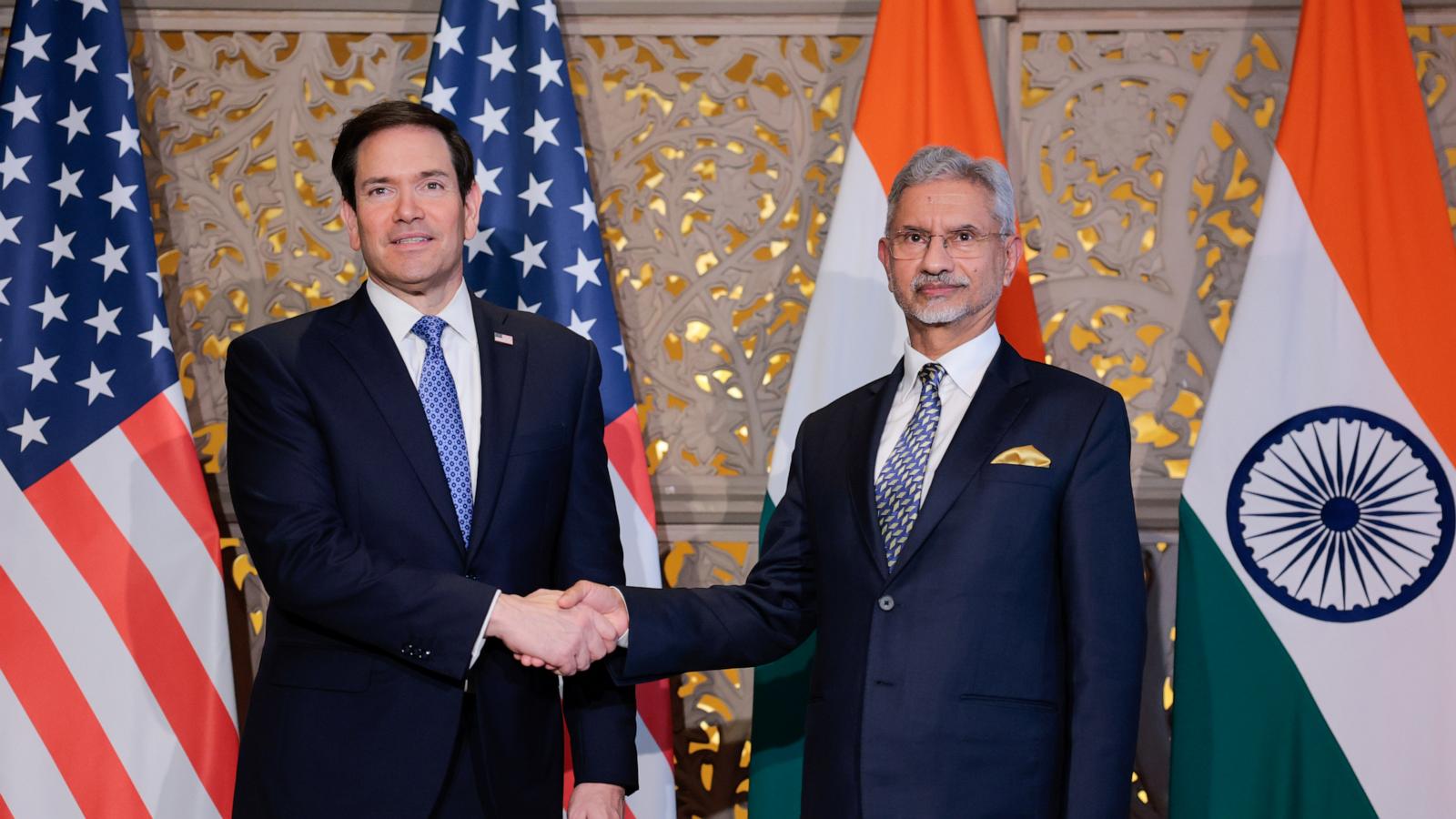
U.S. Secretary of State Marco Rubio held talks with Indian Foreign Minister Subrahmanyam Jaishankar in Mumbai on Tuesday, as the two governments work to deepen energy cooperation and move closer to finalizing a bilateral trade agreement. The meeting, reported by The Associated Press on October 20, 2026, put trade and energy at the top of the relationship between Washington and New Delhi, two governments that have spent much of the past two years trying to turn a broad strategic partnership into concrete economic deals.
What was reported from Mumbai
According to the Associated Press, Rubio met Jaishankar in Mumbai on Tuesday. The two sides are seeking to deepen energy cooperation and to move closer to finalizing a trade deal. The report did not include details of specific terms, commitments or outcomes from the talks, and no public statements from either side were quoted in the material available for this report. Officials have not been reported as announcing a signed agreement, and the source material does not say when a final deal might be concluded.
The choice of Mumbai, India's financial capital and largest city, as the venue is itself worth noting. Much of India's commercial, banking and shipping activity is centred there, so meetings held in the city often bring together business interests alongside diplomats. The source material does not say whether business leaders or company representatives took part in the Mumbai talks.
How US-India trade ties reached this point
Washington and New Delhi have been close partners for many years, but trade has been one of the more difficult parts of the relationship. Both countries are large economies with overlapping interests in technology, defence, manufacturing and energy, yet they have repeatedly struggled to agree on tariffs, market access and rules for particular industries. Negotiators have discussed a bilateral trade agreement for years, with progress often slowed by disputes over agricultural products, digital regulations and the protection of domestic industries on both sides.
Tensions rose in 2025, when the United States imposed steep tariffs on many Indian goods, which at their peak totalled 50 percent. A tariff is a tax on imported goods, and higher tariffs make foreign products more expensive for buyers in the importing country. The tariffs strained ties and gave both governments a strong incentive to negotiate a deal that could reduce barriers and provide more predictability for exporters and investors. The talks in Mumbai fit into that effort to rebuild momentum on trade.
Rubio's role matters here because the State Department typically coordinates US foreign policy, while trade negotiations are often led by other agencies, including the Office of the US Trade Representative. Meetings at the foreign-minister and secretary-of-state level are usually used to set political direction, resolve sticking points that have reached senior levels and signal that both capitals are committed to an outcome. The source material does not specify which officials handled the trade negotiations themselves.
Why energy is part of the agenda
The Associated Press report says the two countries seek to deepen energy cooperation alongside the trade deal. Energy is central to India's economic growth. India is one of the world's largest importers of crude oil, and it is also expanding its use of natural gas, electricity and renewable power as its economy and population grow. For India, diversifying where it buys energy and securing reliable supplies at predictable prices are long-standing priorities.
For the United States, which is a major producer of oil and natural gas, energy exports to India represent a commercial opportunity and a way to strengthen supply relationships with a large and fast-growing market. Energy cooperation can also include joint work on clean technologies, nuclear power, grid modernisation and the supply of equipment. The source material does not detail which energy projects or purchases are under discussion, so any specific outcome should be treated as unconfirmed.
Energy and trade are linked in practice. A trade agreement can set tariffs and rules on fuels and equipment, while energy purchases can be used to balance trade figures and address concerns about the size of trade deficits. Analysts generally view energy as one of the easier areas for early progress in bilateral talks because it involves large, established markets and clear buyers and sellers, though this remains an assessment rather than a reported outcome.
What a trade deal would involve
A bilateral trade agreement between the United States and India would typically cover several areas. These usually include tariff reductions on specific goods, rules for customs and certification, protections for intellectual property, provisions on digital trade and data, and commitments on access for services such as banking, insurance and information technology. Agriculture and dairy have often been among the hardest sectors to negotiate because they involve politically sensitive livelihoods on both sides.
Finalising a deal of this kind usually takes many rounds of technical negotiation before ministers can announce agreement on the main terms. Legal review, domestic consultations and, in the case of the United States, procedural steps in Congress or with federal agencies can also add time. The source material does not say whether the two sides have set a deadline or agreed on a framework document, so readers should not assume that a final text is close.
Analysts following the relationship often describe trade agreements as both economic and strategic instruments. A deal could make it easier for companies to invest across borders, diversify supply chains away from single countries and deepen cooperation in technology and manufacturing. It could also draw attention from other trading partners, who may watch closely how the United States and India settle disputes over market access.
Stakes for businesses and consumers
For businesses, the most immediate question is whether tariffs and trade barriers will fall or remain high. Indian exporters in textiles, pharmaceuticals, engineering goods and agricultural products have been among those most affected by changes in US trade policy, while American companies in energy, aerospace, machinery and technology look to India as a large and growing market. Certainty about rules, rather than just headline announcements, is often what businesses say they need most before committing to long-term investment.
For ordinary consumers, the effects of a trade deal typically show up gradually and unevenly. Lower tariffs can reduce the prices of imported goods, while changes in energy trade can affect fuel and electricity costs over time. Any such effects depend on the final terms, which have not been reported in the source material, so the practical impact remains uncertain.
The broader security dimension also matters. The United States and India are both members of the Quad, a grouping that also includes Japan and Australia and focuses on maritime security, technology and supply chains in the Indo-Pacific region. Economic ties are widely seen as a foundation for that wider strategic cooperation, so progress on trade and energy is often viewed in Washington and New Delhi as part of a larger partnership rather than as a standalone commercial matter.
What to watch next
The key question after the Mumbai talks is whether the two governments announce concrete progress, such as a framework agreement, a timeline for concluding negotiations or specific energy deals. Readers should watch for official readouts from the US State Department and India's Ministry of External Affairs, which usually summarise high-level meetings and any agreed next steps. Statements from the Office of the US Trade Representative and India's commerce ministry would also be important signals on the trade track.
Analysts expect that any agreement will be judged on whether it addresses long-running disputes over tariffs and market access, not only on whether talks continue. If negotiators reach agreement on energy cooperation first, that could build momentum for harder issues such as agriculture and digital rules. Conversely, if the talks stall on those sensitive areas, the energy agenda alone may not be enough to produce a comprehensive deal.
For now, the Mumbai meeting marks a step in an ongoing negotiation rather than its conclusion. The source material confirms that the talks took place and that both countries are seeking to deepen energy cooperation and finalise a trade deal. Whether those aims translate into signed commitments will depend on the negotiations that follow.
Questions and answers
Who met in Mumbai to discuss a US-India trade deal?
US Secretary of State Marco Rubio held talks with Indian Foreign Minister Subrahmanyam Jaishankar in Mumbai on Tuesday, according to the Associated Press.
What are the US and India trying to achieve?
The two countries seek to deepen energy cooperation and move closer to finalizing a trade deal. The source material does not report specific terms or outcomes from the talks.
Why does energy matter in US-India talks?
India is one of the world's largest importers of crude oil and is expanding its use of other energy sources as its economy grows, making energy cooperation a significant part of the relationship.
Has a US-India trade deal been signed?
The source material does not report that a trade deal has been signed. The talks in Mumbai were described as part of efforts to move closer to finalizing an agreement.
Topics: Marco Rubio, Subrahmanyam Jaishankar, US-India relations, India trade deal, Mumbai, Energy cooperation, US State Department
Sources: ABC News