
Polish Team Digitally Records Kościuszko Sites at West Point
Three specialists from Poland used 3D scanning and aerial photography to preserve traces of Tadeusz Kościuszko's role in defending the fortress during the Revolutionary War
By AXY Defense Desk ·
Key points
- A Polish team from the Foundation for the Virtualization of National Cultural Heritage worked with West Point from Sept. 14 to 29 to digitally record Revolutionary War sites and artifacts linked to Tadeusz Kościuszko.
- The team used terrestrial laser scanning, structured-light scanning and gigapixel photography to document eight heritage sites and selected objects, including Kościuszko's sword at the West Point Museum.
- The project is intended to provide a benchmark for future conservation of earthworks that face continual erosion and to eventually allow virtual exploration of West Point's historic resources.
- Kościuszko's engineering work at Saratoga, the Delaware River and West Point helped shape the American Revolution's defensive campaigns.
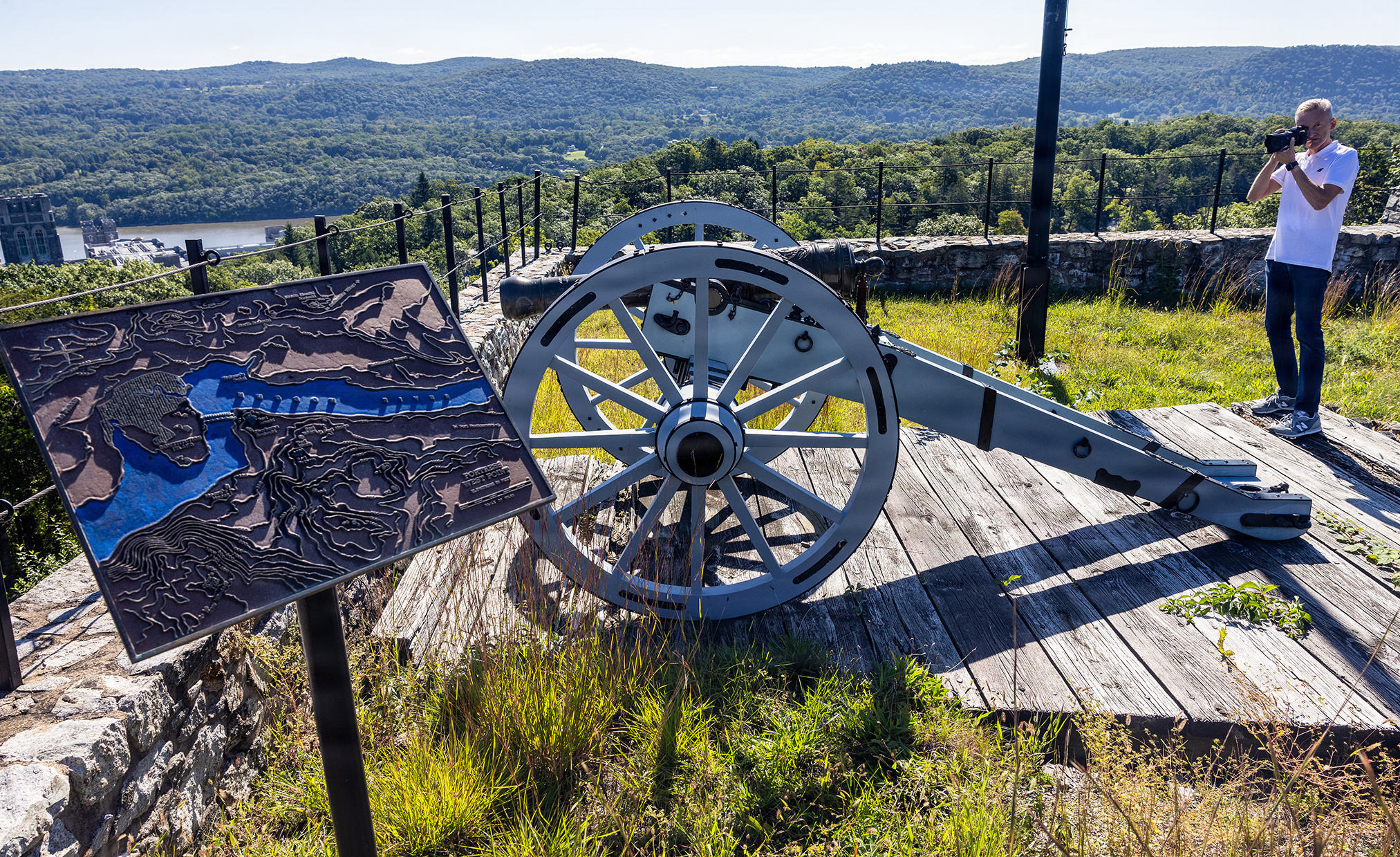
A three-member team from Poland spent two weeks at West Point in September documenting the fortress's Revolutionary War heritage with 3D scanning, aerial photography and other digital tools. The work, carried out with West Point and Poland's Foundation for the Virtualization of National Cultural Heritage, focuses on sites and objects connected to Tadeusz Kościuszko, the Polish-born engineer who helped strengthen the American position at the fortress during the war. The project is titled 'Tadeusz Kościuszko at West Point: The Digital Heritage of the Polish-American Hero of Freedom,' according to West Point.
From Sept. 14 to 29, the Polish team of Piotr Bialobrzycki, Damian Kuc and Jerzy Pajo created what a West Point news release described as '3D digital records of the sites as they exist today.' The release said the project would provide 'a benchmark for future conservation' and would eventually allow people around the world to explore historic resources at West Point virtually. It also described the work as creating 'a precise and lasting digital record of Kościuszko's material heritage at West Point.'
Each member had a defined role. Bialobrzycki, the project director, led terrestrial laser scanning of eight heritage sites at West Point. Kuc, described by West Point as the project's lead specialist in 3D scanning and modeling, used structured-light scanning to document cannons, commemorative plaques, elements of the Kościuszko Monument, the Great Chain and selected artifacts. Those artifacts include Kościuszko's sword, which is held at the West Point Museum. Pajo drew on his background in professional photography to record the sites with multimedia and gigapixel imagery. That material is expected to support virtual walkthroughs of the historic site in the future.
Bialobrzycki framed the project as a statement about the past. 'We wanted to use this moment to demonstrate that the Polish contribution to the American Revolution was concrete and consequential,' he said. 'Its traces can still be read in the terrain, fortifications, monuments, documents and historical objects at West Point.'
Why the Physical Traces Need Protecting
West Point's earthwork fortifications and landscapes are exposed to weather and time, and the release notes that they face continual erosion. Earthen defenses, such as ramparts and embankments, are shaped by rain, frost and wind, and they change slowly over decades. Once features like these are altered or lost, it can be difficult to recover their original form. Conservation specialists generally treat detailed records of a site's current condition as a baseline, because they allow future repairs, research and monitoring to be measured against a known starting point.
That is the logic behind the project's emphasis on a 'benchmark for future conservation.' The 3D models and images do not stop erosion, but they create a precise record of what exists now. If the land or objects change later, planners and historians can compare the new condition with the recorded one. The same material can also serve people who cannot visit the site in person, which the release presents as a long-term goal.
Who Tadeusz Kościuszko Was
Tadeusz Kościuszko was born in 1746 in the Polish-Lithuanian Commonwealth and trained as an engineer and military officer. He is widely remembered in Poland and the United States for his work on fortifications during the American Revolution. He later returned to Europe and led the 1794 Kościuszko Uprising against Russian and Prussian control of Poland, which made him a national hero in his homeland. His American reputation rests mainly on engineering work that helped the Continental Army defend key positions.
The West Point project places his American service at the center of its story. The release describes him as one of the Continental Army's most brilliant and much-needed combat engineers, a reputation that rests on the defensive works he designed and supervised rather than on frontline command.
A Personal Crisis and an Atlantic Crossing
Kościuszko's path to America began with personal misfortune. According to the account in the source material, he was hired to tutor Louise Sosnowska, the daughter of a wealthy lord, after discovering that his brother had spent the family's inheritance. The two fell in love, and in the fall of 1775 they attempted to elope after Lord Sosnowski refused Kościuszko's request. The Smithsonian, cited in the release, reports that Kościuszko told friends that Sosnowski's guards overtook their carriage on horseback, stopped it, knocked him unconscious and took Louise home by force.
Left with little money and a broken romance, and possibly fearful of consequences for his actions, Kościuszko sailed across the Atlantic in June 1776. When he reached Philadelphia, the Continental Congress president John Hancock appointed him a colonel in the Continental Army that October. Benjamin Franklin then hired him to design and build forts on the Delaware River to help defend Philadelphia from British naval forces, according to the Smithsonian.
Engineering Work That Shaped the War
Kościuszko's engineering work went beyond the Delaware forts. After the British captured Fort Ticonderoga in 1777, they pursued the retreating American forces. Kościuszko oversaw the damming of rivers and the flooding of fields to slow that pursuit. The delay gave the patriots time to regroup and prepare for the battle that followed at Saratoga, which the source describes as their first major victory of the war.
At Saratoga, Kościuszko fortified Bemis Heights, a position overlooking the Hudson River. The source material credits his design with contributing to the surrender of British Gen. John Burgoyne. That result is widely regarded by historians as a turning point, because it helped persuade France to enter the war on the American side as a formal ally. In the source's words, the victory 'precipitated the French's entry into the war.'
After Saratoga, Kościuszko oversaw the defense of West Point. The source states that his fortifications were so thorough that the British never attempted an assault on the position. West Point guarded the Hudson River, and the Great Chain stretched across the river to block enemy ships. The chain and the fortifications are among the features that the new digital records are meant to document.
Recognition and Legacy
At the end of the war, Kościuszko was promoted to brigadier general. Thomas Jefferson later praised him in terms that the source material quotes directly: 'As pure a son of liberty as I have ever known.' Such praise helps explain why Kościuszko has remained a figure of historical interest in the United States, including at West Point, where the Kościuszko Monument stands among the site's commemorative features.
The new project extends that recognition in a different form. Rather than building another monument, it creates a detailed digital archive of existing monuments, artifacts and landscape features. Historians and conservators have increasingly used such methods to document heritage sites, and the West Point effort follows that approach.
What Comes Next
The source material does not give a timeline for public access to the completed digital records. The release says the work would 'eventually' allow people to explore West Point's historic resources virtually, which suggests that the models, images and walkthroughs will be developed over time. Analysts who follow heritage projects typically expect a period of processing, quality review and rights clearance before scanned material is published widely, although the source does not specify such steps for this project.
The immediate result is a documented baseline for the sites, artifacts and landscape. Whether that record informs future conservation work, and how quickly the public can access it, will be the next signs of how far the project extends beyond the two weeks of fieldwork in September.
Topics: Tadeusz Kościuszko, West Point, Polish-American history, Revolutionary War, 3D scanning, Cultural heritage preservation, Continental Army
Sources: Military Times
https://axynewsglobal.com/article/polish-team-digitally-records-ko-ciuszko-sites-at-west-point