Pakistan Raises Petrol to Rs382.02 and Diesel to Rs389.80 a Litre
OGRA notification raises petrol by 80 paisa and diesel by 53 paisa as a Rs100 per litre relief scheme begins for small-vehicle owners
By AXY Pakistan Desk ·
Key points
- OGRA raised petrol by 80 paisa per litre to Rs382.02 and diesel by 53 paisa per litre to Rs389.80, according to a notification reported on October 20, 2026.
- A Petrol Relief Scheme, ordered by Prime Minister Shehbaz Sharif, offers a Rs100 per litre discount to eligible motorcycle, Qingqi rickshaw and small-car owners.
- Motorcycle and Qingqi rickshaw owners can claim the discount on up to 20 litres a month, and vehicles with engines up to 800cc on up to 30 litres a month.
- Registration is by SMS to 9771, and a token number must be requested by SMS before visiting a petrol station.
- The source does not state the scheme's duration, funding or number of registrations, and these details are worth watching.
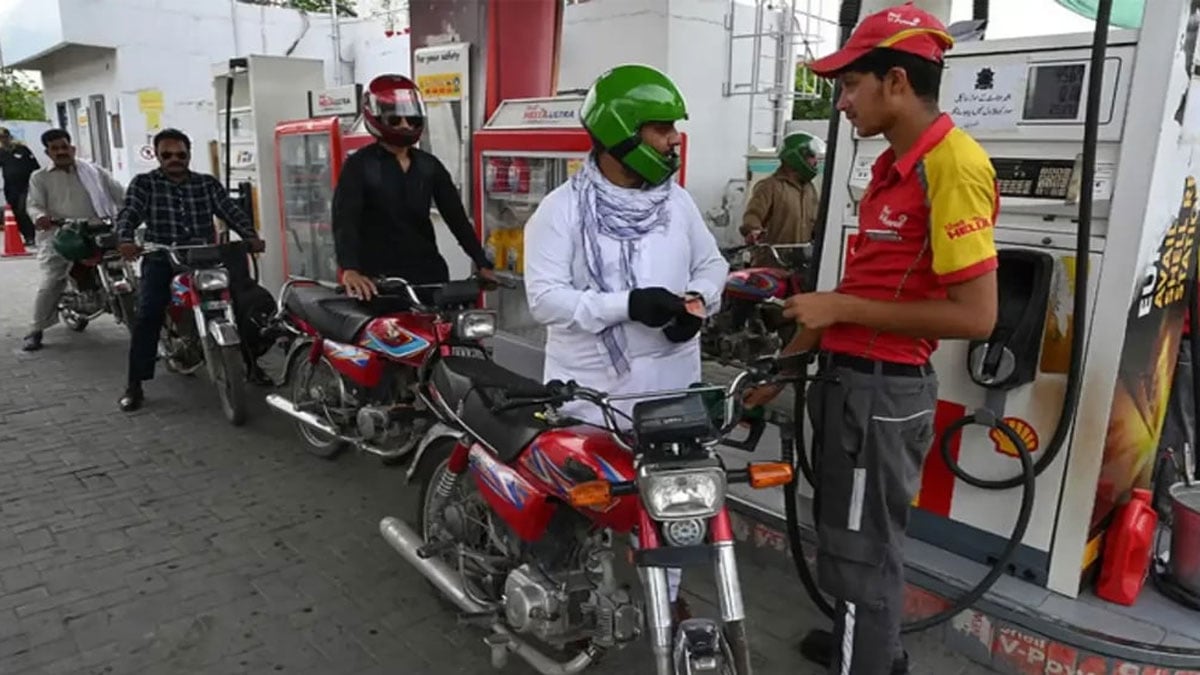
Pakistan's Oil and Gas Regulatory Authority (OGRA) has issued a notification raising the petrol price and diesel rate, ARY News reported on October 20, 2026. According to the notification, petrol rose by 80 paisa per litre to Rs382.02, while diesel went up by 53 paisa per litre to Rs389.80. The price change came alongside a Petrol Relief Scheme that Prime Minister Shehbaz Sharif ordered after petrol prices rose following the US-Iran war. The scheme offers eligible motorcycle, Qingqi rickshaw and small-car owners a discount of Rs100 per litre on petrol.
What the notification changed
Pakistan's currency is the rupee, and one rupee is divided into 100 paisa. An increase of 80 paisa therefore means petrol now costs 0.8 of a rupee more per litre than before. Diesel's 53-paisa rise is just over half a rupee per litre. Working backwards from the published figures, the previous rates would have been roughly Rs381.22 for petrol and Rs389.27 for diesel. These are simple calculations from the stated increases rather than figures reported separately by the source.
The source material does not give the exact time the new rates take effect, nor the date of the previous notification. Readers who need the official schedule, including the precise effective date, should check the OGRA notification directly.
The size of the change is modest in rupee terms. Even so, fuel prices are closely watched in Pakistan because they feed into a wide range of household and business costs. Petrol is the main fuel for motorcycles and small cars, which many families rely on for commuting, school runs and daily work. Diesel powers many trucks, buses and goods carriers, as well as some agricultural and industrial machinery. When diesel becomes more expensive, transport operators face higher running costs, and those costs can eventually appear in fares and in the prices of goods moved by road.
How fuel prices are set in Pakistan
OGRA is the federal regulator responsible for oil and gas in Pakistan. Its responsibilities include regulating the downstream petroleum sector, which covers the sale and distribution of refined fuels such as petrol and diesel. Revised prices are announced through official notifications, and these notifications set the rates that filling stations must charge consumers. A change in the figures published by the regulator is therefore the formal signal that retail prices are moving.
Downstream is an industry term for the stages of the oil business that come after crude oil has been extracted, meaning refining, storage, transport and retail sale. The upstream stage covers exploration and production. Because OGRA oversees the downstream part, its notifications are the point at which policy and market conditions become visible to ordinary buyers.
Pakistan relies heavily on imported crude oil and refined petroleum products. This dependence means that global oil markets, shipping costs and the exchange rate between the rupee and foreign currencies all influence what consumers pay at the pump. When international prices rise sharply, the cost of importing fuel rises as well. Governments then face a choice: pass those costs on to consumers, absorb them through subsidies or tax changes, or introduce targeted measures to limit the impact on particular groups. The Petrol Relief Scheme falls into the third category, because it targets a defined set of vehicle owners rather than reducing prices for everyone.
The US-Iran war and the global oil link
According to the source material, the rise in petrol prices that prompted the relief scheme followed the US-Iran war. The source does not describe the conflict, its timeline or its effect on specific oil supplies, and this report does not add those details.
What is broadly understood is that conflict in the Middle East, a major oil-producing region, can disrupt supply routes and push up global crude prices. Such price movements tend to reach oil-importing countries quickly, and their effect on domestic prices depends on how much of the change governments and regulators pass through to consumers. For a country that imports much of its fuel, the impact can be felt at filling stations within a short period.
The broader economic stakes are also significant. A sustained rise in global oil prices can add pressure to a country's budget, its trade balance and its inflation rate, which is the pace at which the general level of prices rises over time. Analysts expect that if international prices remain high, further domestic adjustments could follow, though the timing and size of any such changes would depend on government decisions and market conditions. Neither the source material nor this report predicts future fuel price levels.
The Petrol Relief Scheme explained
The Petrol Relief Scheme gives a discount of Rs100 per litre on petrol to eligible owners. Under the scheme, motorcycle and Qingqi rickshaw owners can receive the discount on up to 20 litres of petrol per month. Owners of vehicles with engines up to 800cc are eligible for discounted petrol of up to 30 litres per month. Engine capacity is measured in cubic centimetres, or cc, and it is a common way of classifying small cars. A Qingqi rickshaw is a small three-wheeled passenger vehicle that is common in many Pakistani towns and cities.
Applicants must register by sending an SMS to 9771. The message must contain the word REG, followed by their CNIC number, vehicle registration number, the first word of the province name, and the vehicle registration date. CNIC stands for Computerised National Identity Card, the national identity document issued to Pakistani citizens. Once registration is complete, applicants receive a confirmation message on their mobile phones.
Before visiting a petrol station, registered applicants must send the word TOK to 9771 to receive a token number by SMS. The token number must be presented at the petrol station to claim the discounted petrol. A confirmation message is sent once the transaction is completed. The step-by-step process is designed so that the discount can be tracked against each registered vehicle and its monthly limit.
The source material does not state how long the scheme will run, how it will be funded, or how many people have registered so far. These are important questions for anyone deciding whether to sign up, and they remain open in the reporting available.
Who is affected and why it matters
The people most directly affected by the scheme are owners of motorcycles, Qingqi rickshaws and small cars. For many of them, fuel is a regular and significant expense. A Rs100 per litre discount on a monthly allowance could reduce spending for owners who use their full quota. Because the limits are 20 litres for motorcycles and rickshaws and 30 litres for vehicles up to 800cc, the discount is aimed at personal and small-scale use rather than heavy commercial fleets.
The wider public is affected through the knock-on effects of fuel costs. Diesel is central to freight and public transport in many areas. Higher diesel rates can prompt transport operators to seek higher fares or freight charges, and those costs can then move into food, building materials and other goods. Economists often describe fuel as a cost that spreads through an economy, which is why changes at the pump are closely watched by policymakers and households alike.
The source material does not report reactions from transport unions, opposition parties, consumer groups or fuel station operators. Those responses would be an important part of the picture, because they can shape whether the government extends, changes or ends the relief measures.
What to watch next
Several developments will show how this story unfolds. The first is whether OGRA issues further notifications that change petrol or diesel prices, since fuel rates in Pakistan are revised through formal announcements. Prices can move again if international conditions shift or if policy decisions change.
The second is how the Petrol Relief Scheme works in practice. Key questions include whether SMS registration and token systems operate smoothly for applicants and petrol stations, and whether eligible owners are able to claim their discounts within the monthly limits. The third is whether the government publishes details on the scheme's duration, funding and eligibility.
Readers may also want to watch for signs of how the price changes affect transport fares, food costs and overall inflation in the coming weeks. These effects usually appear with a lag, so early data may not capture the full impact. For readers who want to follow the official position, the OGRA website and the government's public notifications are the primary places to check for updated rates and rules.
Questions and answers
What is the new petrol price in Pakistan?
According to a notification from the Oil and Gas Regulatory Authority, petrol has risen by 80 paisa per litre to Rs382.02. ARY News reported the notification on October 20, 2026.
What is the new diesel rate in Pakistan?
Diesel has gone up by 53 paisa per litre to Rs389.80, according to the same OGRA notification. The source material does not give the exact effective time of the new rates.
Who is eligible for the Petrol Relief Scheme?
Motorcycle, Qingqi rickshaw and small-car owners are eligible. Motorcycle and Qingqi rickshaw owners can claim the Rs100 per litre discount on up to 20 litres a month, while vehicles with engines up to 800cc can claim up to 30 litres a month.
How do I register for the Petrol Relief Scheme?
Applicants register by sending an SMS to 9771 containing REG, their CNIC number, vehicle registration number, the first word of the province name and the vehicle registration date. Before fuelling, registered applicants send TOK to 9771 to receive a token number.
Topics: Petrol price Pakistan, Diesel rate Pakistan, OGRA, Petrol Relief Scheme, Shehbaz Sharif, Fuel prices Pakistan, Pakistan economy
Sources: ARY News
https://axynewsglobal.com/article/pakistan-raises-petrol-to-rs382-02-and-diesel-to-rs389-80-a-litre