
Mexico Sentences Three Men to 158 Years for Killing Two Australian Surfers
A judge ruled the 2024 killings in Baja California were premeditated; the victims were camping near Ensenada when they were attacked during an attempted robbery
By AXY World Desk ·
Key points
- A Mexican judge sentenced three men to 158 years and nine months each for the 2024 killings of two Australian brothers and an American in Baja California.
- The judge found the killings were premeditated; the victims were camping near Ensenada when they were attacked during an attempted robbery.
- Prosecutors said the attackers burned the tents and truck and dumped the bodies in a remote well to destroy evidence.
- A former girlfriend of one defendant was sentenced to 20 years in prison for goading him into stealing tyres from the vehicle.
- Prosecutors sought more than $100,000 in damages, but the judge said compensation must be pursued through civil proceedings.
A Mexican judge on Friday sentenced three men to more than 158 years in prison each for the 2024 murders of two Australian surfing brothers, Jake and Callum Robinson, and their American friend, Carter Rhoad, in Baja California. According to CBS News, the court found that the killings were premeditated, and each defendant received a sentence of 158 years and nine months. The three men are identified in the reporting only by their first names: Jesus Gerardo, Irineo Francisco and Angel Jesus. Judge Raul Hernandez delivered the ruling.
What happened at the campsite
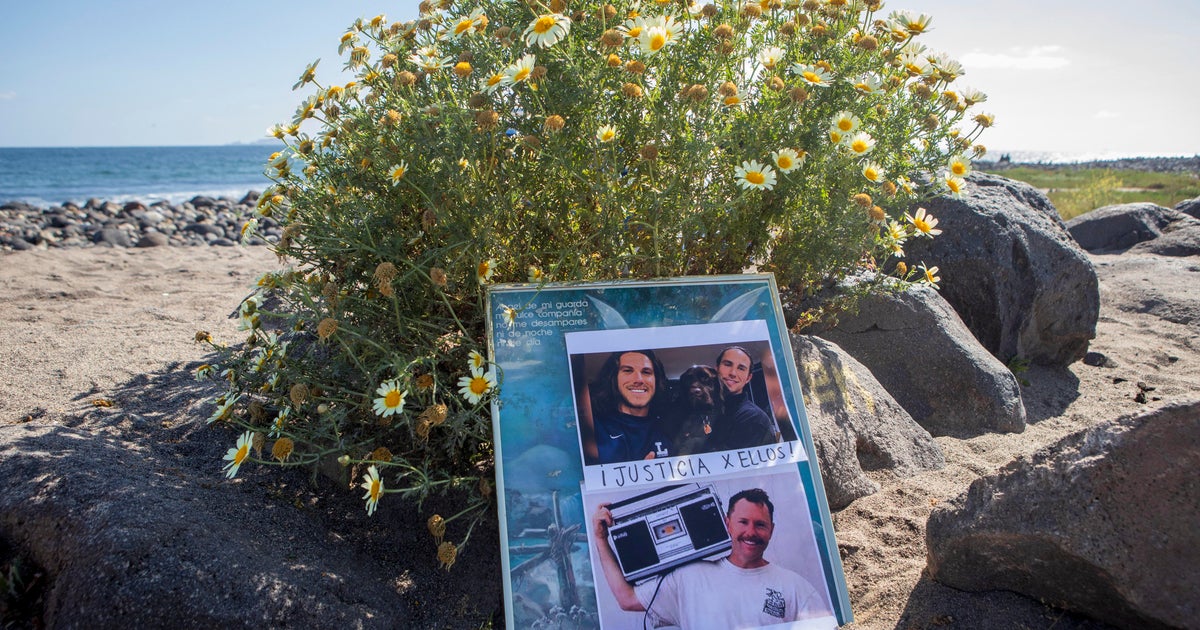
The Robinson brothers, aged 30 and 33, and Rhoad, 30, were on a surfing trip to Mexico's Pacific coast when they were shot dead during an attempted robbery. They had been camping in a remote beachside area near the city of Ensenada, a port city in Baja California, the northwestern Mexican state that lies across the border from California. The attack took place on April 27, 2024, according to the reporting, although the source also says the trio was attacked on April 28 or 29, a discrepancy in the timeline that the court record and public reporting do not fully resolve in the material available.
The bodies were found days later in a cliff-top well. Each man had gunshot wounds to the head, and investigators said a 9mm pistol and a .45 calibre pistol were used in the attack. Police found bloodstains and drag marks at the group's last known campsite, according to the Baja California state prosecutor's office. Prosecutors said the attackers then tried to destroy evidence. The tents and the group's pickup truck were burned, and the bodies were dumped in the well at a site that investigators described as extremely hard to reach, about four miles away from the camp.
The forensic details help explain why the case drew attention beyond the immediate region. Burning a vehicle and moving bodies to a remote location suggests that the perpetrators wanted to delay discovery and make the crime harder to link to them. That the attackers were caught and convicted is significant in a country where many violent crimes do not result in a prosecution.
The prosecution's account of motive
Chief state prosecutor Maria Elena Andrade Ramirez put forward a theory of the crime. She said the killers drove past the group's campsite, saw the pickup truck and tents, and wanted to steal the vehicle's tyres and other parts. In other words, the prosecution's account points to an opportunistic robbery rather than a targeted attack on the men because they were foreign tourists. Andrade Ramirez said it was unlikely that the trio was singled out for being tourists.
The case also involved a woman who played a role in the events. Ary Gisell Silva, the former girlfriend of Jesus Gerardo, admitted to goading him into stealing the tyres from the vehicle. She was sentenced to 20 years in prison in November. According to the prosecution, Silva said Jesus Gerardo sneered at the men's pleas for their lives and bragged about the items he had taken from them. Those details, drawn from her statements and the prosecution's case, add a level of cruelty to the crime that shaped how the court viewed the defendants.
Jesus Gerardo, known as 'el Kekas', had a criminal record before the attacks, according to the reporting. A prior record is not in itself proof of guilt in a new case, but in this matter it formed part of the background the court considered as the case moved to sentencing.
The court ruling and the question of compensation
The key legal finding was that the defendants acted with premeditation. In criminal law, premeditation generally means that a killing was planned or deliberately chosen rather than committed in a sudden moment of rage or panic. A finding of premeditation can increase the severity of a sentence, and in this case it helped support the lengthy terms handed down.
Prosecutors had asked for more than $100,000 in damages for the families. The judge rejected that request and said any compensation would have to be pursued through civil proceedings. This distinction matters. In many legal systems, criminal courts decide guilt and punishment, while financial claims for losses can be handled in separate civil cases, where families must file their own claims and prove their losses. For the Robinson and Rhoad families, the ruling means that the financial question remains open, even though the criminal verdict has been reached.
Analysts who follow cases of this kind often note that civil claims can take a long time and may be difficult to enforce against defendants who are already imprisoned or who have limited assets. That is an analytical point rather than a finding in this case, but it helps explain why families sometimes describe a criminal sentence as only one part of a long process.
The families' response
The reporting includes a statement from Rhoad's mother, Page, who said after learning the verdict: "There can never be justice for the loss of a son, but we are grateful that these men will never hurt anyone else." Her words capture a common tension in cases of violent death. A long sentence can bring a sense that the perpetrators will not harm others, but it does not reverse the loss, and families often describe the outcome in terms of safety for others rather than closure for themselves.
The verdict also means that the Robinson and Rhoad families, in Australia and the United States, have seen the case reach a formal conclusion at the trial level, more than two years after the killings. Families in cases like this often face a long period of waiting, legal procedures and public attention, and the sentencing can mark a turning point even when it does not end their grief.
Why the case matters for travellers and Baja California
Baja California's Pacific coast has long attracted surfers from around the world, and areas near Ensenada are known to visitors who come to camp and surf in remote locations. For travellers, the case raises questions about how safe it is to camp in isolated beach areas, particularly when vehicles, tents and personal belongings can be visible to passing strangers. This is an analysis of the risks the case highlights, not a finding about the safety of the region as a whole.
The prosecution's theory that the attackers were motivated by the chance to steal vehicle parts suggests that opportunistic crime was the driver here. Visitors and local residents alike often weigh the value of remote, low-cost camping against the security of more populated areas. Many travel guides advise tourists to tell others where they are going, to avoid leaving valuables in view, and to choose camp sites with more visibility from roads or other people, although such advice cannot guarantee protection.
The case also highlights the importance of cross-border cooperation. Two of the victims were from Australia and one from the United States, and the outcome of the case will be closely followed by their families and by people in their home countries who travel to Mexico for surfing.
What to watch next
Several developments may follow. The first is whether the defendants appeal the convictions and sentences, a common step in criminal cases. The reporting does not say whether any appeal has been filed, so readers should look for updates from Mexican courts and the Baja California state prosecutor's office.
The second is the civil process. Because the judge said compensation must be pursued through civil proceedings, the families will need to decide whether and how to bring those claims. Their progress may take considerably longer than the criminal case did.
The third is the status of the case of Ary Gisell Silva, who has already been sentenced to 20 years, and any further charges or proceedings that may emerge from the investigation. The reporting so far focuses on the three men sentenced on Friday and on the woman who admitted her role in pressing for the theft.
Finally, the case may prompt continued discussion about visitor safety in Baja California and about how Mexican authorities handle violent crimes against foreigners. Those questions will depend on what further information emerges and on how officials respond.
Topics: Baja California, Ensenada, Mexico, Jake Robinson, Callum Robinson, Carter Rhoad, Surfers killed, Mexico criminal sentencing
Sources: CBS News