
Lucy Lang Turns to Instagram and Comic Books to Defend Inspectors General
New York's state inspector general says public awareness of watchdog offices could protect them from future attacks
By AXY Government Desk ·
Key points
- New York State Inspector General Lucy Lang says public awareness of inspectors general could protect them from attempts to weaken their independence.
- Lang cites firings of nearly 20 inspectors general since the start of President Donald Trump’s second term and says the public response was too quiet.
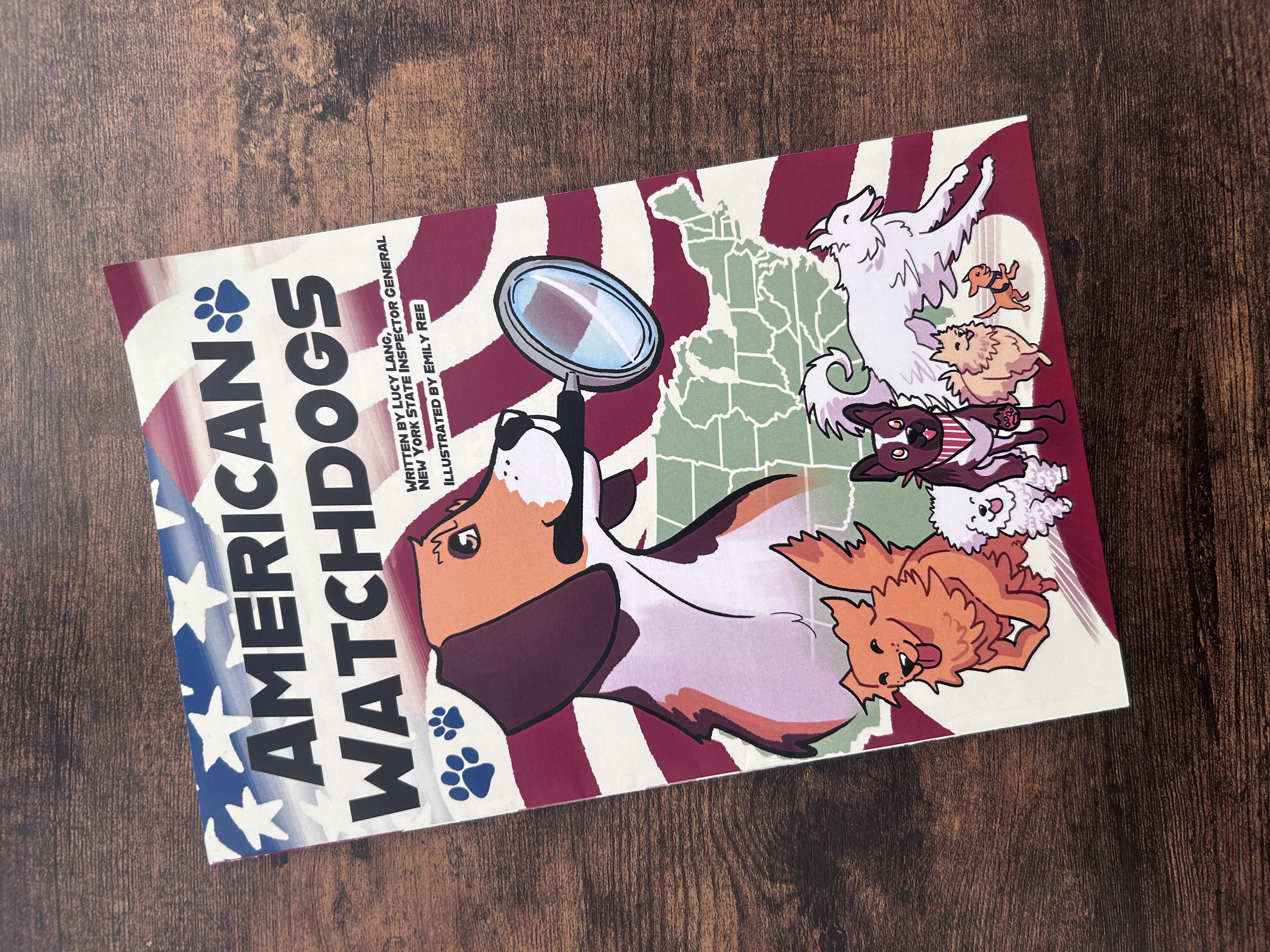
- Her office is using social media, a comic book called “American Watchdogs,” a modular curriculum and a six-week youth advisory council to reach young people.
- Lang says the most noteworthy early reactions have come from older readers who were surprised the comic book exists.
Lucy Lang, the inspector general for New York State, wants more Americans to know that watchdog offices like hers exist. She is making that case through social media, a comic book she wrote for young readers and a new youth advisory council. In an interview with Government Executive, Lang argued that public awareness of what inspectors general do could act as a bulwark against future attempts to weaken them.
The timing matters. Since the start of President Donald Trump’s second term, he has fired nearly 20 inspectors general and installed several people who previously worked for his administration in oversight positions, according to the interview. Lang spoke against that backdrop, and she said the lack of public response to the firings was partly the watchdogs’ own responsibility.
What an Inspector General Is and Why Independence Is the Issue
Inspectors general lead independent oversight offices. Their job is to root out waste, fraud and abuse, and to improve how efficiently and effectively government programs run. In plain terms, an inspector general is an internal watchdog that checks whether public money and public programs are being handled properly. The office is supposed to do that work without taking orders from the people it examines.
The federal system of inspectors general traces back to the Inspector General Act of 1978, which created independent watchdog offices inside federal agencies. Under the requirements Lang described, inspectors general must be appointed “without regard to political affiliation.” That phrase is why independence is a legal question as well as a political one. When a president removes an inspector general or fills the post with someone who has worked for his own administration, that protection is tested in public.
Lang sees the history as older still. She traces the origins of inspectors general to Friedrich Wilhelm von Steuben, a Prussian military officer who, serving as an inspector general, standardized training for the Continental Army at Valley Forge. For Lang, the idea of oversight is part of the country’s founding story. She thinks that gives civic teaching a useful anchor, because students can see oversight as an old American tradition rather than a bureaucratic side note.
The Firings and the Public Silence That Followed
Lang said that when 17 of her federal colleagues were fired on the first Friday night of the current administration’s term, she felt right away that the quiet from the public was partly on the watchdogs. “We hadn’t fulfilled our mandate to communicate with the public about the important work that we’re doing on their behalf,” she said in the interview.
That is a hard admission for a public official to make, and it points to a practical problem. Oversight offices rarely make headlines when they work well. A watchdog that few voters can name is an easy target for someone who wants it gone. If residents know what an inspector general has examined and why it matters, removing that person becomes a visible decision rather than a quiet one. That is the reasoning behind Lang’s focus on outreach. She is treating communication as a form of protection, not just a public relations exercise.
The stakes reach beyond government offices. An inspector general’s report can change how a program serves people, from how money is spent to whether services reach the residents they are meant to help. If those reports go unread, or if the office that writes them is weakened, the gap is felt by the public that the program was supposed to serve.
A Classroom Question That Changed the Approach
Lang said the idea took shape while she was guest speaking at a government class at the University of Albany. She asked the seniors where they got their information about government. With one exception, 30 students told her they got it from independent journalists on Instagram and TikTok. Lang said the students had not had personal interactions with elected or appointed officials in their lifetimes.
Lang drew two conclusions from that exchange. The first was that the office needed to use platforms that reach a wide range of people. Its reliance on op-eds and press releases, she said, was not enough to educate the full public it serves. The second was about her own profession. She said that “my colleagues in government and I have been really deficient in our investment in civic education.”
That admission is the core of her argument. If young people get their understanding of government from creators on social media, then oversight offices that stay out of those spaces are effectively absent from the conversation. Lang’s office has chosen to enter it.
Why a Comic Book for Children
Lang said her office is celebrating its 40th year, and it is also taking part in America 250 celebrations. She wanted the anniversary to look backward and forward at once. As someone who studies history, she said part of civic education should draw on the country’s long history of oversight, which goes back to the founding era.
The office already runs a paid internship program for college and law students, and it has done so for several years. Lang said the numbers of high school students who cannot name the three branches of government, let alone explain what an inspector general does, convinced her the office needed to start earlier. The office built a modular curriculum that it has been teaching around New York State this year and plans to keep teaching.
The comic book came from a more personal moment. A friend’s child, a middle school student, asked if he could come work for her. Lang told him she did not have a job for an eighth grader, but the request made her think about reaching even younger children. She then wrote “American Watchdogs,” thinking about her own fifth and seventh grade children and how to give kids something accessible. She said that for the nerdiest students, it might make history seem exciting.
Lang also framed the comic as a long-term safeguard. Her hope is that young people who already know about inspectors general will not be hearing about them for the first time when those offices are under attack. In her words, that would be too late to do anything about it.
A Youth Advisory Council Built to Hear Back
The office has also launched a youth advisory council. Students from around New York State applied and were accepted to a six-week program. It meets virtually for two hours a week and looks at different parts of oversight. The council also asks students for their views on where government is working in their communities and where it might be failing them.
Lang described the arrangement as “a real two-way street.” That matters because it turns outreach into a form of listening. A watchdog office that only lectures young people about oversight is teaching a subject. One that asks where the system is falling short is gathering information it may need later, and it is also showing students that their experience of government counts.
Early Reactions and What Comes Next
Lang said the most noteworthy reactions so far have come from older people. Many of them look at the comic book and say, “I can’t believe that you thought of this.” She contrasted that response with the reactions she has been looking for from younger readers, which is where the office’s effort is aimed.
The next steps are concrete. The modular curriculum will continue to be taught around New York State, and the youth advisory council is already running its six-week program. The question is whether these efforts change how young people think about watchdogs over time. That will show up in results, not intentions, and it is the test Lang’s office will face as the country debates how independent its oversight offices should be.
For now, the argument is clear. Lang believes that a public which knows what inspectors general do is harder to sideline. Whether that holds up when a future administration moves against watchdogs will depend on how many people, young and old, actually understand the work those offices do.
Questions and answers
Who is Lucy Lang?
Lucy Lang is the inspector general for New York State. She became the state’s inspector general in 2021 and previously served as a Manhattan prosecutor.
Why does Lang want more people to know about inspectors general?
Lang argues that public awareness of what inspectors general do could act as a bulwark against future attempts to weaken them. She said her office’s communication with the public had fallen short of its mandate.
What is the comic book about?
Lang wrote a comic book titled “American Watchdogs” to teach children about inspectors general and oversight. She said it might make history seem exciting and give young people earlier exposure to the work of watchdog offices.
What comes next for the New York program?
The office will keep teaching its modular curriculum around New York State and has launched a six-week youth advisory council that meets virtually for two hours a week. The council asks students where government is working and where it might be failing them.
Topics: Lucy Lang, Inspectors General, New York State Inspector General, Civic Education, Government Oversight, Donald Trump
Sources: Government Executive