
Kenyan Preacher Paul Mackenzie Found Guilty of Murdering 190 Children
Mombasa court convicts Mackenzie and 28 co-accused over deaths linked to the Shakahola starvation cult, where more than 400 bodies have been recovered since 2023
By AXY War & Crime Desk ·
Key points
- A Mombasa court on Monday, October 19, 2026, found Paul Mackenzie and 28 co-accused guilty of murdering 191 people, including 190 children and one adult.
- The Shakahola Forest deaths were linked to a starvation cult based inland from Malindi, with well over 400 bodies recovered since 2023.
- The prosecution alleges Mackenzie incited followers to starve to death in order to meet Jesus; he has also denied separate manslaughter and terrorism charges.
- Sentencing details have not been reported, and relatives including Francis Wanje hope the ruling will prevent similar tragedies.
A court in Mombasa on Monday found Paul Mackenzie, a self-described Kenyan preacher, and his associates guilty of murdering 191 people, all but one of them children, in what has become known as the Shakahola starvation cult case. The verdict, delivered on October 19, 2026, covers 29 accused people and concerns deaths linked to a remote forest base inland from Malindi, a beach resort on Kenya's Indian Ocean coast. According to the source reporting, the judge said the prosecution had proved its case against every accused person named in the murder charges. The ruling closes the murder counts in a case that has shocked Kenya and drawn international attention since the first graves were found in 2023.
The judge set out the court's conclusion in a single sentence, which the source reporting quotes directly: "I am satisfied that the prosecution has proved the case against all the 29 accused persons for the murder of 190 children and one adult." The accused had pleaded not guilty in 2024 to 191 counts of murder, one for each person the prosecution said had died. In legal terms, the judgment means the court accepted the prosecution's evidence on the murder charges for the whole group of defendants.
How the Shakahola case came to light
The case takes its name from Shakahola, a remote area of forest inland from Malindi where the cult had established its base. Investigators began uncovering graves there in 2023, and the number of bodies rose steadily as digging continued over the following months and years. The source reporting says that hundreds of bodies have been discovered since 2023 at the site, and that in the three years since the first discovery, the remains of children, women and men have been unearthed, bringing the total to well over 400.
The scale of the discovery was shocking partly because the deaths occurred in a sparsely populated area, far from the immediate view of most of Kenya's population. Recovering remains from scattered graves in dense forest is slow, difficult work, and each body found added to the picture of how many people had died. That is one reason the total kept climbing long after the first discoveries were announced.
The alleged starvation teaching
The prosecution alleges that Mackenzie incited his followers to starve to death in order to "meet Jesus." A starvation cult is a group in which members are persuaded, usually by a leader, to abandon food as a religious act or as a route to salvation. Such groups are dangerous because deaths can happen gradually and quietly, with families and neighbours often unaware of what is happening inside a closed community until it is too late.
The Shakahola case shows how a religious teaching can become a criminal matter when it leads to the deaths of people, especially children who cannot choose for themselves. Kenyan law, like the law in most countries, does not protect the right to religious belief when it is used to cause death or serious harm to others. The court's verdict reflects its acceptance of the prosecution's argument that the accused were responsible for the deaths.
The charges and the wider legal picture
In criminal law, a murder count usually refers to a single charge tied to a specific victim or death. The 191 counts in this case therefore reflect the prosecution's effort to hold the accused responsible for each person it said had died. Because the case involved many victims and many accused, the court had to decide whether the evidence linked each defendant to the deaths in the way the law requires. The judge's finding indicates that it did.
The murder case is not the only legal matter facing Mackenzie. The source reporting notes that he has also denied charges of manslaughter and terrorism in separate cases. Manslaughter is generally understood as unlawful killing without the intent to kill, while terrorism charges typically require prosecutors to show that violent or dangerous acts were carried out to intimidate or to advance a political, religious or ideological aim. The source reporting does not give the current status of those separate cases, and Monday's verdict addressed the murder counts.
The courtroom and the families of the dead
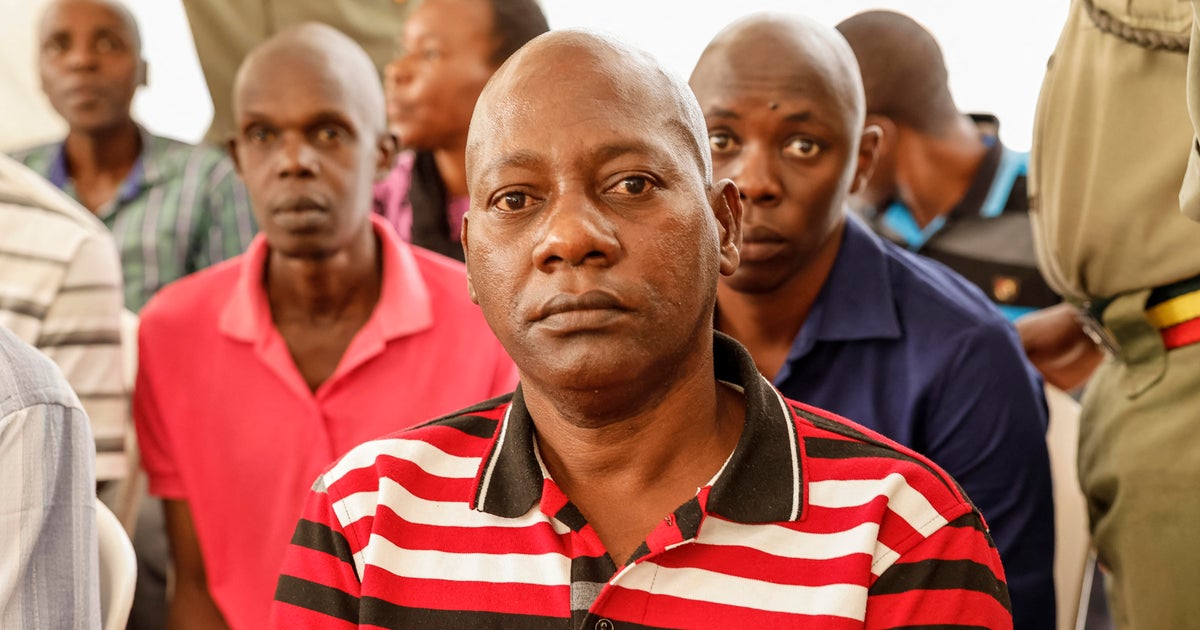
The source reporting describes Mackenzie as looking impassive as he arrived at Mombasa Law Courts on Monday with 29 other accused. The defendants came off a bus with barred windows, handcuffed in pairs. Such security arrangements are common for large groups of detained defendants, and they underlined how far the case had moved from the forest where the bodies were found.
Relatives of the victims were also in court, and many had made their way to Mombasa from rural communities along the coast. For families who have waited years for answers, the journey to the courthouse was both practical and emotional. Some had lost several members of their households, and the courtroom became the place where they could see the legal process reach a conclusion.
Francis Wanje, 62, lost eight family members in Shakahola, including his daughter and two grandchildren. Speaking to AFP before the session began, he said: "This day, to me, is a very, very important day." He added: "We are expecting a ruling that will be a lesson to the whole public, so that such kinds of things will not happen again." He also expressed anger over what he described as the government's initial inaction. His comments capture two of the strongest feelings among the families: a need for formal accountability and a fear that the same kind of tragedy could happen again.
Why the verdict matters
For Kenyan families, the verdict is a formal acknowledgement that the deaths were not simply tragedies but the result of criminal conduct by identifiable people. That distinction matters to relatives who want accountability as well as remembrance. For a country in which religious leaders command large followings, the case also raises a broader question about how faith communities are monitored and how authorities should respond when a leader's teaching appears to endanger lives.
Wanje's criticism of initial government inaction points to a question likely to remain central after the verdict. Analysts who follow public safety and religious freedom in East Africa often argue that warning signs in cases like this should prompt earlier investigation, before deaths mount. The source reporting does not describe any review of the government's earlier response, so whether such a review will take place remains an open question.
The case also has implications for how courts handle mass-casualty criminal cases in which most victims were children and the deaths were linked to beliefs rather than to a single act of violence. Prosecutors had to connect many individual deaths to a common scheme. The court's decision suggests the evidence was sufficient to do so for the murder counts, a finding that other courts facing similar cases may look to in the future, though each case turns on its own facts.
What happens next
The source reporting does not state when sentencing will take place or what penalties the court may impose. In criminal cases in Kenya, a conviction is typically followed by a separate stage in which the court considers sentence, and the timing and outcome of that stage will be closely followed by the families, the public and rights groups. Until sentences are announced, the verdict is the key legal point of record on the murder charges.
Analysts expect the separate manslaughter and terrorism cases to remain a focus of attention, since they could shape the full legal picture of Mackenzie's responsibility. The reporting does not say when those cases will be decided. Readers should also watch for any official review of how authorities responded to early reports from the area, a question that the families have raised and that the verdict alone does not answer.
For now, the Monday verdict stands as the court's finding on the murder charges. The families who travelled to Mombasa are waiting to see how the court will reflect that finding in its sentences, and many will be looking for signs that the lessons they hope for, namely that such deaths will not happen again, are taken seriously by the state.
Questions and answers
Who is Paul Mackenzie?
Paul Mackenzie is a self-described Kenyan preacher whom the prosecution accuses of inciting his followers to starve to death in order to meet Jesus. He and 28 associates were found guilty by a Mombasa court on Monday, October 19, 2026.
Why was Paul Mackenzie found guilty?
The judge said the prosecution had proved its case against all 29 accused for the murder of 190 children and one adult. The accused had pleaded not guilty in 2024 to 191 counts of murder.
Where were the Shakahola bodies found?
The bodies were found at the cult base in the Shakahola forest, inland from the Kenyan beach resort of Malindi. The source reports that well over 400 bodies have been recovered since 2023.
What happens next in the Mackenzie case?
The source reporting does not say when sentencing will take place. Mackenzie has also denied separate manslaughter and terrorism charges, and the status of those cases was not detailed.
Topics: Paul Mackenzie, Shakahola Forest, Mombasa Law Courts, Malindi, Kenya, Starvation cult, Murder trial
Sources: CBS News