
Israel Secures 12 Apache Echo Attack Helicopters From Boeing
A last-minute U.S. extension and an urgent Israeli Cabinet funding vote clear the way for a deal signed the same day
By AXY Defense Desk ·
Key points
- Israel is set to acquire 12 AH-64E Apache 'Echo' attack helicopters from Boeing, according to an Israeli Ministry of Defense announcement.
- The deal was rescued by a last-minute U.S. extension, described as a 'final window' conditional on immediate signing.
- An urgent Israeli Cabinet phone vote approved a budget source drawn from another long-term, non-defense national program.
- Delivery is scheduled for the beginning of the next decade, and the source does not disclose the contract value.
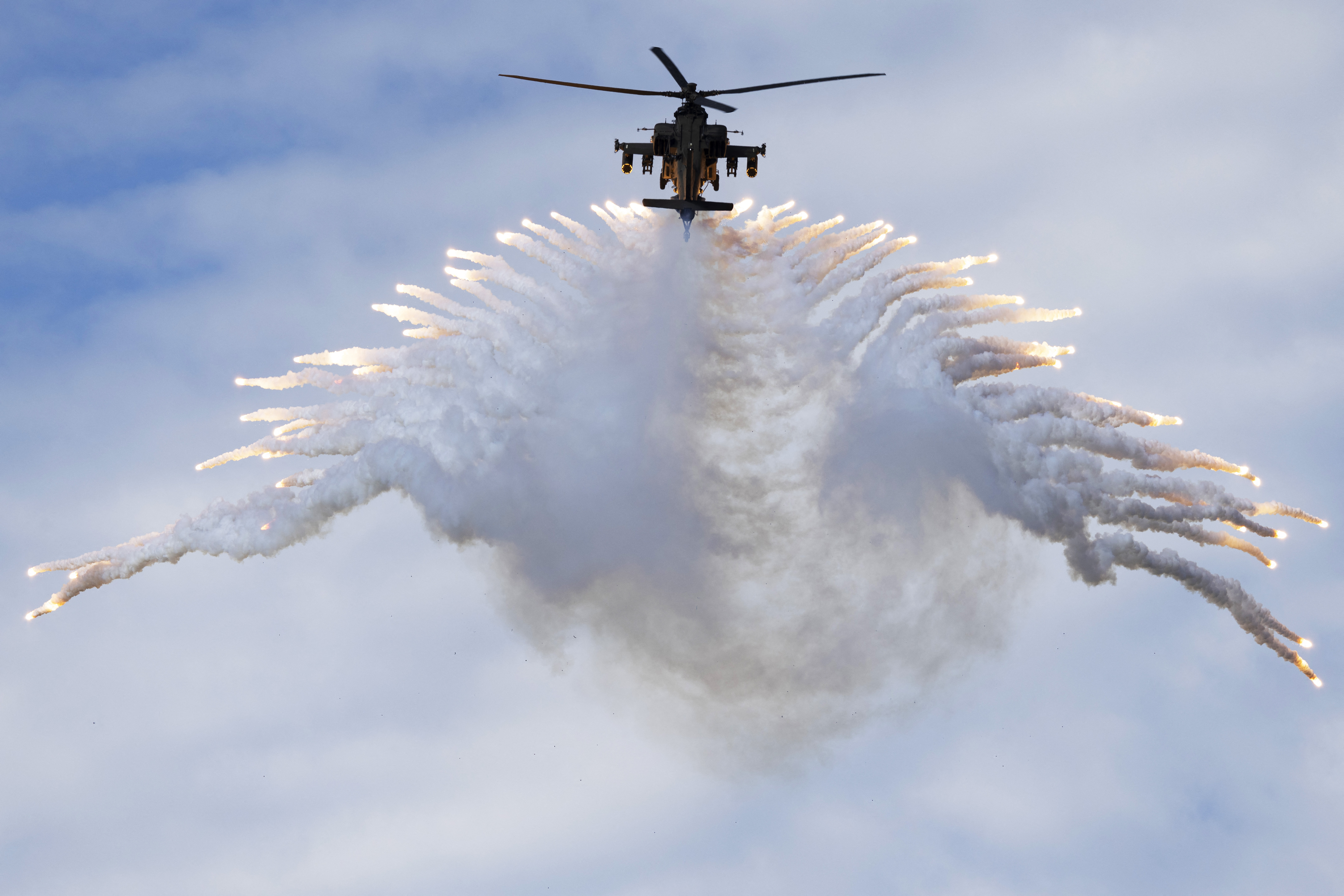
Israel is set to acquire 12 AH-64E Apache 'Echo' attack helicopters from Boeing, according to an Israeli Ministry of Defense announcement made this week. Defense News Israel correspondent Tzally Greenberg reported that the deal secures the advanced variant of the helicopter, with delivery scheduled for the beginning of the next decade. The purchase had been in doubt for months, and it was rescued only after Israeli defense officials asked the United States for one more extension and an Israeli Cabinet vote approved the money needed to sign the contract on the same day.
The Apache is one of the most widely used attack helicopters in the world, and Israel already operates Apache helicopters. The 'Echo' designation refers to the latest version of the aircraft, which carries more advanced sensors, networking and targeting equipment than earlier models. Buying a newer variant matters because it determines which systems a military can use for years, and it shapes how well the aircraft can work alongside other forces and future upgrades.
What the deal secures
According to the Israeli announcement as reported by Defense News, the agreement covers 12 helicopters. The source describes them as the advanced variant, and it says delivery is scheduled for the beginning of the next decade. The source does not give a contract value, a delivery schedule by year or the number of aircraft that will be delivered in each batch, so those details remain unconfirmed.
The deal is significant for Israel's air force because attack helicopters are used to support ground troops, strike targets at short range and escort other aircraft. Israel's defense establishment has long relied on the Apache for these roles. Replacing or expanding a fleet requires years of planning, which is why the delays in this procurement drew so much attention in Israel.
Months of delay over funding
The deal's viability was in question for months. Defense News reports that the Israeli government was unable to finalize the agreement despite several offer extensions granted by the United States. The main obstacle was a dispute between the Israeli Ministry of Finance and the Israeli Ministry of Defense over how to pay for the purchase.
In budget terms, the finance ministry wanted adjustments to the national budget and a clearly defined funding source before committing money. The defense establishment, by contrast, pressed for approval of the procurement as an urgent matter, arguing that it should not wait for broader budget discussions. This kind of disagreement is common in government procurement, where a ministry that controls the purse may insist on fitting a large purchase into existing spending limits. When the two sides cannot agree, a deal can stall even when the military need is widely accepted.
The delay carried a practical risk beyond the immediate politics. According to the source, after Israel missed the original deadline of October 7, 2026, concerns arose that Boeing's production slot for the helicopters could be routed to other international customers. Such a shift could lead to longer delivery times and higher prices. Defense contracts for complex aircraft are often tied to production schedules, so a missed signing window can affect both cost and timing.
A last-minute extension and a Cabinet vote
The breakthrough came at the final stage. Israeli defense officials contacted their U.S. counterparts and requested another extension, according to the source. The Americans agreed and opened what Israeli officials described to the press as a 'final window.' The condition was that the deal be signed immediately.
That condition set off a rapid sequence of decisions in Israel. An urgent Cabinet vote, conducted by phone, took place on Wednesday. The Cabinet approved a budgetary source for the purchase, drawn from another long-term national program that is not related to defense. The source says this approval made it possible to sign the deal on the same day.
The decision to fund the helicopters by redirecting money from a non-defense program is likely to draw attention in Israel's policy debates. Any reallocation of long-term spending involves trade-offs, and analysts will be watching whether the program that lost funds can be restored or whether it will face delays of its own. Defense News did not identify the program in the material reviewed for this report.
Inside the Apache Echo
The AH-64E Apache 'Echo' is a twin-engine helicopter with two crew members seated in tandem, one behind the other. Its weapons and targeting system can carry up to 16 Hellfire missiles, which are laser-guided anti-armor missiles often used against tanks, vehicles and fortified positions. It can also carry 76 2.75-inch rockets, which are unguided rockets used for area attacks. The helicopter's armament includes an M230-series 30mm automatic chain gun, supplied with up to 1,200 rounds of ammunition.
The source also highlights the aircraft's digital capabilities. The platform includes digital network connectivity through Link 16, a secure tactical data link used by many Western militaries to share information between aircraft, ships and ground units. The helicopter also supports manned-unmanned teaming, which allows crewed aircraft to control or receive data from drones. This capability means a helicopter crew can potentially direct uncrewed systems during a mission, extending their reach without placing more crew in danger.
The Apache is also built around a modular open systems approach. In plain terms, this design is meant to make it easier to add or replace hardware and software over time, without rebuilding the entire aircraft. For a military that expects to operate a helicopter for decades, that flexibility can reduce the cost of future upgrades and allow new sensors or weapons to be integrated more quickly.
Why the deal matters
The purchase matters to Israel's military planning because it preserves a capability that the defense establishment considered urgent. It also matters because it shows how the country's budget politics and its security needs interact. The episode demonstrates that funding disputes can carry consequences far beyond the finance ministry, affecting delivery schedules and costs for critical equipment.
The deal also matters for the relationship between Israel and the United States. The source makes clear that the U.S. side granted several extensions and then a final window, which suggests that Washington was willing to accommodate Israel's timeline while still insisting on a firm commitment. Analysts who follow arms sales generally view such extensions as a signal of continued cooperation, while also recognizing that the American side has its own production planning and customer priorities to manage.
For Boeing, the agreement provides a defined order for a helicopter that the company has long supplied to international customers. The source notes that the production slot was at risk of being reassigned, so securing the contract protects both the timing and the value of the order. For the defense industry more broadly, the case shows that production capacity for advanced military aircraft is limited and that customers who delay decisions can lose their place in line.
What to watch next
Several questions remain open after the announcement. The source does not give the total contract value, and it does not specify the exact delivery schedule beyond saying it begins at the start of the next decade. Observers will be looking for further details from the Israeli Ministry of Defense and Boeing about pricing, training, support packages and the first delivery date.
Another question is the funding. The Cabinet's decision to use money from a long-term non-defense program could affect other government priorities. Analysts will watch whether the government explains how that program will be funded or restored, and whether the decision creates pressure in future budget debates.
Finally, the deal's timing underscores the importance of production schedules. If Boeing's delivery slots are tight, any future delay could again affect cost and availability. For now, the signed agreement gives Israel a secured path to acquiring 12 of the advanced Apache helicopters, but the details of how and when those aircraft arrive will determine whether the deal fully resolves the concerns that built up over the past months.
Topics: Israel, Boeing, AH-64E Apache, Israeli Ministry of Defense, Israeli Air Force, Military procurement, Attack helicopters, United States arms sales
Sources: Defense News
https://axynewsglobal.com/article/israel-secures-12-apache-echo-attack-helicopters-from-boeing