
Hyundai Recalls About 94,000 Genesis Models Over Power Seat Fire Risk
Owners of certain Genesis vehicles are told to park outside after two reported fires linked to damaged seat switches
By AXY Autos Desk ·
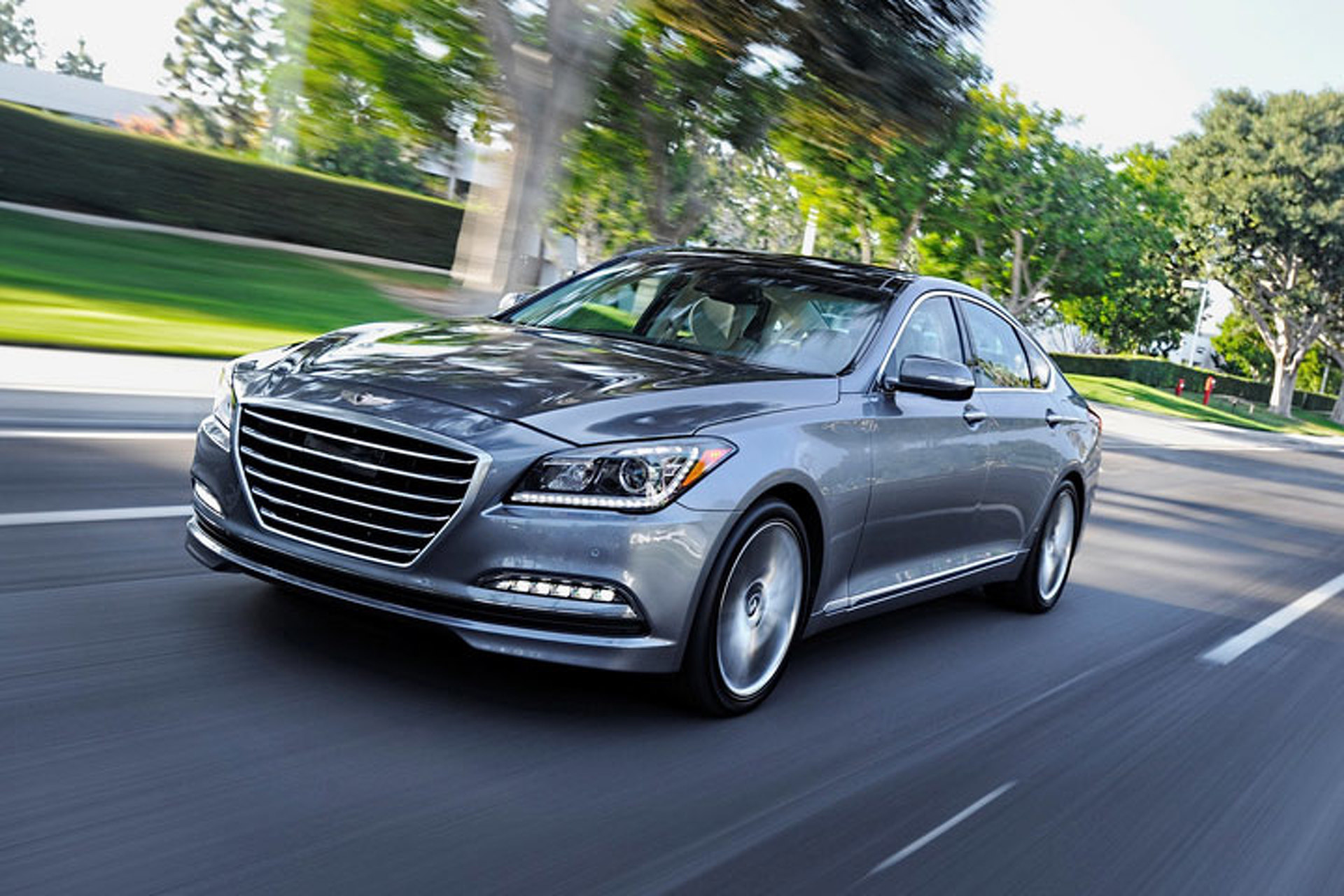
Key points
- Certain Hyundai Genesis models face a park-outside warning after two reported fire incidents tied to damaged power seat switches, according to Motor1.
- The headline refers to a recall of about 94,000 vehicles, but the body text available does not detail that figure or the affected model years.
- A park-outside warning is a precaution meant to limit fire damage while repairs are pending.
- Owners should check official recall information using their vehicle identification number and contact a dealer for repair details.
Certain Hyundai Genesis models are under a park-outside warning after two reported fire incidents tied to damaged power seat switches, according to a report published by Motor1 on 19 October 2026. The Motor1 report, which is the primary source for this article, describes the warning as the central concern for affected owners. The headline that accompanied the story refers to a recall of about 94,000 Genesis models over a power seat fire risk. The body text available for this report does not detail that figure, and it does not list the model years, trim levels, production periods or markets covered, so readers should treat the vehicle count as reported in the headline rather than confirmed in the article text.
The warning is the most immediate issue for owners. A park-outside instruction tells drivers to leave an affected vehicle outdoors, rather than in an attached garage or close to a home, until the underlying problem has been dealt with. Such instructions are generally issued when a manufacturer has identified a hazard that could start a fire but has not yet completed repairs for every vehicle involved. The aim is to limit the damage that could follow if a fire did start, not to suggest that every affected car will burn.
What the Motor1 Report Says
The central finding in the Motor1 report is that the problem lies in the seat switches rather than in the seats themselves. The report links the two reported fire incidents to damaged power seat switches. It does not describe the dates of the incidents, the locations where they occurred, or any injuries or property damage that may have resulted, and the available material does not say how the damage to the switches was identified or what caused it in each case.
Two reported fires is a small number when set against the total number of vehicles on the road, but regulators and manufacturers treat fire reports seriously. A vehicle fire can injure occupants, damage a home or garage, and destroy the car itself. Because the reported fires were connected to a specific component, the warning can be directed at a defined group of vehicles rather than at an entire brand or every model in a company's lineup. That focus is significant because it suggests the manufacturer has identified a particular part as the likely source of the hazard.
The report also serves as a reminder that many serious safety issues begin with small components. A switch that costs little to make can cause a major problem if it fails in a way that generates heat or creates an electrical short. For drivers, this means that a warning about a seat control can have consequences far beyond the seat itself.
How a Power Seat Switch Can Become a Fire Risk
A power seat switch is an electrical control that sends current to the small motors that move a seat forward, backward, up or down, and in many vehicles adjust the reclining angle or lumbar support. Power seats are used frequently, and the switches that operate them carry electrical current each time they are pressed. Over time, the contacts inside a switch can wear, and the wiring connected to it can be stressed by repeated movement or by heat.
When electrical contacts or connections become damaged, electrical resistance can rise. Resistance converts electrical energy into heat, and if the heat is not dissipated, it can melt plastic components, damage insulation and, in the worst cases, ignite nearby materials. This is the general mechanism by which a faulty electrical component can start a fire. The Motor1 report describes damaged switches as the link to the two reported incidents, but it does not explain the specific failure mode in the Genesis cases, so readers should not assume details beyond what is confirmed.
The risk is not confined to the switch itself. Wiring harnesses run beneath the seats and through the floor and body of the vehicle, so a fault in one part of the seat electrical system can affect nearby cables and connectors. This is one reason a recall involving a seemingly minor part can require inspection or replacement of wiring and connectors as well as the switch. The scope of any repair will depend on what the manufacturer's engineers find when they examine the affected components.
Why Park-Outside Warnings Are Used
A park-outside warning is a precautionary measure. It is designed to reduce the consequences of a fire while a repair is still pending. If a vehicle does ignite, parking it outdoors and away from buildings lowers the chance that the fire will spread to a home or garage, and it reduces the risk to people sleeping or working nearby. The instruction gives drivers a clear step to take while waiting for a fix.
For owners, however, the warning creates practical problems. Many people rely on a garage for security, weather protection and convenience, and some may not have a safe outdoor space for parking. An instruction of this kind can change daily routines, especially for households with multiple cars or for drivers who live in areas with extreme weather. Automotive safety observers generally expect manufacturers to issue such warnings when they cannot yet guarantee that every affected vehicle is safe. The length of time a warning stays in place usually depends on how quickly replacement parts can be produced and how fast dealers can book and complete repairs.
Warnings of this type also carry reputational and financial weight. Each affected owner must be notified, each vehicle must be inspected or repaired, and the manufacturer must cover parts, labour and any additional support it chooses to provide. Analysts who follow recalls often note that the speed and clarity of communication can shape how owners respond, and that unclear instructions can prolong uncertainty even when a repair is available.
How Recalls Work in the United States
The Motor1 report does not say which markets are affected, so it is not clear from the material available whether the recall applies only to the United States or to other regions as well. In the United States, however, vehicle safety recalls are overseen by the National Highway Traffic Safety Administration, known as NHTSA, which is the federal agency responsible for motor vehicle safety. Under the federal system, manufacturers are generally required to report safety defects to the agency when they identify them, to notify registered owners, and to provide a free remedy through authorised dealers.
A recall notice typically explains the defect, the risk it poses, any interim instructions such as a park-outside warning, and how owners can book a repair. Owners who are unsure whether their vehicle is included can check the official NHTSA recall lookup using the vehicle identification number, which is a unique code printed on the vehicle and listed on registration documents. They can also contact a Hyundai or Genesis dealer or the manufacturer's customer service line. Because the Motor1 report does not list the affected vehicles in detail, owners should not assume that a particular model year or trim is included or excluded without checking.
Recall campaigns can also be expanded. If a manufacturer or regulator finds additional incidents or identifies a broader production problem, the population of affected vehicles can grow. For that reason, owners whose cars are not initially covered may still want to check again after official updates are published.
What Owners Should Do Now
The first practical step for Genesis owners is to check whether their vehicle is covered, using the official recall lookup or a dealer. The second is to follow any interim instructions in an official notice, including any park-outside guidance. The Motor1 report does not describe a specific list of warning signs, but in general, drivers should be alert to smoke, a burning smell, unusual heat from a seat or its controls, or a seat that moves erratically. Anyone who notices these signs should stop using the affected controls, move the vehicle away from buildings if it is safe to do so, and seek service promptly. If a fire occurs, the first call should be to emergency services.
Owners should also avoid relying solely on news summaries. Official recall notices and manufacturer communications will contain the precise scope, repair details and any remedy timelines. Keeping records of any dealer contact, service appointment or notice received by mail can also help if questions arise later about a repair or rental vehicle support.
Genesis, Hyundai and the Wider Industry
Genesis is the luxury brand of Hyundai Motor Company, the South Korean carmaker. It competes in the premium segment against established German and Japanese luxury brands, and its cars are typically positioned around comfort, technology and higher price points. Because the affected vehicles are part of a premium line, the decision to issue a warning carries reputational stakes as well as safety and financial ones. Buyers of luxury cars often expect a high standard of quality, and a safety warning can affect confidence in the brand even when a fix is available.
The reported incidents also highlight a broader industry challenge. Modern vehicles contain many electronic controls, sensors, switches and wiring networks, and a fault in a relatively inexpensive part can lead to a recall affecting large numbers of cars. Automakers increasingly rely on suppliers for these components, which means that quality control can involve multiple companies in the supply chain. Industry observers often watch whether a recall remains limited to a specific production period or expands as more information becomes available, since that pattern can signal whether the cause was an isolated defect or a systemic issue.
Cost is another consideration. A recall of this size involves dealer labour, replacement parts, logistics and communication with a large group of owners. Each individual repair may be relatively simple, but the total effort is substantial, and manufacturers must also manage the possibility of rental cars or other support for owners who depend on their vehicles.
What to Watch Next
Several questions remain open after the Motor1 report. The most important is whether an official recall notice will confirm the number of affected vehicles, identify the model years and production periods involved, and describe the specific repair. Readers should also watch for a clear statement on how long the park-outside warning will remain in effect and whether it will be lifted once a fix is available for each vehicle.
Another key development would be any additional fire report. Analysts who follow vehicle safety say that new incidents could lead to a wider recall or a longer warning, while a confirmed and effective repair would allow the focus to shift to how quickly dealers can complete work across the affected population. The availability of replacement parts, dealer capacity and the manufacturer's communication with owners will all shape how smoothly that process runs.
For now, the report establishes a clear message for owners: certain Genesis models face a park-outside warning linked to two reported fires and damaged power seat switches. Owners should check their vehicles through official channels and follow the guidance they receive. Official notices and manufacturer statements, which are not yet part of the reporting available here, will provide the detail needed to judge the full scope of the problem.
Questions and answers
Why is Hyundai recalling Genesis models?
According to Motor1, certain Genesis models face a park-outside warning after two reported fire incidents tied to damaged power seat switches. The headline refers to a recall of about 94,000 vehicles, although the report's body text does not detail that figure.
Should Genesis owners park outside?
Owners of affected vehicles have been warned to park outside as a precaution. The instruction is meant to reduce the risk of a fire spreading to a home or garage while a repair is pending.
How can I check whether my Genesis is included in the recall?
Owners can use the official NHTSA recall lookup with their vehicle identification number or contact a Hyundai or Genesis dealer. The available reporting does not list the affected model years in detail.
What happens next with the Genesis recall?
Readers should watch for an official recall notice that confirms the number of vehicles, identifies the model years, explains the repair and states how long the park-outside warning will remain in place.
Topics: Hyundai, Genesis, Vehicle recall, Power seat switch, Car fire risk, Vehicle safety, NHTSA
Sources: Motor1