
France Cost-of-Living Protests Draw 550,000 Amid Security Fears
Interior Ministry puts national turnout at about 550,000, with around 110,000 in Paris, as dozens are detained and students join the marches
By AXY World Desk ·
Key points
- Dozens of people were detained in Paris on Saturday after protesters clashed with security forces, according to Euronews.
- The French Interior Ministry said around 550,000 people joined nationwide cost-of-living protests, including about 110,000 in Paris.
- Trade unions, citizens branding themselves as yellow vests and students joined together, citing fuel prices, living costs and education needs.
- The government stepped up security beforehand, and the next signals to watch are further protests, government measures on prices and student mobilisation.
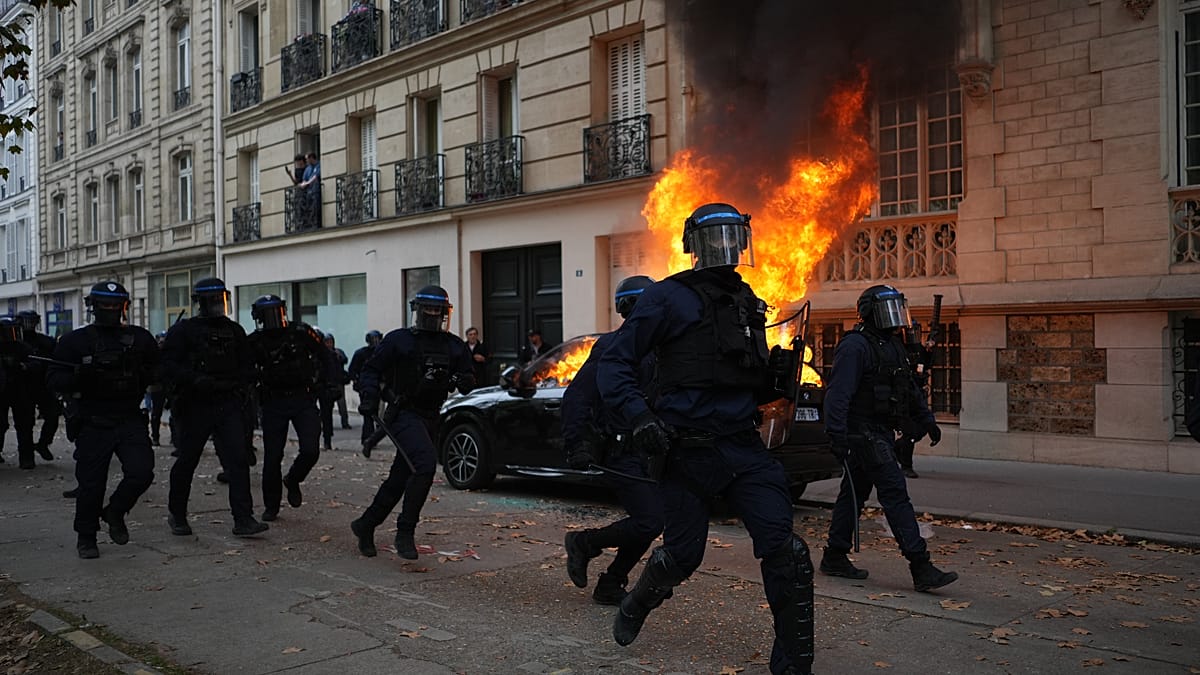
Dozens of people were detained in Paris on Saturday after protesters clashed with security forces across the French capital, as nationwide demonstrations over the cost-of-living crisis drew large crowds across France. The French Interior Ministry said around 550,000 people took part in the protests, including roughly 110,000 in Paris. The government had stepped up security measures beforehand, and student groups were also expected to join the marches amid fears of potential clashes, according to a report by Euronews.
The protests brought together several groups with overlapping grievances. Trade unions and citizens who have branded themselves as yellow vests were both demonstrating against the rising cost of living and higher fuel prices, which the Euronews report links to the US-Israeli war on Iran. A large number of students also joined the nationwide action, demanding a revamp of the country's educational system, upgrades to classrooms and facilities, and greater access to resources. The combination of economic, civic and educational demands is one of the most striking features of the day, and it helps explain why the event drew such wide attention.
For readers outside France, the scale of the figures is significant. An official estimate of 550,000 participants nationwide places the day among the largest mobilisations of the autumn. The concentration in Paris, where about 110,000 people were counted, means the capital again became the focal point for both peaceful marches and the confrontations that followed. Euronews reported that the security response had been reinforced in advance, reflecting official concern that the day could turn disorderly.
What Happened on Saturday
According to the Euronews report, protesters clashed with security forces across Paris on Saturday, and dozens of people were detained as a result. The report does not give a detailed account of individual incidents, the charges facing those detained, or how the clashes unfolded street by street. What it does establish is that the security operation was intended to manage a day that officials expected could bring confrontations, and that the day did produce arrests.
The mix of participants is central to understanding the day. Trade unions, citizen movements and students each have their own reasons for taking to the streets, and their participation in a single day of action gives the protests a broad base. Unions typically focus on wages, pensions and working conditions. Citizen groups often focus on household budgets, taxes and the cost of everyday goods. Students tend to raise questions about public services and their own futures. When these demands are combined, the protest is no longer tied to one grievance, which can make it more difficult for governments to respond with a single policy.
The Euronews reporting also makes clear that the protests were nationwide rather than confined to the capital. That detail matters because national mobilisations require coordination across many cities, unions and local networks, and they are more likely to put sustained pressure on the government than isolated local actions.
Why Fuel Prices and Living Costs Are Central
The report identifies rising fuel prices as a key trigger for the anger on the streets. Fuel prices are shaped by several forces: global crude oil markets, exchange rates, refining costs, and national taxes and levies. Oil markets are particularly sensitive to disruptions in supply, and conflicts in the Middle East have repeatedly been associated with price spikes because the region is a major source of the world's oil. When the cost of fuel rises, the effects spread well beyond motorists. Transport, food distribution and heating bills can all become more expensive, and these knock-on effects tend to hit low- and middle-income households hardest because they spend a larger share of their income on essentials.
The cost-of-living crisis is therefore less about a single price than about the cumulative pressure of many everyday expenses. Economists often describe this kind of pressure as a squeeze on purchasing power, meaning that wages and benefits fail to keep pace with what households must pay for basic goods and services. When this squeeze lasts for months, it can turn into political anger quickly, particularly when people feel that their government has limited room to respond or that the burden is not shared fairly.
It is important to note that the Euronews report attributes the link between fuel prices and the wider conflict to the context of the protests, rather than setting out a detailed economic analysis of the causes of price rises. Readers seeking to understand how much of the increase comes from global markets and how much from domestic taxation would need to consult official price data and independent economic analysis.
The Yellow Vest Movement's Origins
The term yellow vest, or gilets jaunes in French, refers to the high-visibility jackets that drivers in France are required to keep in their vehicles for emergencies. The name was adopted by a protest movement that emerged in November 2018 in opposition to planned increases in fuel taxes. What began as online anger over the cost of petrol and diesel quickly spread into weekend street demonstrations across France. Over time the movement grew into a broader expression of frustration about taxation, the cost of living and what many participants saw as the distance between ordinary citizens and national political leaders.
The earlier movement became known for its recurring weekend protests, road blockades and, in several cities, violent confrontations with police. Its impact was significant: it forced the government to reconsider the fuel tax rise and drew attention to the difficulties faced by households in rural areas and smaller towns, where car use is often essential for work and daily life. The movement also left a lasting mark on French politics and on public debate about policing of demonstrations.
Its legacy remains important for understanding Saturday's events. Many French citizens and officials still associate the yellow vest label with the risk of disorder, which helps explain why the government moved to increase security before the latest marches. At the same time, the reappearance of the name shows how durable the underlying grievances about money and fairness have been. For many people, the question is not only what the government is doing about prices today, but whether the concerns raised by the earlier movement have been addressed at all.
Security Measures and the Risk of Clashes
The French government stepped up security ahead of the protests because officials feared potential clashes. Large, multi-group demonstrations in central Paris typically require coordinated policing, including monitoring of routes, protection of public buildings, and rapid responses to flashpoints where crowds and police come into close contact. Security planning for such a day involves balancing the need to protect people and property with the right of citizens to march and make their views known.
Policing large protests involves a delicate balance. Authorities must protect public order and the safety of demonstrators, bystanders and property, while also respecting the right to peaceful assembly. Detentions during a day of mass protest do not by themselves indicate how the day as a whole was conducted, since most participants in large demonstrations are not involved in confrontations. The Euronews report describes dozens of detentions following clashes but does not provide a breakdown of the number of officers injured, the number of protesters injured, or the damage caused. Those details would help clarify the scale and nature of the disorder.
The handling of detainees will also be closely watched. Important questions include how long people are held, whether they are charged, and whether any face prosecution. Official statements and court records in the coming days would provide clearer answers than the initial reporting available so far.
Students Add Education Demands
The students who joined Saturday's protests set out a separate set of demands. They called for a revamp of the country's educational system, upgrades to classrooms and facilities, and greater access to resources. These are issues that governments usually address through budgets for schools and universities, staffing, teacher training and infrastructure investment. Such changes take years to plan and carry out, so they are rarely resolved quickly through a single announcement.
Student participation can change the character of a protest. Young people often bring energy, a strong sense of long-term stakes and organising skills developed through social media, and their presence can draw wider public attention. It can also raise concern among authorities, because student demonstrations have in the past been associated with some of the most visible confrontations in French cities. The inclusion of education demands connects the cost-of-living debate to the future: families worried about rising prices are often the same families worried about school conditions and access to opportunity for their children.
For ordinary readers, this link is easy to understand. Household budgets are affected by fuel, food and housing costs, but they are also shaped by the quality of schools, the availability of learning materials and the chances young people have to build careers. The combination of these concerns helps explain why the protests appealed to people who might not otherwise take part in demonstrations.
What Could Happen Next
The Euronews report does not describe the government's formal response to the protests, so the next steps remain uncertain. Analysts would typically watch several signals. The first is whether trade unions and citizen groups call further nationwide action, which would indicate whether Saturday was a single peak or the start of a sustained campaign. The second is whether the government responds with measures on fuel prices, household support or public spending, since concrete action on the cost of living could ease some of the pressure. The third is whether student groups keep their mobilisation going into the new academic term and whether ministers engage with their demands on schools and facilities.
Authorities will also be watching how the detentions are handled and whether security measures remain in place for future marches. Analysts often note that the way a government handles the first few days after a large protest can shape public opinion for weeks. If future marches remain largely peaceful, tensions may ease. If clashes continue, the debate could shift from economic grievances toward questions about public order and policing, which can make it harder for protest movements to keep the focus on their original demands.
For ordinary readers, the key issue is how these pressures affect daily life. Fuel prices, household bills and public services touch almost everyone, which is why protests of this size draw such wide attention. The coming weeks will show whether the anger on Saturday translates into lasting political change, a negotiated settlement or a longer period of unrest. Readers should look to official government statements, the Interior Ministry's updates and independent reporting for further developments.
Topics: France protests, cost-of-living crisis, yellow vest movement, Paris, French Interior Ministry, fuel prices, student protests, French police
Sources: Euronews.com
https://axynewsglobal.com/article/france-cost-of-living-protests-draw-550-000-amid-security-fears