
Fiat Multipla-Inspired Concept Could Reach Production in 2-3 Years
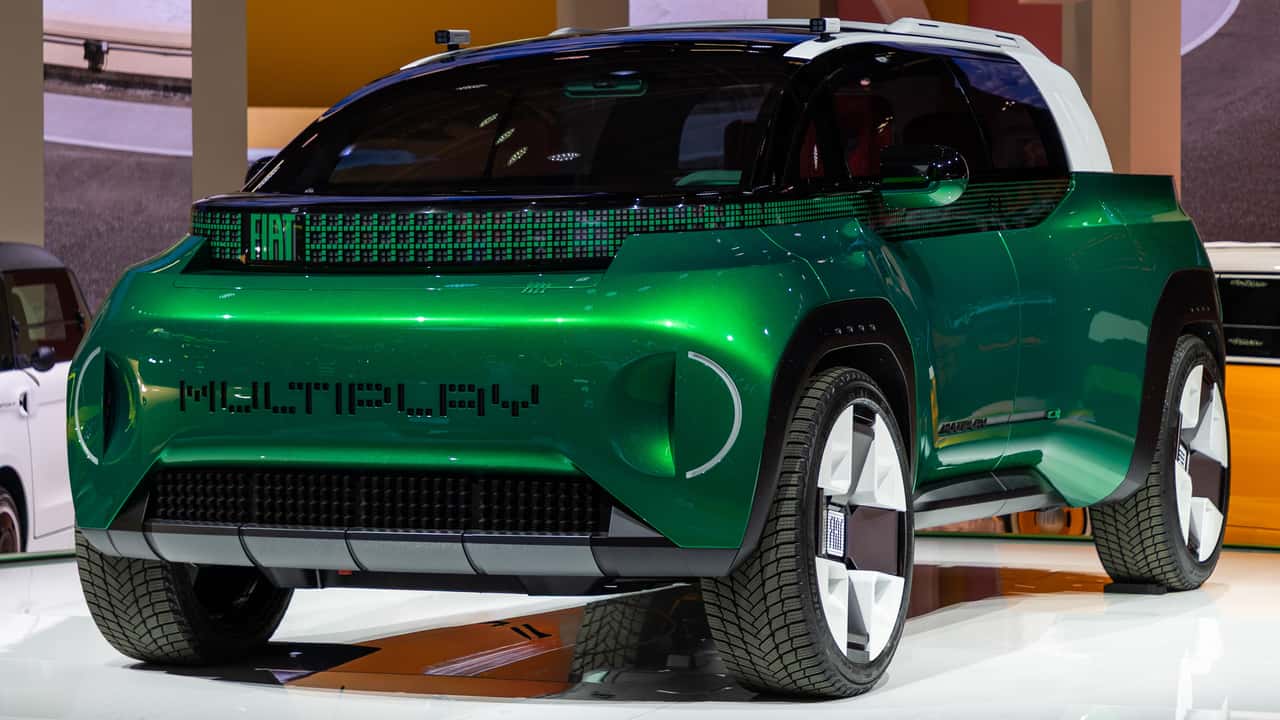
Motor1 reports a new Multipla-inspired family car concept could go on sale within two to three years, but the source gives no price, engine or confirmed launch date
By AXY Autos Desk ·
Key points
- Motor1 reports a new Multipla-inspired concept could become a production family car in the next two to three years.
- The original Fiat Multipla was sold from 1998 to 2010 and is remembered for its unusual, practical design.
- The source material gives no confirmed price, engine type, body details or official launch date from Fiat or Stellantis.
- Concept cars often change substantially before production, and automaker timelines can slip.
- Buyers are likely to judge a revived model on price, running costs and practicality as much as on its looks.
Fiat may be preparing to bring one of its oddest past models back to showrooms. Motor1 reports that a new Multipla-inspired concept could become a production family car in the next two to three years. The report was published on October 21, 2026, and it is the central fact in an otherwise short account. It gives no price, no engine details, no body style and no exact launch date, so readers should treat the timeline as a possibility rather than a promise.
That leaves a lot of open questions, and some of them matter to anyone shopping for a family car. Would a revived Multipla be electric, hybrid or petrol? Would it keep the original's tall, rounded shape? Would it be sold only in Europe or in other markets too? The source does not answer those questions. What it does offer is a clear sign that Fiat is at least considering a practical vehicle built around the Multipla's identity. That alone makes the idea worth following.
What the report says
The Motor1 report describes a Multipla-inspired concept that could move from the show stand into production. Its time frame is the next two to three years. The report calls the concept a family car, which points to a roomy, practical vehicle rather than a sports car or a limited-edition collectible. The wording is cautious. The word "could" carries most of the weight in the sentence, and it is the only forward-looking claim the source makes.
The material does not say whether Fiat has formally approved the project. It includes no statement from Fiat or from its parent company, Stellantis. It also does not explain how far development has progressed, whether a prototype has been built, or whether the concept has been shown to buyers for feedback. Those gaps matter. A concept can be a serious engineering study that is close to a production decision, a design exercise meant to gauge public reaction, or something in between. Automakers show many concepts every year that never reach dealers.
The Multipla's odd place in Fiat's history
The original Multipla was sold from 1998 to 2010, a production run of about twelve years. It was a compact car with a tall, rounded body that looked nothing like most small cars of its time. Its front end was unusual, and its interior was laid out to fit passengers in a way that rivals did not copy. The car was built around practicality, and much of its odd shape came from that goal rather than from styling for its own sake.
The Multipla never became a mainstream fashion, but it became a talking point. Many people remember it with affection, others with a shrug, and it still comes up often among car enthusiasts when they discuss Fiat's more unusual models. That memory is part of the reason a revival would attract attention. It is also the source of the risk. Buyers who remember the original's quirks may expect a modern version to keep them, while buyers who never owned one may judge it purely on whether it works as a family car.
Fiat's current line-up has been shaped by a changing market. Across Europe, many shoppers have moved toward crossovers and electric SUVs, which offer higher seating positions and more interior space in a familiar package. A revived Multipla would have to make a case against that trend, and its distinctive look would be a large part of that argument.
How a concept becomes a production car
For readers who are not familiar with the process, here is the basic path. A concept car is a showpiece built to display a design direction, test public response and signal what a company might do next. Many concepts use parts, materials or layouts that would never pass safety rules or fit a realistic cost target in a showroom. Turning one into a car that can be sold means meeting crash-test requirements, emissions and efficiency standards, manufacturing budgets, and the needs of dealers and buyers in many countries.
Some concepts reach the road almost unchanged. Others are reshaped heavily, because the production version has to be cheaper to build, easier to repair and acceptable in safety testing. A window of two to three years is therefore a planning estimate. It signals intent, but it is not a guarantee. Industry timelines often slip when engineering problems arise, when market conditions change or when a company's priorities shift.
Automakers also have to decide what powers the car. The source does not say whether a revived Multipla would be electric, hybrid or run on a conventional engine. That choice shapes the price, the running costs and which markets the car can reach. Charging networks, fuel prices and tax rules vary widely across Europe and elsewhere, so the powertrain will matter to buyers as much as the body. An electric version, for example, would depend on battery costs and charging access in each market, while a petrol or hybrid version would face different emissions and fuel-economy rules.
There is also the question of who builds it. Stellantis was formed in 2021 through the merger of Fiat Chrysler Automobiles and the PSA Group, the French maker behind Peugeot and Citroen. Fiat is one of the group's many brands. Any decision on a Multipla revival would therefore involve the wider group's engineering, purchasing and sales planning, not just Fiat's own teams. Sharing parts and platforms across brands can lower costs, but it can also limit how far a single model can depart from the rest of the range.
What a revived Multipla would have to offer
For ordinary drivers, the test is simple. Is this car worth paying for? A tall, flexible family vehicle with a distinctive look could appeal to people who want more space and practicality without buying a large SUV. Parents with children, people who carry bulky sports or hobby equipment, and buyers who simply want something that stands out in a car park might all look at it. Families who currently choose between a small estate, a people carrier and a crossover could see a fresh option in the mix.
The risk is price. Compact family cars face steady cost pressure from components, batteries and labour, and a novelty design can be a hard sell if the price sits above more conventional rivals. Buyers will also weigh resale value, insurance, fuel or charging costs, and how easily the car can be serviced. A new Multipla would have to answer those practical questions as well as revive a memory. Novelty may get a car noticed, but it rarely keeps a family buyer happy on its own.
Design is the other test. The original's look was loved by some and mocked by others, and a modern version would be judged against that history. If it is too faithful, it could look like a retro costume. If it is too cautious, it could lose the personality that made the idea worth discussing. Designers would need to find a version that feels fresh, uses modern safety features and still reads as a Multipla at a glance.
Why it matters beyond one model
For Fiat, the stakes are commercial. The brand has been looking for ways to stand out in a crowded market, and a car with a clear identity could draw attention in showrooms and online. It could also divide opinion. For a brand that many shoppers know mainly for small, affordable cars, a well-received oddity could help it be remembered. A poorly received one could reinforce the idea that Fiat is playing it safe in some segments and taking risks in others.
The wider industry also has a stake. Over the past decade many carmakers have shifted their ranges toward crossovers and electric SUVs, and many buyers have chosen bigger, higher bodies. A revived Multipla would test whether a quirky, practical design can still win buyers in that environment. Its reception would be watched by rival companies deciding whether similar niche designs are worth the development cost.
For buyers, the question is less about nostalgia and more about choice. A market with more distinctive options gives families a wider range of shapes and sizes to consider. Whether this particular concept becomes a showroom car or stays a design study, the discussion it has started shows that the Multipla's appeal has not disappeared since production ended in 2010.
What to watch next
The clearest signal would be an official statement from Fiat or Stellantis confirming the project, its target market and its timing. Without that, the Motor1 report remains a single account of a possible plan, and it should be read that way. Official announcements are usually the first point at which a concept is treated as a real product plan.
The second signal is detail. Information about the platform the car would share with other models, the powertrain, the planned production site and the expected price would show how seriously the project is being pursued. Industry watchers often look for these details in the months before a launch, when specifications and prices begin to firm up.
The third is public reaction. Concepts are sometimes used to test interest. Strong responses from buyers and the press can push a company to move ahead, while weak reactions can lead to quiet changes or shelving. For now, the idea is a promising possibility with a specific but unconfirmed timeline of two to three years. Readers who want to follow it should watch for official Fiat and Stellantis announcements rather than speculation.
Questions and answers
Is Fiat bringing back the Multipla?
A Motor1 report published on October 21, 2026 says a new Multipla-inspired concept could become a production family car in the next two to three years. The report does not confirm an official Fiat decision or a launch date.
When could a new Fiat Multipla go on sale?
The report gives a window of the next two to three years. That is a possible timeline rather than a confirmed launch date, and concept cars often change before they reach production.
What was the original Fiat Multipla?
The Multipla was sold from 1998 to 2010 and was known for its tall, rounded body and unusual interior layout. It is remembered as one of Fiat's most distinctive family cars.
Who owns Fiat?
Fiat is part of Stellantis, which was formed in 2021 through the merger of Fiat Chrysler Automobiles and the PSA Group. Any Multipla decision would involve the wider group's planning as well as Fiat's own.
Topics: Fiat, Fiat Multipla, Stellantis, Motor1, family cars, concept cars, car design
Sources: Motor1
https://axynewsglobal.com/article/fiat-multipla-inspired-concept-could-reach-production-in-2-3-years