
China's First Aircraft Carrier Liaoning Makes Another Far-Seas Deployment
Carrier group trains near Taiwan, Japan and the Philippines as regional governments watch its movements closely
By AXY Defense Desk ·
Key points
- China's first aircraft carrier, the Liaoning, led a naval task group into the western Pacific on Oct. 14 for training.
- The carrier has made at least six faraway deployments since its completion 14 years ago, plus another in October.
- The group sailed near Taiwan, Japan and the Philippines, areas where China has political or maritime disputes.
- Japan's defence ministry said it saw fighter aircraft taking off and landing from the Liaoning about 250 kilometers south of Ishigaki Island.
- Experts said the Liaoning's voyages help train and test technology for the newer Shandong and Fujian carriers.
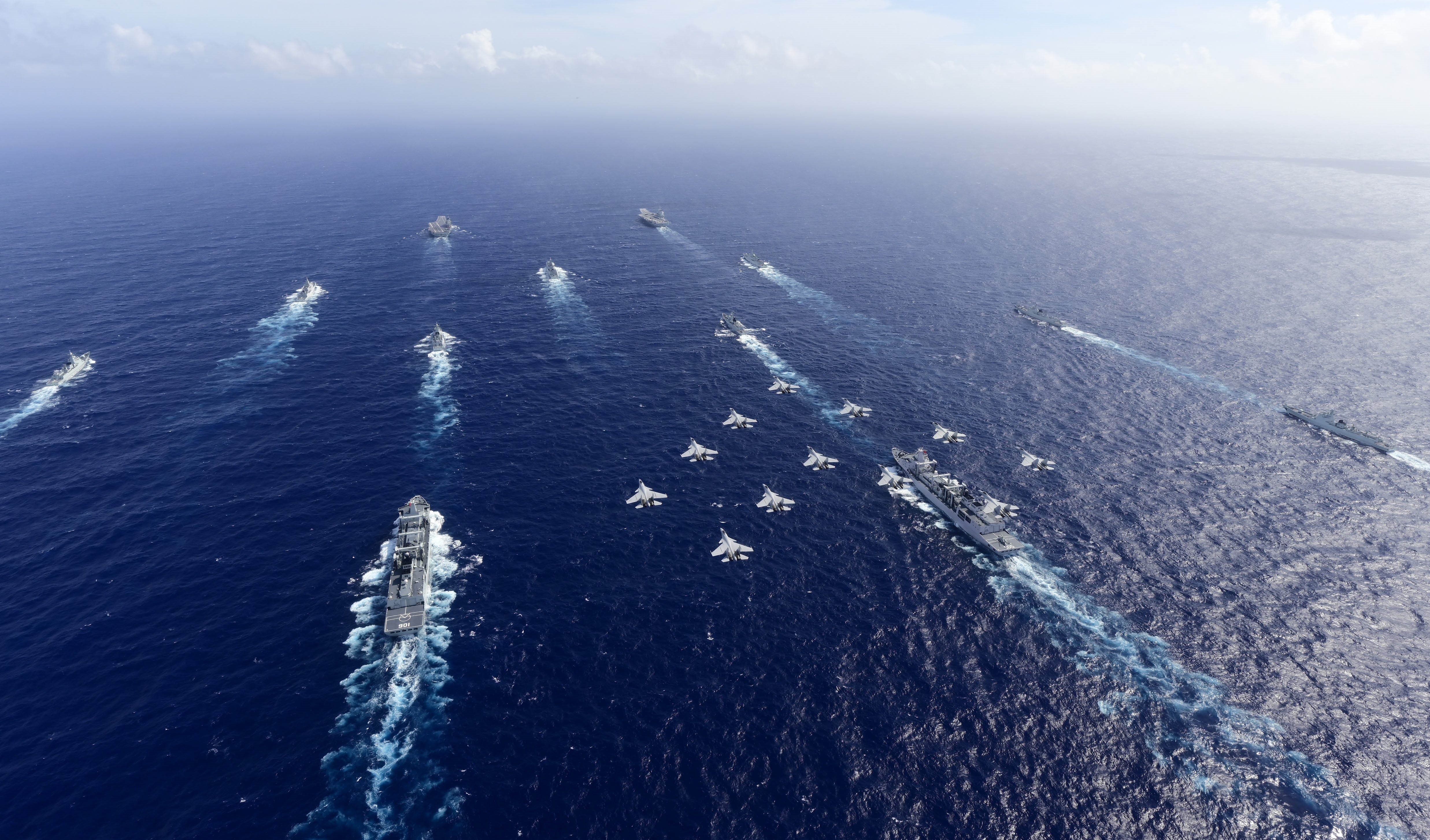
China's first aircraft carrier, the CNS Liaoning, has sailed on another far-seas training deployment, and its movements are being tracked closely across East Asia. The ship had already made at least six faraway deployments since it was completed 14 years ago. It made another in October, leading a naval task group into the western Pacific Ocean on Oct. 14, according to the Chinese People's Liberation Army Navy.
The voyage matters because it sits in some of the most contested water in the region. The carrier group has passed close to areas where China has political or maritime sovereignty disputes with its neighbours, and that has put governments in Taipei, Tokyo and Manila on alert.
How the Liaoning Became China's First Carrier
The Liaoning is China's only carrier that started life as a Soviet-era design. It was built from a hull that had been left unfinished, and China later bought and refitted it. Beijing put it into service in 2012, and it has been the country's first real test ship for carrier operations ever since.
The ship is not new. Its age matters because the People's Liberation Army Navy now has two newer carriers, and the Liaoning is the oldest of the three. That makes it a useful tool for training rather than the centrepiece of a fight. The vessel is about 305 meters (1,000 feet) long, with a flight deck up to 75 meters wide. Its design is described as a "short take-off but arrested recovery" carrier. In plain terms, that means aircraft leave the deck using a ski-jump style ramp and land by catching cables with a hook, rather than being launched by catapults.
For China, the ship has long been a symbol of its growing naval reach. Beijing has pushed its navy to operate further from home, and the Liaoning has been the main way to show that progress in public.
A Routine Voyage Pattern Takes Shape
Because the ship sails so often in public view, military analysts believe the navy has settled on a routine. Under that routine, the Liaoning makes regular long-distance trips that help train crews and test equipment for the rest of the fleet.
Carl Thayer, an Asia specialist and emeritus professor at the University of New South Wales in Australia, said the current voyage "appears to be part of an established evolving pattern of far-seas training deployments." He said the ship shows "China's naval military capability and political influence through its constant presence in China's near and far seas."
The pattern is important for people who watch the region closely. A ship that sails often, and far from its home ports, is a ship that can keep crews sharp and keep foreign navies guessing about where it will go next. Each new deployment becomes a fresh signal about how far China's fleet can reach.
What the October Deployment Involved
China's state news agency, Xinhua, reported the navy's account of the trip. Xinhua called the expedition a "drill" and part of an annual routine training plan aimed at "testing and improving combat readiness." The agency also said the Liaoning's October movements comply with international law and "are not directed at any specific country or target."
The state-controlled Global Times described the October voyage as the carrier's second in the distant seas. It also described the ship's progress as moving from a "coastal pathfinder" to a "far-sea blade." Those phrases are propaganda-style language, but they show how Beijing wants the carrier to be seen.
The task group was built around the carrier and included two large destroyers and a guided-missile destroyer, according to local media reports in East Asia. As of Oct. 23, the group had carried out exercises near the southernmost Japanese outlying islands. It was then headed for the South China Sea, near the Philippines.
Japan's defence ministry said it had seen fighter aircraft taking off and landing from the Liaoning about 250 kilometers (155 miles) south of Japan's Ishigaki Island. Colin Karotam, senior resident fellow with the Defence Strategy Program at the Australian Strategic Policy Institute, said the carrier group had launched and recovered aircraft inside Japan's maritime exclusive economic zone. Karotam called such activity "uncommon," though he said it may have taken place before.
Why Taiwan, Japan and the Philippines Are Watching
The carrier's route brings it close to places where China's rivals have strong interests. China claims self-ruled Taiwan as part of its territory and has not ruled out the use of force to take it. The People's Liberation Army has stepped up military activity near the island since 2022.
Taiwan's Ministry of National Defense said in mid-October that it was monitoring the possibility of large-scale Chinese military exercises nearby as a result of the Liaoning's movements. For Taiwan, that means watching not just the carrier but the wider set of ships and aircraft that could come with it.
Japan disputes a group of uninhabited islets with Beijing. The Philippines is also in a dispute with China over parts of the South China Sea. In that sea, China has built artificial islands over the past two decades, often for military use, to strengthen its sovereignty claims. Brunei, Malaysia, the Philippines and Vietnam also dispute parts of the sea with China.
The timing adds another layer. The carrier group's activities began shortly before the Keen Sword 27 U.S.-Japan military exercises started on Oct. 19. According to the report, those exercises are biennial, and the Philippines is among the nations taking part. China sees the United States, a treaty ally of both Japan and the Philippines, as a military rival in Asia.
Training the Shandong and Fujian Crews
The deployment is also about the rest of China's carrier fleet. The Liaoning is meant to help the navy's two newer carriers, the CNS Fujian and the CNS Shandong, learn how to adopt new technology, according to experts cited in the report.
The Shandong is nine years old and would learn about "new and emerging" technology as the older Liaoning tests flight operations, sensors and modern aircraft, said Collin Koh, a senior fellow at Nanyang Technological University in Singapore. Koh said the Shandong "is basically an improved version of the Liaoning." He said the current deployment was probably "meant maybe to validate certain technologies."
That matters for crews and for planners. If the older ship can prove a new sensor or aircraft on the water, the newer carriers can use those lessons without the same risk. For sailors, it means more time at sea and more practice on the hard tasks of launching and landing jets from a moving deck.
Where the Carrier Group Could Head Next
The next move for the Liaoning group is still developing, and the best guide is the route the ships have already taken. The group was headed for the South China Sea near the Philippines as of Oct. 23, so that area is where the next set of activity is most likely to be seen.
There is also a question of what the ship would do in a crisis. Alexander Huang, chairman of the Council of Strategic and Wargaming Studies in Taipei, said the Liaoning, as the oldest of China's three carriers, would "not be the frontline reaction force if there were a contingency." That suggests the ship is more useful for training and signalling than as the first unit sent into a fight.
This could mean the Liaoning's value lies less in its firepower and more in what it teaches the fleet and what it tells neighbours. For ordinary people in the region, the practical effect is more watchfulness, more reports of military movements, and a higher chance of tense encounters at sea. For the governments involved, each voyage is a reminder that the disputed waters around Taiwan, Japan and the Philippines are becoming a busier place for China's navy.
Questions and answers
What is the CNS Liaoning?
The CNS Liaoning is China's first aircraft carrier. It was completed 14 years ago and has made at least six faraway deployments, plus another in October.
Where did the Liaoning carrier group sail in October?
The group led by the Liaoning headed into the western Pacific on Oct. 14 and later carried out exercises near Japan's southernmost outlying islands. As of Oct. 23 it was headed for the South China Sea near the Philippines.
Why are Taiwan, Japan and the Philippines watching the carrier?
The carrier's route passes near areas where China has political or maritime disputes. Taiwan's defence ministry said in mid-October it was monitoring the possibility of large-scale Chinese exercises nearby.
Why does China send the Liaoning on these voyages?
China's navy calls the trips a routine training plan aimed at testing and improving combat readiness. Experts say the Liaoning also helps train crews and test technology for the Shandong and Fujian carriers.
Topics: Liaoning aircraft carrier, People's Liberation Army Navy, Taiwan, Japan, Philippines, South China Sea, Chinese navy carriers
Sources: Defense News