
Bulgaria Asks NATO for Combat Aircraft and Anti-Drone Systems
Sofia seeks alliance help after drone strikes hit ships off Romania and a vessel sank off Bulgaria's coast
By AXY Defense Desk ·
Key points
- Bulgaria has formally asked NATO to deploy combat aircraft and anti-drone systems after drone attacks on commercial shipping in the Black Sea, Defence Minister Dimitar Stoyanov said on Friday.
- A commercial vessel sank off Bulgaria’s Black Sea coast after a drone attack on Tuesday, prompting Sofia to summon Russia’s ambassador.
- Drones hit two ships that caught fire off Romania’s Black Sea coast in the same week.
- NATO ambassadors from its 32 member states will discuss the request next week, and any approval would require their agreement.
- Bulgaria expects to join a NATO anti-drone initiative by the end of October and has proposed a moratorium on attacks on civilian ships.
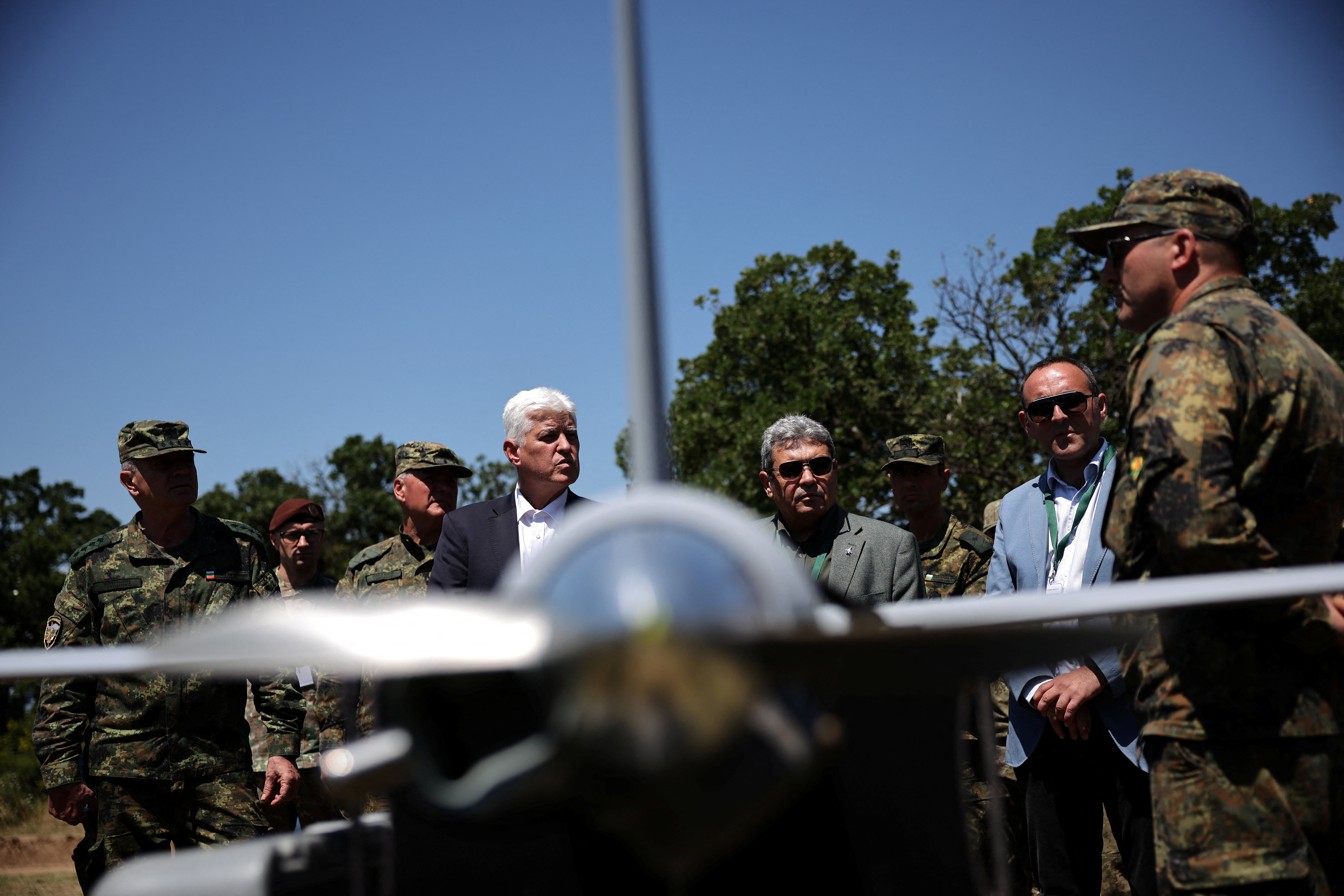
Bulgaria has formally asked NATO to deploy combat aircraft and anti-drone systems to strengthen its defences after a series of drone attacks on commercial shipping in the Black Sea, Defence Minister Dimitar Stoyanov said on Friday, 16 October. The request follows a tense week in which drones struck vessels near the coasts of Romania and Bulgaria, and one attack ended with a commercial ship sinking off the Bulgarian coast. Sofia has sent letters and a formal request to NATO’s leadership and is now waiting for a decision from the alliance.
According to Stoyanov, drones hit two ships that caught fire off Romania’s Black Sea coast earlier this week. On Tuesday, a commercial vessel sank off Bulgaria’s Black Sea coast after a drone attack, prompting Sofia to summon Russia’s ambassador. Summoning an ambassador is a standard diplomatic step that signals a government’s protest and demands an explanation, but it is not in itself a finding about who carried out an attack. The source reporting does not say who launched the drones.
How the Black Sea Became a Front Line for Drones
The Black Sea is a body of water bordered by Bulgaria, Romania, Turkey, Ukraine, Russia and Georgia. Bulgaria, Romania and Turkey are members of NATO, the transatlantic security alliance founded in 1949. Bulgaria and Romania joined in 2004, and Turkey was among the original members. That gives the alliance a direct stake in the sea’s security, because its southeastern flank, the member states closest to the Black Sea and to the conflict in Ukraine, lies along its shores.
The sea has been a focal point of military and commercial tension since Russia launched its full-scale invasion of Ukraine in February 2022. Ukraine’s ports on the Black Sea have been central to its grain and other exports, and merchant ships have been exposed to attacks in and around these waters throughout the war. Shipping lanes in the region carry grain, fertiliser, fuel and other goods, so disruption there can affect prices and supply far beyond the coastline.
The Defence News report frames the recent incidents as part of a growing threat that drone warfare linked to the Russia-Ukraine conflict poses to commercial shipping near NATO’s southeastern flank. Drone warfare is the use of unmanned aerial vehicles, commonly called drones, for surveillance, strikes and attacks. Over the past several years, drones have become one of the most widely used and cheapest weapons in the conflict, and they have spread into maritime operations as well as land and air combat.
What Bulgaria Is Asking NATO to Provide
Stoyanov said Bulgaria had sent letters and a formal request to NATO Secretary General Mark Rutte and to the Supreme Allied Commander, the senior military officer responsible for NATO operations in Europe. In his words, the letters urge the alliance “to strengthen our capabilities, which also means deploying additional forces on our territory. We are awaiting their decision.”
The request covers two types of capability. Combat aircraft are fighter or attack jets that can patrol airspace, intercept threats and respond quickly to incidents. Anti-drone systems are designed to detect, track and neutralise unmanned aircraft. Such systems can include radars, sensors, electronic jamming equipment and weapons that can bring down small drones, which are cheap enough to be used in large numbers and difficult to stop with traditional air defence missiles.
Stoyanov did not give detailed specifications for the aircraft or systems Bulgaria wants, and the source material does not describe the size of any possible deployment or a timetable for arrival. It also does not say which NATO assets might be made available. Readers should therefore treat the request as a formal proposal that has not yet been approved, rather than as a confirmed arrangement.
NATO’s Response and the Decision Process
NATO Secretary General Mark Rutte met Bulgarian Prime Minister Rumen Radev and Romanian President Nicusor Dan on Thursday. Afterwards, Rutte said NATO would “continue to work closely with our Allies in the Black Sea, adjusting our deterrence and defence posture as needed.” Deterrence means discouraging an adversary from acting through the credible threat of a response, and defence posture refers to how forces are positioned and organised. The phrase signals that the alliance is willing to adjust its posture in the region, but it does not confirm any specific deployment.
A NATO official, asked about Bulgaria’s request on Friday, said the issue would be discussed further by ambassadors from the alliance’s 32 member states next week. Decisions on deploying forces inside member states are generally taken collectively through the North Atlantic Council, NATO’s principal political decision-making body, which consists of permanent representatives, or ambassadors, from each member. Any approval would therefore depend on agreement among those ambassadors, and it could be followed by military planning before any aircraft or equipment arrived.
Bulgaria also expects to join a NATO anti-drone initiative by the end of October, according to the source material. The source does not name the initiative or describe its participants. In general terms, joining such a programme could give a member access to shared technology, training, and coordinated monitoring with other allies facing similar threats, but those details would need to be confirmed by NATO.
Regional Coordination and the Proposed Moratorium
Stoyanov said he planned to meet his Romanian and Turkish counterparts soon to discuss coordinating action and a common approach to the situation in the Black Sea. Joint positions among the three countries could matter because they share the sea and face similar risks. Measures that typically require this kind of cooperation include agreed procedures for reporting incidents, sharing radar and surveillance information, and setting common rules for protecting shipping. Coastal states often find that a single country cannot monitor a large maritime area alone, which is one reason regional coordination is important.
Bulgaria has also proposed a moratorium on attacks on civilian ships in the Black Sea. A moratorium is a temporary agreement to halt a specific activity. Proposals of this kind aim to reduce the risk to non-combatants, including the crews of merchant vessels, even while wider conflicts continue. Experience from past maritime arrangements shows that such pledges depend on verification and enforcement to be effective, and the source material does not say whether any other state has agreed to Bulgaria’s proposal or how it would be monitored.
What to Watch Next
Several developments will show how quickly the request moves. The first is the outcome of the NATO ambassadors’ discussions next week. The second is whether the alliance confirms any deployment of combat aircraft or anti-drone systems to Bulgaria, and if so, which types and how many. The third is the meeting between Stoyanov and his Romanian and Turkish counterparts, which could produce a shared approach to incident reporting and maritime protection.
Bulgaria’s expected entry into the NATO anti-drone initiative by the end of October is another marker to watch. Readers should also look for further information on the two ships that caught fire off Romania’s coast and on the vessel that sank off Bulgaria. The source material does not provide the cause of the fires or the results of any investigation, and those findings will be important for understanding how the attacks were carried out.
For people living along the Black Sea coast and for those who depend on the sea for trade, the practical questions are whether attacks continue, whether shipping routes or insurance costs change, and how quickly NATO can provide protection if it agrees. Until the alliance decides, Bulgaria’s request remains a formal proposal. Its real effect will depend on what is approved, what is deployed, and how quickly those assets can be used to detect and stop drones over busy shipping lanes.
Topics: Bulgaria, NATO, Black Sea, Anti-drone systems, Dimitar Stoyanov, Mark Rutte, Romania, Drone warfare
Sources: Defense News
https://axynewsglobal.com/article/bulgaria-asks-nato-for-combat-aircraft-and-anti-drone-systems