
At Least 153 Killed in Drone Strike on Disputed Sudan-South Sudan Region
Early report gives no breakdown of the dead and does not say who launched the drone at the border fuel site
By AXY War & Crime Desk ·
Key points
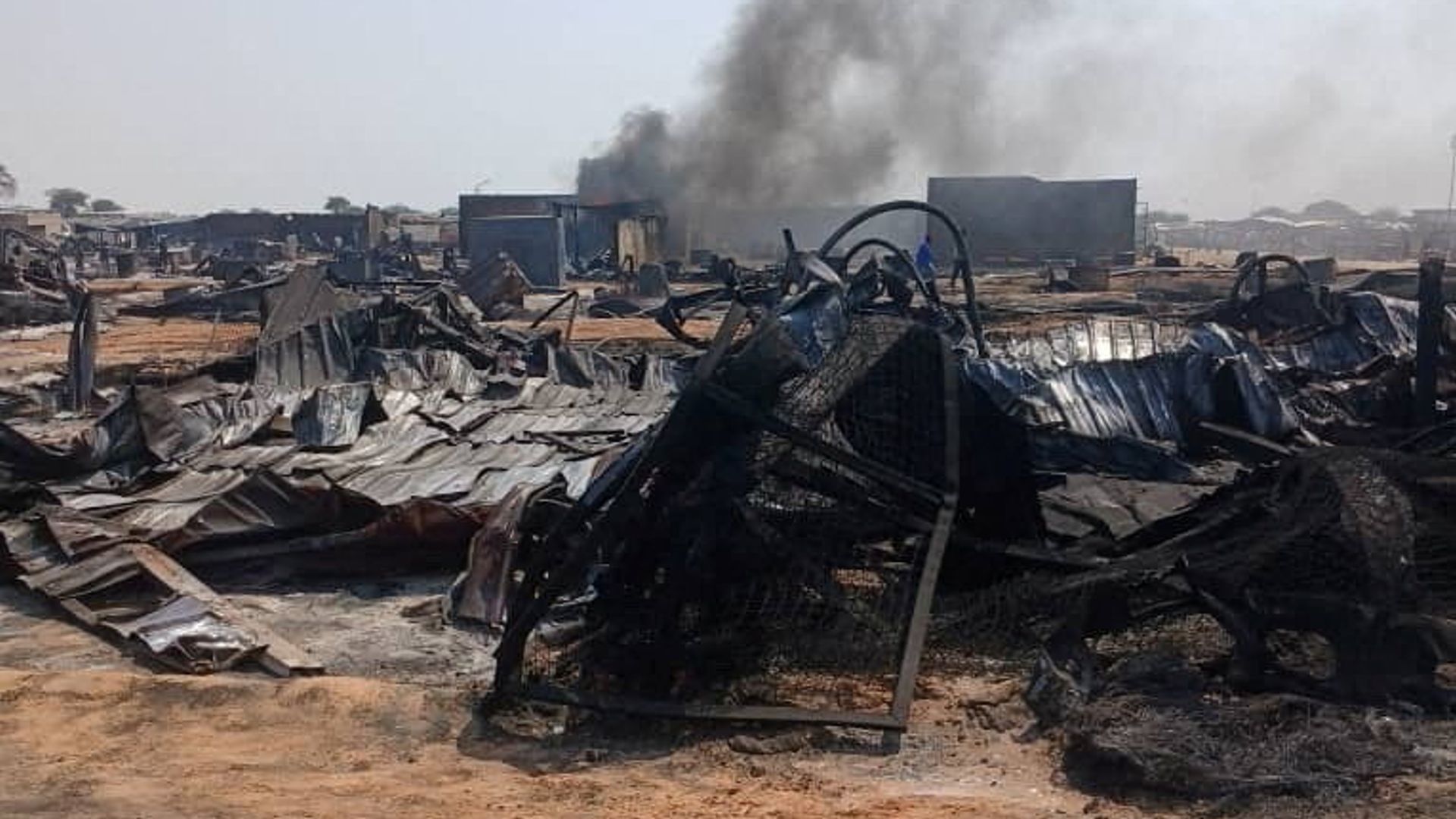
- A drone strike on a fuel depot in a disputed region on the Sudan-South Sudan border has killed at least 153 people, according to Sky News.
- The early report does not say who carried out the strike, who was at the depot or when the attack happened.
- The border region has been contested between the two countries for years, leaving residents with unclear protection and unreliable services.
- Under international humanitarian law, whether the strike was lawful depends on whether the depot was a military target and whether civilian deaths were excessive.
- Confirmed evidence from independent investigators will be needed before responsibility can be assigned.
A drone strike on a fuel depot in a disputed region on the border between Sudan and South Sudan has killed at least 153 people, according to a Sky News report published on 21 October 2026. The early account was brief. It gave the death toll and the type of site that was hit, but it did not say how many of the dead were civilians, who launched the drone or when the attack took place.
That gap is the central problem with the story right now. A strike that kills more than 150 people is a catastrophe by any measure, and for families in the region it raises immediate and painful questions. Were the dead fuel workers, drivers, soldiers, or people who had come to the depot to buy fuel for generators, vehicles or cooking? The answers will shape how the attack is judged under the laws of war. They will also decide how quickly relatives can find out whether someone they love was among the dead.
Fuel depots are rarely just storage tanks. In remote areas they can be the only reliable source of diesel for a hospital generator, a water pump or a grain truck. Destroying one can cut off whole towns, and the effects often last much longer than the attack itself.
Where the strike happened
The attack hit a fuel depot in a disputed region on the Sudan-South Sudan border. The Sky News report describes the location only in those terms. It does not name a town, district or state, and it does not say which government or armed group controls the site.
'Disputed' is not a vague label here. It means the two countries have not agreed on who holds the final right to govern a particular area. In places like this, the day-to-day presence of officials, police and soldiers can be thin, and residents often find that no single authority is clearly responsible for their safety.
How the border dispute developed
South Sudan became independent from Sudan in July 2011, after decades of war between the north and the south. Independence ended that long conflict, but it did not settle every question about the frontier. Negotiators had to agree where the line ran, and some border zones have remained contested for years, with each capital pressing its own claim.
Oil made the frontier more valuable. South Sudan's oil fields are inside its territory, but for many years the country has relied on pipelines and processing facilities in Sudan to move crude to export markets. That shared dependence gave both governments a reason to keep the border calm. It also gave armed actors a reason to fight over strategic sites and transport routes.
Local disputes sit on top of the political ones. Herders move livestock across the frontier in search of water and grazing, and clashes with farming communities have been common for years. When armed men become involved, a quarrel over a well or a grazing route can turn deadly.
For residents, the practical effect is that services depend on who is in control at a given time. Schools, clinics, police and tax collection can change hands, and aid groups may have to negotiate with several authorities to bring food, medicine or fuel into an area. An attack on a fuel depot, a site that keeps vehicles, generators and water pumps running, therefore reaches well beyond the people killed on the day.
The wider war in Sudan
The strike comes in the middle of a war that has reshaped Sudan since April 2023. Fighting broke out between the Sudanese Armed Forces and the paramilitary Rapid Support Forces in and around the capital, Khartoum. It later spread to many other parts of the country. The conflict has forced millions of people from their homes, both inside Sudan and into neighbouring countries, and has left millions more facing serious hunger.
Darfur and Kordofan, in the west and centre of the country, have seen some of the most severe fighting and reports of civilian harm. Human rights groups and United Nations investigators have accused both sides of attacks that hit civilians. Those accusations have been made repeatedly, and they are a large part of why outside observers now pay close attention to any mass-casualty incident in the country.
The border region is a different theatre, but it is connected. Fighting in Sudan has put pressure on remote areas that were already tense, and a stretched and divided security system is less able to police frontier zones. This could mean more armed groups operating in places where the state has little presence. That is an analytical point, not a finding from the report on this strike.
Why drones are changing the fighting
Drones have become a common weapon in the Sudan war and in many other conflicts. Cheap commercial aircraft can carry explosives, observe targets or be modified for attack. They let groups without large air forces strike far behind front lines. For a fuel depot in a remote area, a drone can be easier to launch than a ground assault, and harder to trace afterwards.
Attribution is difficult. A small aircraft can be launched from a site some distance away, leave little wreckage and be identified only through fragments, video, radio signals or witness accounts. Investigators often combine fragment analysis with satellite imagery and interviews with survivors and local people. That work takes weeks, sometimes months, and it can be blocked by poor access to the site.
The Sky News report does not say what kind of drone was used or who operated it. Until a credible account names the operator, any claim about responsibility is speculation. Parties to armed conflicts often issue denials or counter-claims within hours, so first statements from any side should be read with care. The strongest evidence usually comes later, from independent sources.
What international law asks
Under international humanitarian law, the rules that govern armed conflict, attacks must distinguish between military objectives and civilians and civilian objects. Attacks must not target civilians. Those carrying them out must take feasible precautions to avoid or minimise civilian harm. An attack is prohibited if the civilian deaths it is expected to cause would be excessive compared with the concrete military advantage anticipated.
A fuel depot can be a lawful target if it supplies an armed force. It can also be civilian infrastructure that supplies towns, hospitals and homes. Which description applies depends on facts that are not yet public. Those include who used the depot, whether it was known to be used by the military, whether any warning was given, and who was nearby when it was hit.
Serious violations committed deliberately, or with reckless disregard for predictable civilian deaths, can amount to war crimes. Establishing that requires evidence. This is why independent investigators, satellite analysts and local monitors usually matter so much after incidents of this kind. Without them, the first account is often the only one that exists for months.
The Geneva Conventions and their Additional Protocols set out these rules. Both Sudan and South Sudan are bound by the Geneva Conventions, so the obligations exist on paper for both governments. The International Committee of the Red Cross publishes widely used guidance on how the rules apply in practice. Enforcing them in a war zone with poor access for outside investigators is far harder than writing them down.
Who is affected
The people most affected are those in and around the depot and the communities that rely on it. Families of the dead face an immediate and grim task: identifying bodies, burying relatives and, in many cases, establishing who was at the site at all. Where registration offices and clinics are far away or overwhelmed, that process can take days.
The loss of fuel has knock-on effects. In areas already short of supplies, the destruction of a depot can push up the price of diesel and petrol, slow the movement of food and medicine, and leave health facilities without power for surgery or refrigeration. These are general consequences of losing a fuel site in a place like this. They are not findings from the report on this strike, but they show why a single attack can disrupt daily life far beyond the scene.
For people living near the border, the incident also adds to a sense of insecurity that has built up over years. When residents cannot be sure which authority will protect them, or whether the next attack will come from a government force, an armed group or an unknown operator, many choose to leave or to keep their movements very limited.
What to watch next
The report offers one firm figure: at least 153 people killed. Several questions remain open. A fuller death toll would show how many of the dead were civilians. A clearer account of who was at the depot would help judge whether it was a military target. An official statement from a government or armed group would indicate who is claiming responsibility, or denying it.
Independent monitors may try to confirm the death toll and the type of site that was hit. If evidence points to an unlawful attack, pressure could grow for an inquiry by United Nations human rights bodies or an independent commission. Such processes tend to be slow. They depend on access to the area, cooperation from the governments involved and political will, and none of those is guaranteed in a disputed border zone.
Readers should keep two lists in mind: what has been confirmed, and what the parties to the conflict claim. In disputed border areas the first account is usually the least complete. The clearer picture tends to emerge over weeks rather than hours, and it often arrives only after the people closest to the events have been able to speak safely.
Questions and answers
How many people were killed in the drone strike on the Sudan-South Sudan border?
Sky News reported that a drone strike on a fuel depot in a disputed region on the Sudan-South Sudan border killed at least 153 people. The early report did not give a detailed breakdown of the dead.
Where did the drone strike take place?
The strike hit a fuel depot in a disputed region on the border between Sudan and South Sudan. The report does not name a specific town, district or state.
Who carried out the drone strike?
The source report does not say who launched the drone. Responsibility would need to be established through credible evidence and independent investigation.
Could the strike be a war crime?
Whether the attack amounts to a war crime depends on facts not yet public, including whether the depot was a military target and whether civilians were deliberately or disproportionately harmed. Those questions are central under international humanitarian law.
Topics: Sudan, South Sudan, drone strike, Sudan-South Sudan border, fuel depot, international humanitarian law, Rapid Support Forces
Sources: Sky News World RSS