
Army Shows Interest in Northrop Grumman's G/ATOR Missile-Killing Radar
Marine Corps leaders praise the radar as deliveries pass the halfway mark, and Northrop says other services are now engaging with the company
By AXY Defense Desk ·
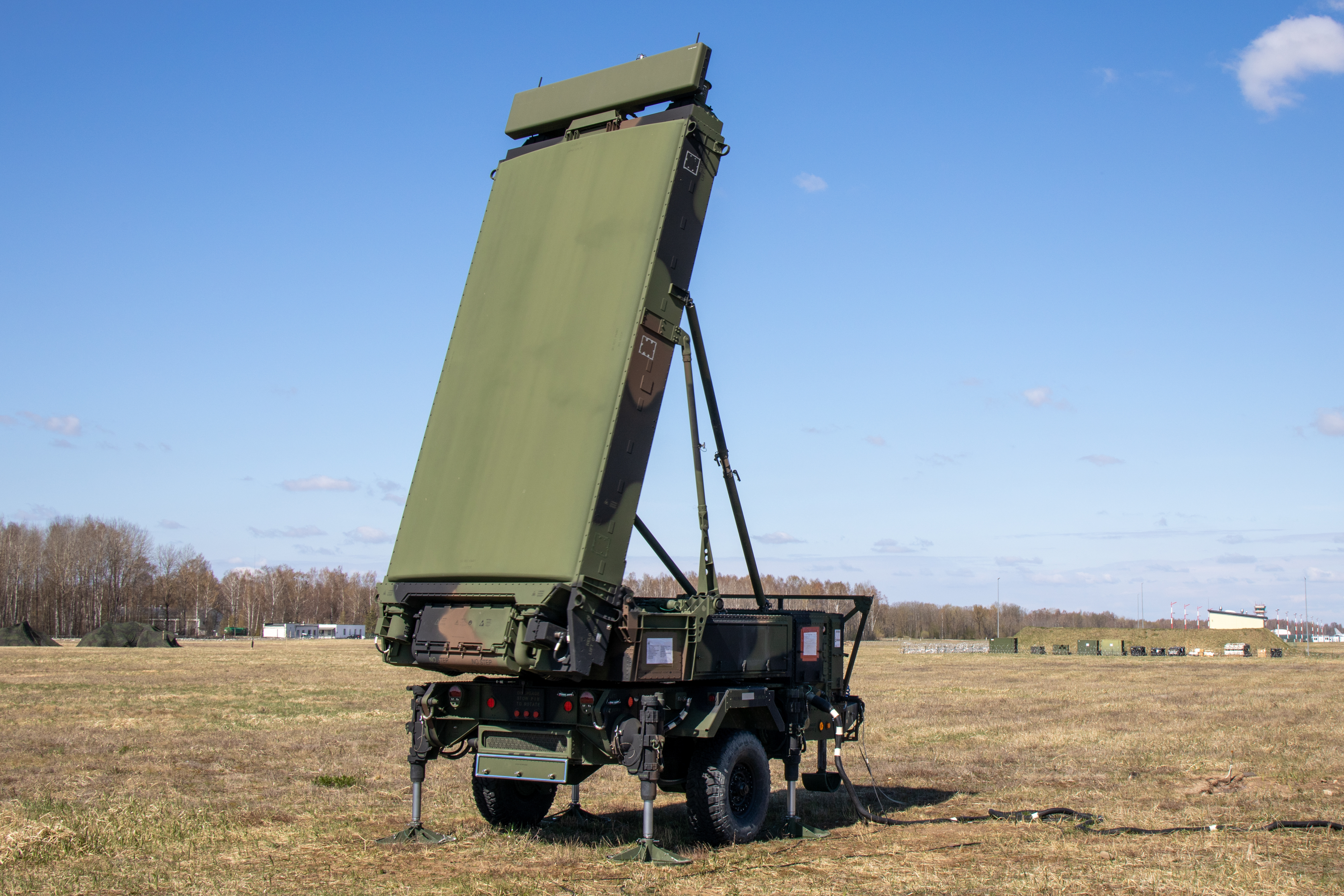
Key points
- Northrop Grumman says the U.S. Army has expressed interest in the G/ATOR radar, but the Army has not said whether it intends to buy it.
- The Marine Corps has ordered 60 G/ATOR systems, and Northrop says 43 have been delivered, with five designated for the Air Force and one for Navy test and evaluation.
- G/ATOR is designed to detect and track drones, cruise missiles and other airborne threats, and to replace five older radar systems.
- Marine Corps leaders say the radar is more capable than expected and want to put it into more units, which could increase orders.
- The company's performance claims have not been independently verified in the reporting.
Northrop Grumman's G/ATOR radar, a mobile system the Marine Corps is using to defend against aircraft, drones and missiles, has drawn interest from the U.S. Army, according to officials who spoke this month. The company says other potential customers are also looking at the system after strong praise from Marine Corps leaders as fielding surges past the halfway point. The Army has not publicly committed to buying the radar, and the company declined to say whether the service intends to acquire it.
The AN/TPS-80 Ground/Air Task Oriented Radar, known as G/ATOR, is the Marine Corps' answer to a broad range of airborne threats, particularly in what the service calls the Pacific littorals, the coastal zones where land and sea meet. The system replaces five older radar systems. Last year it received an extended-range software upgrade that improved its capability and its ability to tell friendly aircraft from hostile ones.
Why the Radar Matters
A radar is a sensor that sends out radio waves and reads the echoes that bounce back, allowing operators to detect and track objects such as aircraft, drones and incoming projectiles. Military air defense depends on finding threats early enough to respond, and that requires sensors that can see low-flying and small targets against cluttered backgrounds. Clutter refers to unwanted echoes from terrain, weather and other sources that can hide or confuse real targets.
The G/ATOR system is designed to handle several of these jobs with a single platform. Rather than relying on separate radars for air surveillance, air traffic control and targeting support, the Marine Corps can use one system that performs multiple roles. For forces operating in small, scattered locations across the Pacific, that flexibility matters because it reduces the number of pieces that must be moved, powered and protected.
Delivery Progress and Demand
In a call with reporters on Oct. 7, Paul Weaver, Northrop Grumman's director of mission systems, said the company had delivered 43 of the 60 G/ATOR systems the Marine Corps has ordered. Of the total, five are designated for the Air Force and one for Navy test and evaluation. Weaver said demand for the system in theater is high, and he linked that demand to the radar's performance.
Weaver also described an ongoing process of changes based on customer feedback. He said the company has spent the past four or five years modifying the system according to user input, including hardware changes that extended its range. He added that Northrop continually updates the software to adapt to the threats forces face, whether those are unmanned aerial systems of any size or other potential dangers.
The Marine Corps' interest in expanding its purchase has also become visible. Brig. Gen. Christopher Haar, who now commands the 3rd Marine Logistics Group, told Military Times last December: “We learned that it’s much more capable than we thought.” He said there is now a demand to get the system into more units and potentially to increase the number of systems the service buys. Initial fielding to the Marine Corps began in 2018.
The Army and Other Customers
Weaver said Northrop was “actively engaged at the headquarters level” with the Marine Corps and the Air Force on how best to employ G/ATOR, and that the company had recently begun engagements with the Army. He did not say whether the Army wants to buy the radar. He argued, however, that its capabilities have broad appeal across the military services.
He pointed to the idea of fielding several systems together. In his words, when a number of these radars operate in a complementary way, forces can stay in constant movement and complicate an adversary's targeting cycle, meaning the process an opponent uses to find, fix and strike a target. He said that interest was shared by every service currently involved in conflict. Weaver tied the Army and Air Force discussions to the radar's current performance and the agility the platform offers.
The Army's interest is significant because it would signal that the radar's value extends beyond a single service. Defense analysts often note that the ground forces, which must protect themselves and their equipment from drones and short-range rockets, face many of the same challenges as Marine units operating in forward positions. Any Army decision would still depend on budgets, testing and formal requirements, and nothing in the company's remarks indicates that a contract is close.
Design and Deployment
According to Northrop's figures cited in reporting, G/ATOR weighs 9,000 pounds, which is light enough to be transported by the C-130 Hercules and the MV-22 Osprey aircraft. A four-person crew can set it up in under ten minutes. Its power setting can be adjusted from 60 kilowatts for medium-range targets to 75 kilowatts for longer-range engagements.
The radar uses an active electronically scanned array, or AESA. Instead of rotating a dish, an AESA radar steers its beam electronically through many small transmit and receive modules, which allows it to track several targets quickly and change focus without mechanical movement. Northrop says the system provides 360-degree coverage.
Weaver said the lightweight design lets the radar fly into an austere location, meaning a site with few existing facilities, to help establish an expeditionary air base. Once in place, it can set up a surveillance perimeter and support airspace control. The company says the system can also identify the launch points of hostile fire, including mortars and artillery, and can serve as a ground-based air traffic control manager.
Lessons From Recent Conflicts
The War Zone reported last month that the Marine Corps’ 31st Marine Expeditionary Unit, based in the Pacific, had used the service’s Expeditionary Advanced Base Operations concept in combat for the first time during operations supporting the conflict known as Operation Epic Fury with Iran. The report did not establish whether G/ATOR was part of that employment, and Weaver did not confirm it was.
Weaver did say the current conflict is highlighting the radar's strengths. He argued that the system performs well in clutter, which makes it useful for identifying all classes of drones and cruise missiles. He also said it provides weapons-quality data, meaning tracking accurate enough to support a firing decision. In his description, that data allows a warfighter not only to see a threat but also to connect it with an available countermeasure, whether kinetic, meaning a physical interceptor, or non-kinetic, such as electronic defeat, and respond appropriately.
These are the company's claims, and they have not been independently tested in public reporting. Analysts generally judge air defense systems by how they perform against real threats, how quickly they can be moved and set up, and how well they link to shooters. Those are the questions that will determine whether G/ATOR’s reputation holds as more units and services evaluate it.
What to Watch Next
Several developments will show whether interest turns into orders. The first is whether the Army moves from talks to a formal requirement or a funded purchase. The second is whether the Marine Corps increases its total order beyond the 60 systems currently planned. The third is whether the Air Force and Navy expand their use of the radar beyond the systems already designated for them.
Analysts expect that any Army decision would be shaped by budget priorities and by how the radar compares with other systems the service already uses or is developing. Observers will also watch for further software upgrades and for field reports describing how G/ATOR performs against drones in actual operations. For now, the company’s account points to growing demand, while the Army’s intentions remain unconfirmed.
Questions and answers
What is the G/ATOR radar?
G/ATOR, short for Ground/Air Task Oriented Radar, is the AN/TPS-80 multi-mission radar built by Northrop Grumman. The Marine Corps uses it to defend against a broad range of airborne threats, particularly in the Pacific littorals.
Has the U.S. Army agreed to buy the G/ATOR radar?
No purchase has been announced. Northrop Grumman says it has recently begun engagements with the Army and that the Army has shown interest, but the company declined to say whether the Army intends to acquire the system.
How many G/ATOR radars has Northrop delivered?
Northrop Grumman’s Paul Weaver said on Oct. 7 that the company had delivered 43 of the 60 systems the Marine Corps has ordered. Five are designated for the Air Force and one for Navy test and evaluation.
What happens next for the G/ATOR program?
Key steps to watch include whether the Army moves to a formal requirement or funded purchase, and whether the Marine Corps increases its order beyond 60 systems. Any Army decision would depend on budgets and testing.
Topics: Northrop Grumman, G/ATOR radar, U.S. Army, U.S. Marine Corps, Air defense, Counter-drone systems, AN/TPS-80
Sources: Military Times