
Arafat Minhas Shines as Pakistan Beat England by 87 Runs in Rawalpindi
Minhas scores 59 and takes six wickets as Pakistan post 302-9, then dismiss England for 215 in a one-day tri-series match
By AXY Pakistan Desk ·
Key points
- Arafat Minhas scored 59 and took six wickets for 40 runs in 8.4 overs as Pakistan beat England by 87 runs.
- Pakistan recovered from 133 for 5 to post 302 for 9, with Hasan Nawaz scoring 79.
- England started with 91 without loss but were bowled out for 215 while chasing 303.
- The One-day International tri-series match was played at the Rawalpindi Cricket Stadium on Tuesday.
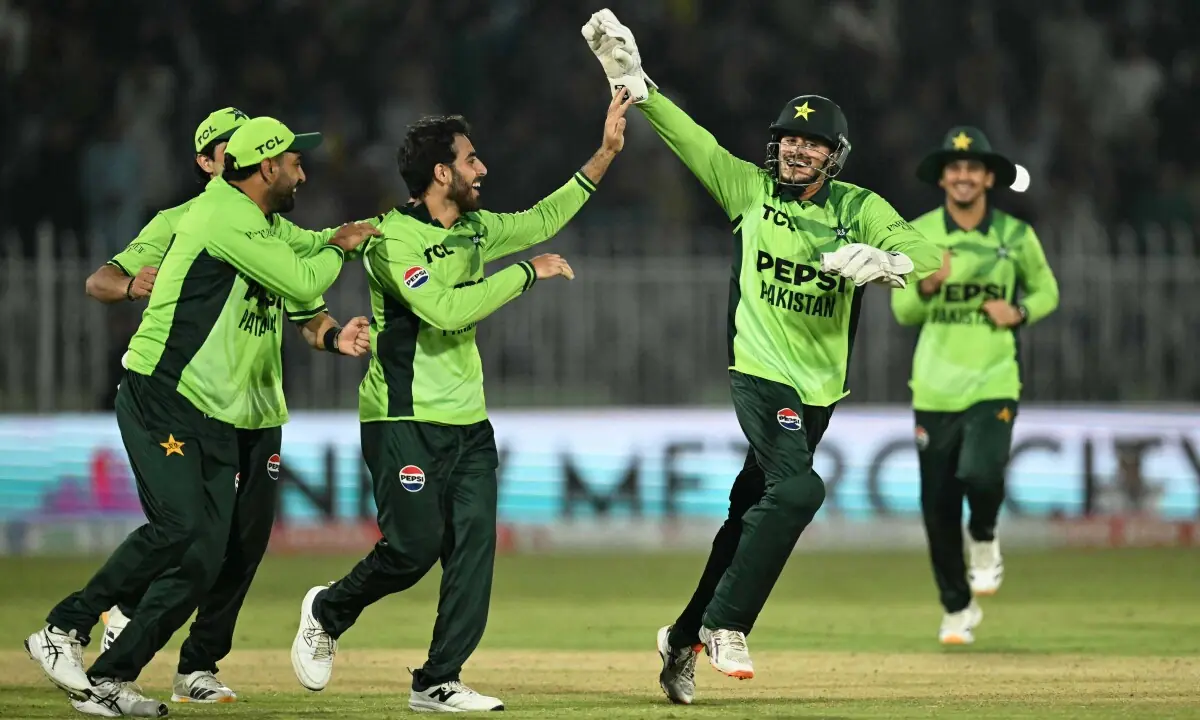
Arafat Minhas dominated both batting and bowling as Pakistan beat England by 87 runs in a One-day International tri-series match at the Rawalpindi Cricket Stadium on Tuesday. The left-arm spinner scored a crucial half-century, took six wickets for 40 runs in 8.4 overs, and ended the contest with a run-out from the deep. England were bowled out for 215 while chasing 303, with more than 10 overs to spare, according to a report published by Dawn.
The result gave Pakistan a comprehensive win in a three-team tournament, and it was built on a performance that touched every phase of the game. Minhas's contribution with the bat helped Pakistan recover from a shaky start, while his spin bowling and fielding then turned a promising England chase into a collapse. The match showed how a single player can influence a result in one-day cricket, and it also exposed the pressure England faced once their early momentum disappeared.
How the Match Unfolded at Rawalpindi
England chose to field after winning the toss, a decision that put Pakistan in the position of batting first on a surface where the home side would need to build a competitive total. The hosts did not get off to a strong start. Fakhar Zaman was dismissed for a first-ball duck, caught by Joe Root at short midwicket off the bowling of Gus Atkinson. Saim Ayub counterattacked briefly before falling for eight, skying Sonny Baker to Sam Curran in the sixth over, with Pakistan at 31 for 2.
Babar Azam and Saad Baig then attempted to stabilise the innings, but Babar's 34 off 52 balls ended in the 15th over when Will Jacks breached his defences. Adil Rashid removed Salman Ali Agha for 16, caught by Atkinson at deep fine leg, leaving Pakistan at 81 for 4. Saad went on to add 52 for the fifth wicket with Hasan Nawaz, but Atkinson returned to dismiss him for 35 off 54 balls, and the hosts were at 133 for 5 at that stage.
Pakistan's Recovery From 133 for 5
The innings was rebuilt by Hasan and Minhas, who added 78 runs off 74 balls for the sixth wicket. Hasan struck 79 off 74 deliveries, including five fours and four sixes, and found the boundary through cover and backward point while punishing loose deliveries over the rope. His innings ended at 211 for 6 when Jamie Overton bowled him with a yorker in the 40th over. A yorker is a full delivery aimed at the base of the stumps, and it is one of the hardest balls for a batter to score from because there is little room to get under it.
Minhas made 59 off 58 balls, hitting nine fours, before he was dismissed after skying Baker to Harry Brook at cover. Faheem Ashraf provided a late surge with 39 off 26 balls, including consecutive boundaries against Rashid and a six off Root, and was caught by Jacks at deep midwicket in the 49th over. Captain Shaheen Shah Afridi then added a brisk five-ball 10, and his late boundaries helped Pakistan finish on 302 for 9. Scoring more than 300 in a 50-over innings is generally regarded as a formidable target, and this total gave the bowlers a meaningful score to defend.
England's Fast Start and the Turning Point
England's reply began with real intent. Tom Banton and Ben Duckett put on 91 without loss in 14.3 overs, a stand that put the chase firmly on course at that stage. Duckett made 45 off 46 balls with eight fours, while Banton scored 57 off 53 deliveries with five fours and two sixes. The partnership was broken by Haris Rauf when Duckett mistimed a pull, and Fakhar Zaman took the catch at deep fine leg.
The match turned quickly after that. Minhas removed Banton with his third delivery, when the opener swung across the line and picked out Shaheen at midwicket. Minhas then bowled England captain Harry Brook for five with a delivery that gripped and straightened, leaving the visitors at 128 for 3. Naseem Shah soon ended Root's resistance, bowling him for 33 off 35 balls with a skidding delivery that kept low and struck the off stump. A skidding delivery comes through lower and quicker than expected, which makes it difficult for a batter to play with a full swing.
Minhas's Six-Wicket Spell and the Final Run-Out
Sam Curran and Jordan Cox tried to keep England in contention, but the chase steadily faded. Curran made 27 before top-edging a pull off Haris to substitute fielder Ghazi Ghori at deep backward square leg. Cox, who scored 18, was given leg-before to Minhas's quicker delivery and lost his review. Leg-before-wicket, or LBW, is a dismissal when the ball would have hit the stumps but was stopped by the batter's pad, and a review allows the batting side to ask for the decision to be checked under the Decision Review System, known as DRS.
Minhas continued his work through the lower order. He dismissed Jamie Overton for one, when Hasan took a catch at long-on after the batter charged down the pitch. Jacks briefly threatened a counterattack by hitting Haris for six, but he fell for 19 after miscuing a stroke off Minhas to Shaheen at short midwicket. Minhas then completed his six-wicket haul by trapping Rashid leg-before for a first-ball duck in the 39th over.
The result was sealed by a run-out. With Atkinson and Baker stranded at the same end, Minhas fumbled a throw from the deep, but he gathered the ball again and his slingy left arm produced a flat, direct throw that crashed into the stumps. A run-out happens when a fielder breaks the stumps with the ball while a batter is out of their crease, and it was the final act of an evening that Minhas had made his own. It was the sort of moment that can be decisive in a tight contest, even if the wicket came at the end of a match that England had already lost.
Background: Tri-Series Cricket and One-Day Internationals
A One-day International, usually shortened to ODI, is a format in which each side bats for up to 50 overs, with an over being six legal deliveries bowled by one bowler. The format was developed to give cricket a shorter form than Test matches, which can last up to five days, and it has long been a central part of international cricket. A tri-series is a tournament in which three national teams play each other, typically in a round-robin format, and the best-placed sides advance to a final. The format gives fans frequent matches against different opponents within a short period.
In a tri-series, every match counts towards the standings, so a result like this one can affect how the tournament unfolds. Points, net run rate and head-to-head records often decide which teams qualify for the final. Net run rate is a measure of how quickly a team scores runs compared with how quickly it concedes them over the course of the tournament, and it can become important when teams finish with similar records. These technical terms matter because they determine how a team's form in one match translates into its position in the table.
Why the Result Matters and What to Watch Next
For readers, the match is a useful example of how cricket results can depend on individual performances that change the course of an innings. Pakistan's win came after the side had been reduced to 133 for 5, and the recovery made the difference between a modest total and one above 300. That kind of comeback can give a team confidence, but it also depends on whether the middle order can keep performing when conditions change. Observers will be watching whether Pakistan can rely on these contributions again, rather than treating them as a one-off.
For England, the defeat raises questions about how a strong start can fall apart so quickly. Their openers had put on 91 without loss, yet the side was bowled out for 215 while chasing a total above 300. Analysts may look at whether the middle order was able to build on the early platform, and whether the approach to spin bowling needs adjusting. Such questions are typically examined before the next match, when teams can change their line-up and tactics.
The source report does not say when or where Pakistan and England will next meet, or how the tri-series standings now look, so those details cannot be confirmed here. Readers who want to follow the tournament should check the official schedule and points table for the next fixtures and how this result affects qualification for the final. Minhas's form, England's response, and the outcome of the remaining matches will be the main points to watch as the tournament continues.
Questions and answers
Who was the star performer in the Pakistan vs England tri-series match?
Left-arm spinner Arafat Minhas was the standout, scoring 59 with the bat and taking six wickets for 40 runs in 8.4 overs. He also ended the match with a run-out of Gus Atkinson.
What was the result of Pakistan vs England at Rawalpindi?
Pakistan won by 87 runs. Pakistan posted 302 for 9, and England were bowled out for 215 while chasing 303, with more than 10 overs to spare.
Where and when was the Pakistan vs England one-day match played?
The One-day International tri-series match was played at the Rawalpindi Cricket Stadium on Tuesday, according to the Dawn report.
What is a tri-series in cricket?
A tri-series is a tournament in which three teams play each other, usually in a round-robin format, with the results affecting standings and qualification for the final. The source report does not specify Pakistan's next fixture.
Topics: Arafat Minhas, Pakistan cricket, England cricket, Rawalpindi Cricket Stadium, One-day International, tri-series, Shaheen Shah Afridi, Hasan Nawaz
Sources: Dawn