
Amazon's $500 Alexa Tablet 12 Pro Takes Aim at Apple's iPad
A metal body, a 120Hz screen and Google Play support mark a sharp break from Amazon's budget Fire tablets
By AXY World Desk ·
Key points
- Amazon's Alexa Tablet 12 Pro costs $500 and is the top model in a new Alexa Tablet line aimed at the iPad.
- The reviewer found a 6.5mm aluminum body, roughly 550 grams in weight and solid build quality.
- The display is an 11.95-inch IPS LCD with 120Hz refresh, which the reviewer said gives it an edge over the $749 iPad Air.
- The Nanomatte anti-glare finish was not on the review unit, which had a standard glossy screen.
- Amazon has dropped its own version of Android and now offers Google Play services on the new tablets.
Amazon is selling a premium tablet against Apple's iPad, and the top model in its new Alexa Tablet line costs $500. A hands-on review published on October 20, 2026 tested that model, the Alexa Tablet 12 Pro, and concluded that it is "an entirely different beast than the Fire tablet lineup." The reviewer said its premium build and specifications make it a credible competitor to the iPad.
For anyone who has bought one of Amazon's cheaper tablets, the change is the story. The reviewer said the new device has little in common with the Fire models that came before it. The difference is obvious in the first few minutes of holding it, and it extends to the software, which is where Amazon made its most significant change.
The review raises a simple question for shoppers. Has Amazon built a tablet that can become the default choice for people who do not want an iPad? The reviewer spent time with the $500 model to find out.
How Amazon's tablets got here
Amazon's Fire tablets have been a fixture of the budget market for more than a decade. The first Kindle Fire arrived in 2011, and the line has stayed focused on low prices ever since. A cheap Fire tablet is an easy purchase for a family, and it is often recommended to parents who want a device for their children.
Keeping prices low required cuts. Amazon used less expensive materials and components, and the result was a generation of tablets that did their basic jobs well enough but offered little beyond that. Plastic bodies were the most visible sign of the trade-off. The reviewer described the new approach as a break from that pattern, not a small update to it.
The software side of the Fire line has a history of its own. Fire tablets run a version of Android, the operating system developed by Google. Amazon modified that version heavily, and the modified version did not include Google's app store and core services by default. That meant many popular apps were missing or hard to get, and buyers who wanted them often had to work around the gap. The Alexa Tablet line changes that arrangement, according to the review.
Build, weight and first impressions
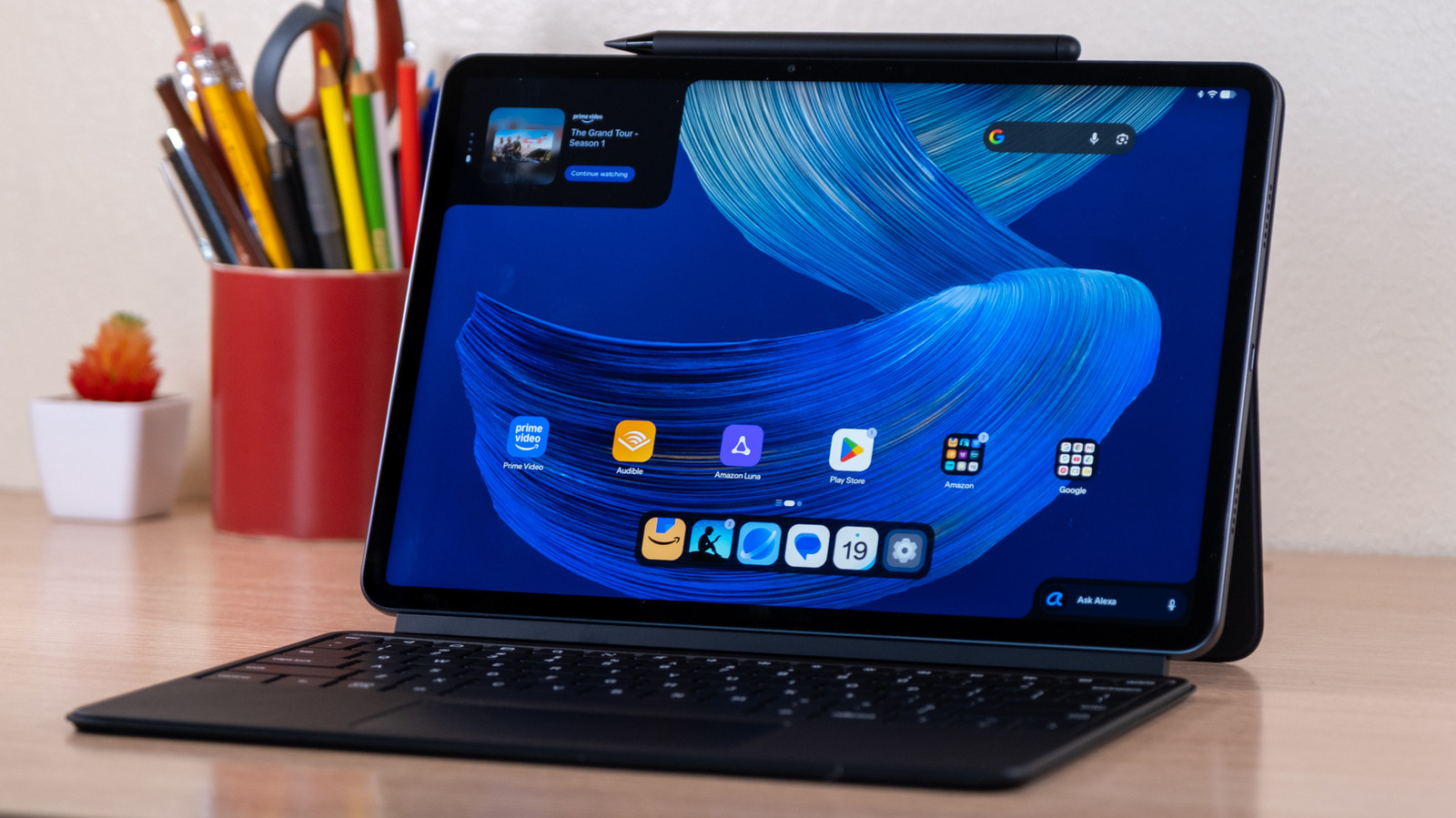
The Alexa Tablet 12 Pro has an aluminum unibody that is 6.5mm thick and weighs roughly 550 grams, according to the reviewer. A unibody is a single piece of metal that forms most of the device's frame, which usually makes a tablet feel more solid than one built from several plastic parts. The reviewer said the tablet feels solid in the hand, with no flex and no creaking, and none of the cheapness that Amazon's budget tablets were known for.
The design is flat-edged and sleek, and the reviewer said it is reminiscent of an iPad. The only color option is graphite. The reviewer called the finish clean and stylish but said more color choices would have been a nice addition. The display measures 11.95 inches, which the reviewer described as nearly 12 inches. At that size, the tablet is not easy to forget once you pick it up.
The reviewer compared the build quality to the iPad Air and the Galaxy Tab S12, Samsung's tablet line, and said the Alexa Tablet 12 Pro feels like a proper premium tablet in the hand. Weight is the main trade-off. The device is heavier than the 11-inch iPad Air, and it is substantially heavier than a Kindle Paperwhite, the e-reader that weighs around 200 grams. The reviewer said the extra weight becomes noticeable if you read in bed for hours. For a desk, a couch or a lap, the reviewer found it manageable and well balanced.
The physical controls are placed with the tablet held upright in mind. The USB-C charging port sits on the bottom edge. The power button is on the top edge, and it contains a fingerprint sensor. The reviewer said the sensor worked reasonably quickly and accurately during use. The volume buttons are on the right edge.
The right edge is also the top edge when the tablet is held sideways. It has a slightly recessed area where the Pen Pro stylus snaps on magnetically, both to charge and to stay stored when it is not in use. The reviewer called this a neat idea. The feature is subtle, so it will not get in the way of buyers who do not plan to use a stylus. Buyers who do want one will find it built in.
The screen and the Nanomatte question
The review says the display might be the best part of the tablet, though the reviewer added a caveat. The screen is an 11.95-inch IPS LCD with a resolution of 2800 x 1840 pixels in a 3:2 aspect ratio. IPS stands for in-plane switching, a type of liquid crystal display known for wide viewing angles and accurate colors. The panel runs at a 120Hz refresh rate and reaches 500 nits of peak brightness.
Two of those numbers are worth explaining. Refresh rate is how many times per second the screen redraws its image. At 120Hz, scrolling and animations typically look smoother than on a standard 60Hz screen. Brightness is measured in nits, and 500 nits is enough for most indoor use. Bright sunlight can still make any screen harder to read.
The reviewer said the 120Hz refresh rate gives the tablet an edge over the $749 iPad Air. That is one of the clearer points in the review, because buyers can compare it directly on a specification sheet.
The bigger display story is a finish Amazon calls "Nanomatte." Most tablets with anti-glare protection add a matte coating on top of the glass. Nanomatte takes a different route. Amazon developed the treatment with Corning, the glass maker known for its Gorilla Glass, and the process etches the glass itself at the sub-pixel level using photolithography. Photolithography is a light-based patterning method borrowed from chip manufacturing. The reviewer said they have been a fan of Apple's matte displays for their ability to cut glare, and they were glad to see the approach becoming more common.
The review unit did not have that feature. It came with a standard glossy screen, which the reviewer said looks great but is not the buzzy new feature that the higher-end model offers. Anyone who uses a tablet near windows or under bright lights will want to confirm which screen they are buying before they order.
Dropping Amazon's version of Android
The software change may matter more than the hardware. According to the review, Amazon has dropped its own proprietary fork of Android on the Alexa Tablet line. The new devices offer Google Play services, the core Google software that many Android apps depend on.
For everyday users, the difference is practical. Google Play is where most Android users download apps, and many popular services expect Google's core software to be present. Without it, a tablet can feel incomplete, even if the hardware is strong. Adding Google Play brings the tablet closer to the experience people expect from an iPad, which runs Apple's own app store and services.
The review does not say how the Alexa Tablet's software compares with the full experience on other tablets over long periods, and it does not measure how many apps work perfectly. Those are questions that take months of use to answer.
Where the tablet fits against the iPad Air and rivals
The review's comparisons show where Amazon is aiming. The Alexa Tablet 12 Pro is measured against the iPad Air, the Galaxy Tab S12 and the Kindle Paperwhite. The Kindle comparison is a reminder of Amazon's broader lineup, since the Paperwhite is a dedicated e-reader rather than a general-purpose tablet.
At $500, the Alexa Tablet 12 Pro sits in a crowded part of the market. Shoppers choosing a premium tablet can compare it with established brands, and those brands have their own app ecosystems, accessories and loyal buyers. Amazon's challenge is to show that the hardware, the screen and the Google Play support are enough to pull buyers away from familiar options.
Analysts who follow consumer electronics could read the launch as an attempt to win shoppers who would otherwise buy an iPad. The review itself does not make market-share claims, and it does not say how the tablet will perform in sales.
What to watch next
Several questions remain open after this review. The first is whether the Nanomatte model reaches buyers and how it compares with the glossy version the reviewer tested. Shoppers who care about reflections in bright rooms will want to see the matte screen in person before deciding.
The second question is whether Amazon will add colors. The reviewer said graphite is the only option, and that more choices would have been welcome. Color may seem minor, but it affects how a premium device fits into a buyer's home and style.
The third question is whether the build quality and the Google Play support hold up over months of daily use. A first review can judge how a tablet feels and how it performs in a short test, but it cannot measure durability, software updates or battery life over a long period. Those details will decide whether the Alexa Tablet 12 Pro becomes a serious iPad alternative or stays a strong first attempt.
The reviewer's main conclusion is that Amazon has made a clear break from its past. The Alexa Tablet 12 Pro does not look or feel like a Fire tablet, and for buyers who have written off Amazon's tablets as cheap, that shift is the most important thing about it.
Questions and answers
How much does the Amazon Alexa Tablet 12 Pro cost?
The reviewer tested the $500 Alexa Tablet 12 Pro, which is the highest-end model in Amazon's new Alexa Tablet line.
How is the Alexa Tablet 12 Pro different from Amazon Fire tablets?
The review says it has a premium aluminum body, a 120Hz display and Google Play services, and Amazon has dropped its proprietary version of Android. Earlier Fire tablets were known for cheap, plastic builds.
Does the Alexa Tablet 12 Pro have a matte screen?
Not on the review unit, which had a standard glossy screen. The reviewer said a higher-end model offers the Nanomatte anti-glare finish developed with Corning.
How does the Alexa Tablet 12 Pro compare with the iPad Air?
The reviewer said the tablet is heavier than the 11-inch iPad Air, and that its 120Hz refresh rate gives it an edge over the $749 iPad Air.
Topics: Amazon, Alexa Tablet 12 Pro, Fire tablets, Apple iPad, Google Play, Android, tablets
Sources: BGR
https://axynewsglobal.com/article/amazon-s-500-alexa-tablet-12-pro-takes-aim-at-apple-s-ipad